Robert Colquhoun: A Visionary Painter of Isolation and Expression
Robert Colquhoun (1914–1962) stands as a pivotal figure in British art of the mid-century, recognized for his distinctive expressionist style—characterized by stark contrasts of color, simplified forms, and an unflinching portrayal of human emotion. Born in Kilmarnock, Scotland, he possessed an innate artistic sensibility nurtured by early exposure to the landscapes of Ayrshire, which would profoundly inform his visual vocabulary. His formal education at Glasgow School of Art cemented a lifelong partnership with fellow artist Robert MacBryde, forging a creative alliance that shaped their careers and intellectual discourse.
- Early Influences & Artistic Formation: Colquhoun’s formative years were marked by an immersion in rural Ayrshire's vibrant hues and textures—a connection that translated into his initial paintings depicting agricultural laborers and workmen with remarkable sensitivity. These early works demonstrated a nascent understanding of color theory and compositional balance, foreshadowing the stylistic developments to come.
- The MacBryde Collaboration & Parisian Exploration: The meeting at Glasgow School of Art initiated a symbiotic relationship with MacBryde that extended beyond artistic collaboration into personal companionship. Together they embarked on a transformative journey to France and Italy in 1937–39, absorbing the influence of Picasso’s cubism and experimenting with innovative techniques. This period solidified their commitment to abstraction and established them as artists deeply attuned to the intellectual currents of their time.
World War II Service & London Studio Life
- Military Engagement: During World War II, Colquhoun served as an ambulance driver in the Royal Army Medical Corps, experiencing firsthand the anxieties and hardships of wartime. This experience undoubtedly deepened his understanding of human vulnerability and contributed to the melancholic tone that permeates much of his oeuvre.
- Collaborative Studio Space & Artistic Circle: Following the war, Colquhoun relocated to London and shared studio space with MacBryde, Jankel Adler, and John Minton—forming a vibrant artistic community centered around Bedford Gardens. This environment fostered intellectual exchange and fueled their creative output, attracting influential figures like Michael Ayrton, Francis Bacon, Lucian Freud, Dylan Thomas, and George Barker.
Theatre Design & Artistic Recognition
- Stagecraft Contributions: Colquhoun’s artistic talents extended beyond painting into theatre design. He collaborated extensively with MacBryde on productions of Macbeth and King Lear at Stratford-upon-Avon, as well as Donald of the Burthens for Sadler's Wells Ballet, demonstrating his versatility and commitment to visual storytelling.
- Critical Acclaim & Galerie Lefevre: Throughout the 1940s and early 1950s, Colquhoun achieved considerable acclaim within the British art world. His work was regularly showcased at Galerie Lefevre in London, securing his reputation as one of the foremost artists of his generation.
Mature Style & Legacy
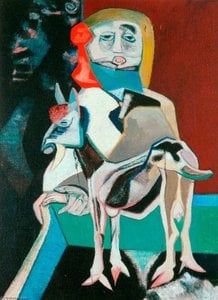
- Expressionist Vision: Colquhoun’s mature style embraced a powerfully expressive aesthetic—characterized by bold color palettes and simplified geometric forms. He relentlessly pursued themes of isolation, anguish, and psychological complexity, reflecting the anxieties of postwar Europe.
- Printmaking & Continuing Influence: Colquhoun was a prolific printmaker, producing numerous lithographs and monotypes that further explored his artistic ideas. His work continues to resonate with contemporary artists and scholars alike, serving as an enduring testament to his singular vision and contribution to British art history.
His oeuvre remains a poignant reflection of the human condition—a haunting exploration of emotion conveyed through masterful technique and imbued with the indelible mark of Ayrshire’s landscape. Robert Colquhoun's legacy endures not merely as an artist but as a symbol of artistic integrity and unwavering dedication to conveying profound psychological truths.