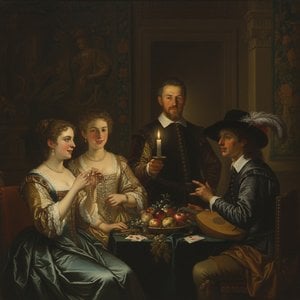
Jan Provoost: A Flemish Pioneer Bridging Art and Science
Jan Provoost (c. 1465 – January 1529) stands as a remarkable figure in the artistic landscape of the Early Netherlandish Renaissance, embodying not only masterful painting but also significant contributions to cartography, engineering, and architecture—a testament to his intellectual curiosity and multifaceted talents. Born in Mons, Belgium, Provoost’s formative years were marked by exposure to humanist ideals and burgeoning scientific inquiry, shaping his artistic vision and fostering a collaborative spirit that would define his career.
Early Life & Artistic Training: Provoost's initial training took place under the tutelage of Gerard David in Valenciennes, where he honed his skills in oil painting—a technique championed by artists like Hans Memling and Albrecht Dürer—absorbing influences from both Flemish Primitives and Italian Renaissance masters. This early exposure instilled a meticulous attention to detail and a profound understanding of perspective, elements that would permeate his subsequent works.
Bruges & Antwerp: Two Centers of Innovation Provoost established workshops simultaneously in Bruges and Antwerp, capitalizing on the city’s thriving commercial activity and artistic patronage. Bruges, renowned for its guild system and aristocratic clientele, provided fertile ground for devotional paintings—particularly altarpieces—while Antwerp attracted ambitious craftsmen eager to engage with new ideas and technologies.
Religious Painting & Artistic Style
Provoost’s artistic style is characterized by a harmonious blend of realism and idealism, reflecting the humanist preoccupation with human anatomy and naturalism alongside spiritual contemplation. His paintings frequently depict biblical narratives with striking clarity and emotional depth, utilizing subtle color palettes and masterful draughtsmanship to convey profound theological themes. Notably, his monumental altarpiece for Sint Jans Hospital in Bruges—a masterpiece completed in 1525—demonstrates Provoost’s exceptional skill in conveying emotion and capturing the grandeur of religious iconography. The influence of Hans Memling is palpable in Provoost's meticulous rendering of drapery folds and facial expressions, highlighting the shared artistic sensibilities of these prominent Flemish artists.
Collaboration with Albrecht Dürer & Cartographic Achievements
A pivotal moment in Provoost’s career arrived in 1520 when he encountered Albrecht Dürer during his visit to Antwerp—a meeting that sparked a fruitful artistic partnership. Together, they embarked on ambitious projects aimed at disseminating knowledge and celebrating humanist ideals. Provoost's involvement in Dürer’s engraving commissions underscored the importance of interdisciplinarity within Renaissance culture, demonstrating how artistic creativity could intersect with scientific endeavor. Furthermore, Provoost excelled as a cartographer, producing detailed maps that accurately reflected the geographical realities of his time—a skill invaluable for facilitating trade and exploration.
The Lost Crucifixion & Rediscovery
Perhaps Provoost’s most enduring legacy resides in ‘The Crucifixion,’ an anonymous panoramic crucifixion painting discovered in 1971 at Koolkerke village church. This monumental artwork—a testament to Provoost's artistic prowess and innovative compositional techniques—was initially dismissed as a forgery but was subsequently authenticated through scientific analysis, revealing its remarkable provenance and captivating viewers with its emotive depiction of Christ’s suffering. Currently housed at the Groeningemuseum in Bruges, ‘The Crucifixion’ continues to inspire admiration for Provoost’s artistry and serves as a poignant reminder of the enduring power of visual art to convey spiritual truth.
Concluding Remarks
Jan Provoost's artistic output represents a cornerstone of Flemish Renaissance art—a synthesis of humanist ideals, scientific observation, and masterful technique. His multifaceted talents extended beyond painting into cartography and engineering, reflecting the broader intellectual currents shaping Europe during his lifetime. Through works like ‘The Crucifixion’ and collaborations with Dürer, Provoost cemented his place as a visionary artist who championed innovation and enriched the cultural heritage of Belgium and beyond.
Explore the captivating world of Gerard van Honthorst, a Dutch Golden Age master renowned for his dramatic chiaroscuro & courtly portraits. Discover his life, art, and lasting influence on Baroque painting.