

Max Schmidt 最著名的画作是 Bedouin Encampment near Cairo (1849)。 配合 View of Smyrna, seen from the caravan route (1845) 与 Fishermen off the Coast of Korfu (1847),便构成了家喻户晓的三部杰作。 我们的目录收录了 Max Schmidt 的 9 件作品;以下是全球关注度最高的 9 件作品,并附有创作年份、馆藏博物馆及其艺术价值。
排名依据为我们的热度评分,该评分综合了每件作品的搜索量、访问量及订单量。更新于 November 2026。 本页面的每一件杰作均可根据您选择的尺寸,定制为博物馆级手工油画复制品或艺术微喷画。


收藏了本页大部分画作的 2 家博物馆。
| 博物馆 | 城市 | Max Schmidt 的作品 | 此列表中的画作 |
|---|---|---|---|
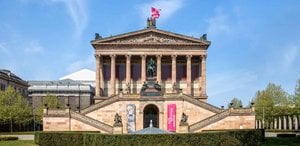 老国家美术馆 |
柏林 | 2 | Forest and mountain, Spree River landscape in humid weather |
 巴伐利亚州绘画收藏馆 |
慕尼黑 | 1 | View of Smyrna, seen from the caravan route |


Bedouin Encampment near Cairo (1849)。紧随其后的是 View of Smyrna, seen from the caravan route (1845) 和 Fishermen off the Coast of Korfu (1847)。
31岁:Bedouin Encampment near Cairo创作于1849,Max Schmidt出生于1818。
我们的目录收录了 Max Schmidt 的 9 件作品,创作时间从 1844 年至 1877 年。
其中大部分藏于 老国家美术馆 (柏林) 及 巴伐利亚州绘画收藏馆 (慕尼黑)。上表逐一列出了这些博物馆。
在 1840s 期间:本页 9 件作品中有 4 件创作于该时期,其中包含 Bedouin Encampment near Cairo。
本页最早的作品创作于 Cairo (1844),最晚于 Spree River landscape in humid weather (1877)。
Forest and mountain 及 Spree River landscape in humid weather 是该页面中由 老国家美术馆, 柏林 收藏的 2 件作品之一。
是的。本页面的每一幅画作均可在画作详情页中,根据您选择的尺寸,定制为博物馆级手工油画复制品或艺术精美版画。
Born in the heart of Berlin in 1818, Max Schmidt emerged as a profound voice within the German landscape tradition, a painter whose brush captured not merely the topography of the earth, but the very soul of the light that graces it. His early years in the Province of Brandenburg provided a foundational connection to the German terrain, yet his artistic spirit was far from provincial. Under the rigorous tutelage of masters such as Carl Joseph Begas and Wilhelm Schirmer at the Berlin Art Academy, Schmidt developed a technical precision that would later serve as the vessel for his more expansive, romantic explorations of the world beyond Europe's borders.
The trajectory of Schmidt’s career is marked by a fascinating duality between the exotic and the familiar. For much of his early professional life, his gaze was drawn toward the sun-drenched landscapes of Egypt and Greece. This deep familiarity with the classical and oriental worlds infused his work with a unique palette and a sense of ancient grandeur. His subjects were often imbued with a sense of timelessness, reflecting the monumental architecture and sweeping vistas of the Mediterranean and North Africa. It was this period of exploration that allowed him to master the interplay of light and shadow, creating compositions that felt both structurally sound and atmospherically ethereal.
While his early inclinations leaned toward the exotic, a significant shift occurred around 1854. Having spent years immersed in the aesthetics of distant lands, Schmidt turned his attention back to his native Germany with a renewed and transformative perspective. No longer merely documenting scenery, he began to treat German landscapes with what contemporaries described as a rare poetic feeling. This evolution saw him moving away from the purely descriptive toward a more emotive interpretation of nature. His works from this era, such as the celebrated “Wood and Mountain” (1868) and “A View on the Spree” (1877), demonstrate an ability to find the sublime within the local, elevating the familiar forests and rivers of his homeland to the level of high art.
Schmidt’s professional journey also saw him ascending to positions of significant academic influence. His tenure as an instructor at the School of Arts in Weimar and later at the Königsberg Academy allowed him to shape the next generation of German painters. He was not merely a practitioner of his craft but a scholar of it, evidenced by his written contribution, Die Aquarellmalerei, which served as a vital treatise on the nuances of watercolor painting. This scholarly depth ensured that his influence extended beyond the canvas and into the very pedagogy of nineteenth-century German art.
The legacy of Max Schmidt resides in the delicate balance he maintained between academic rigor and romantic sensibility. His ability to weave together the monumental scale of Orientalist themes with the intimate, poetic nuances of German landscape painting makes him a singular figure in the history of nineteenth-century art. His works, now held in prestigious collections such as the Berlin National Gallery, continue to resonate with viewers through their mastery of atmosphere and their profound respect for the natural world.
To reflect on his life's work is to trace a map of artistic discovery: