Mário Cesariny de Vasconcelos: A Surrealist Poet and Painter of Portugal
Born in Lisbon, Portugal, on August 9th, 1923, into a family marked by both privilege and quiet turmoil, Mário Cesariny de Vasconcelos emerged as one of the most distinctive voices of Portuguese surrealism. His life, inextricably linked to the political landscape of his nation – particularly under the authoritarian rule of António de Oliveira Salazar – fueled a rebellious spirit that permeated his art, poetry, and ultimately, his very being. More than just an artist, Cesariny was a chronicler of his time, a subversive voice challenging societal norms through dreamlike imagery and provocative verse.
Cesariny’s early life wasn't defined by idyllic comfort. His father, Viriato de Vasconcelos, a skilled goldsmith, and his mother, María de las Mercedes Cesariny, a Spanish woman of French descent, experienced marital difficulties that cast a shadow over the family home. This atmosphere of instability profoundly shaped young Mário’s perspective, fostering a sense of alienation and a desire to escape the confines of conventional expectations. He found solace in art from an early age, developing a natural talent for drawing and painting – skills he honed largely through self-study, inspired by visits to the Gulbenkian Museum Foundation in Lisbon, a treasure trove of artistic heritage.
The Surrealist Awakening and Lisbon’s Underground
Cesariny's immersion into the surrealist movement began around 1945 or 1946, sparked by his discovery of Maurice Nadeau’s *History of Surrealism*. This seminal work introduced him to the principles of automatic writing and dream imagery – techniques that resonated deeply with his own rebellious sensibilities. He quickly joined the burgeoning Lisbon Surrealist Group, led by Alexandre O'Neill, becoming a central figure in Portugal’s surrealist scene. This group operated largely underground, challenging the conservative values of Salazar’s regime through their art and poetry. The political climate demanded secrecy; any overt expression of dissent could lead to severe repercussions from the PIDE (Portuguese Secret Police).
The period between 1960 and 1974 was particularly fraught for Cesariny. His outspoken views, coupled with his homosexuality – a taboo subject in Portugal at the time – made him a target of surveillance by the PIDE. He frequently found himself on the police’s radar, forced to live under constant threat and often seeking refuge in exile in Great Britain and France. Despite these pressures, he continued to create, using his art as a form of resistance—a defiant assertion of freedom against oppression.
A Poetic and Pictorial Universe
Cesariny’s artistic output spanned both poetry and painting, though his poetic work ultimately became more widely recognized. His poems are characterized by their dreamlike quality, often blending personal experiences with social commentary and surrealist imagery. Recurring themes include love, freedom, and the absurdity of existence—all viewed through a lens of critical observation. Titles like “you are welcome to elsinore” reveal his willingness to confront uncomfortable truths about Portuguese society under Salazar’s rule.
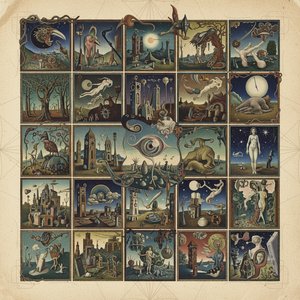
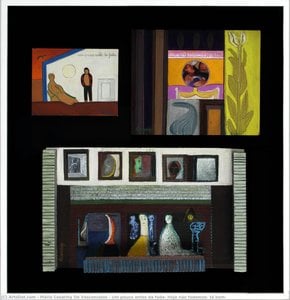
His paintings, while less frequently exhibited than his poetry, are equally compelling. Rather than adhering to traditional painting techniques, Cesariny employed collage, assemblage, and found objects to create layered, evocative works that defy easy categorization. He described his artistic process as a circular one—poetry informing painting, and vice versa—a testament to the interconnectedness of his creative endeavors. Notable works include “Untitled (DD2CNP)” and “National Theatre and Dance Museum,” both showcasing his distinctive use of color, texture, and symbolic imagery.
Legacy and Recognition
Mário Cesariny de Vasconcelos passed away on November 26th, 2006, leaving behind a rich legacy as a poet and painter who challenged the status quo. His work continues to resonate with audiences today, offering a poignant reflection on themes of freedom, identity, and the complexities of human experience. His contributions have been acknowledged by platforms like WahooArt.com and featured in collections such as the National Theatre and Dance Museum in Lisbon and the Rede Portuguesa de Arte Contemporânea a Norte in Porto. Cesariny’s art remains a vital part of Portuguese cultural heritage—a testament to the power of creativity to transcend political boundaries and inspire generations.
Important Dates
- August 9, 1923 (Birth)
- November 26, 2006 (Death)
Notable Works
- Untitled (DD2CNP)
- National Theatre and Dance Museum
Museums and Collections
- National Theatre and Dance Museum, Lisbon, Portugal
- Rede Portuguesa de Arte Contemporânea a Norte, Porto, Portugal