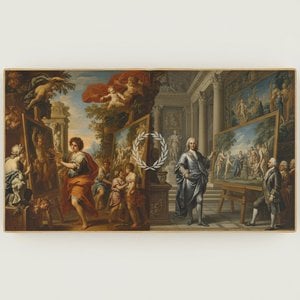
The Enigmatic Vision of Jean Fouquet: A Master of Northern Gothic
Jean Fouquet (c. 1420 – c. 1510) remains one of the most captivating and perplexing figures in the history of European art. Born in Tournai, a vibrant crossroads of cultures within the Burgundian Netherlands, his life and artistic output defy easy categorization, placing him squarely at the fascinating intersection of Gothic, Early Renaissance, and even elements of courtly intrigue. While largely overlooked during his lifetime, Fouquet’s intensely personal and symbolic paintings have since garnered immense critical acclaim, recognized for their unparalleled psychological depth, intricate detail, and a haunting beauty that continues to resonate with viewers centuries later. His work offers a unique window into the world of late medieval nobility, blending religious iconography with secular themes and a distinctly humanist sensibility – a foreshadowing of artistic developments to come.
Early Life and Mysterious Origins
The precise details of Fouquet’s early life are shrouded in mystery, contributing significantly to his enduring allure. Records are scarce, and much of what we know is pieced together from scholarly conjecture and the stylistic analysis of his paintings. He likely received training in Tournai, a center renowned for its manuscript illumination and panel painting during this period. However, unlike many artists of his time who worked within established workshops, Fouquet seems to have operated largely independently, creating works that bear little resemblance to the prevailing artistic conventions of the Low Countries. There’s speculation he may have spent time in Italy, particularly Florence, absorbing the influence of early Renaissance masters like Donatello and Masaccio – a theory supported by certain stylistic parallels in his later work, notably the use of perspective and naturalistic depiction of figures. The lack of documented patronage also suggests a unique position within the artistic landscape; he wasn’t tied to a wealthy family or guild, allowing him considerable freedom but also placing him at a disadvantage.
A World of Intrigue: Courtly Scenes and Symbolic Narratives
Fouquet's paintings are dominated by scenes of courtly life – banquets, tournaments, dances, and intimate gatherings—populated by richly dressed nobles, musicians, and entertainers. These aren’t simply depictions of aristocratic leisure; they are meticulously constructed narratives laden with symbolism. He frequently employed a complex system of allegorical figures, animals, and objects to convey moral lessons, political commentary, or personal reflections. The presence of female characters, often depicted in ambiguous roles – sometimes as virtuous maidens, other times as seductive temptresses—adds another layer of complexity to his work. The “Dance of Death” cycle, a series of panels depicting the grim procession of skeletons, is perhaps his most famous achievement, showcasing his mastery of detail and his ability to infuse even the darkest subject matter with a haunting beauty. The figures are rendered with astonishing realism, their faces conveying a range of emotions—joy, sorrow, fear, and resignation—that speaks volumes about the human condition.
Technique and Style: A Synthesis of Gothic and Renaissance Elements
Fouquet’s artistic style is characterized by a remarkable synthesis of Gothic and Early Renaissance influences. He retained the rich colors, intricate detailing, and elongated figures typical of late Gothic painting, while simultaneously incorporating elements of perspective, naturalistic representation, and a greater emphasis on psychological realism— hallmarks of the burgeoning Renaissance. His use of oil paint, though relatively rare at the time, allowed him to achieve subtle gradations of tone and color, adding depth and luminosity to his paintings. He was a master of *disegno*, the Italian technique of drawing as an independent art form, evident in the precise rendering of drapery, hands, and facial features. Fouquet’s meticulous attention to detail—the rustle of silk robes, the gleam of armor, the expression on a noble's face—is unparalleled, creating a world of astonishing immediacy and verisimilitude.
Legacy and Historical Significance
Despite his relatively small body of work (only around 30 paintings are definitively attributed to him), Jean Fouquet’s influence has been profound. He is considered one of the most important figures in Northern European painting, bridging the gap between the late Gothic and Early Renaissance periods. His innovative use of symbolism, psychological realism, and his unique blend of artistic styles paved the way for subsequent generations of artists. His work continues to fascinate art historians and viewers alike, prompting ongoing debate about his origins, his motivations, and the meaning of his enigmatic visions. Fouquet’s paintings offer a rare glimpse into the world of late medieval nobility—a world of courtly intrigue, religious devotion, and artistic experimentation—and remain a testament to the enduring power of human creativity. His legacy lies not just in the beauty of his art, but also in the mysteries that surround his life and work, ensuring that he will continue to be a subject of scholarly inquiry and artistic admiration for centuries to come.
由 WahooArt.com 编辑团队撰写
鉴赏力测试
每道题只有一个正确答案。
题目 1:
According to the provided biographies, which artist is known for their work featured in ‘The World Goes Pop’ exhibition at Tate Modern?
题目 2:
What is a key characteristic of an artist’s bio, as described in the ‘How to Write an Artist Bio’ article?
题目 3:
The Tate Modern exhibition ‘The World Goes Pop’ included artists from how many different countries?
题目 4:
According to the provided text, what is the primary purpose of an artist bio?
题目 5:
Which of the following best describes the length typically recommended for an artist bio?
Journey through the ethereal beauty of Sandro Botticelli's greatest works. From The Birth of Venus to his mythic Renaissance masterpieces, explore the stories and techniques behind these icons. Find museum-quality art reproductions for your decor. Discover all masterpieces on WahooArt.com
Explore the life & art of Simon Vouet, a pivotal French Baroque painter who introduced Italian styles to France. Discover his masterpieces and lasting influence on 17th-century art.