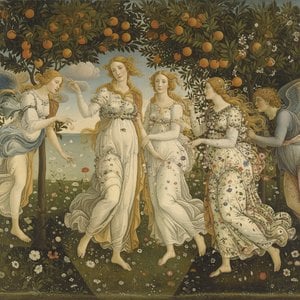
The Soul of Modernism: The Life and Legacy of Mario Sironi
In the heart of the Emilia-Romagna region, amidst the rolling hills and the storied traditions of Langhirano, a profound artistic journey began. Mario Sironi, a figure whose name remains etched in the annals of Italian Modernism, was born into a world where craftsmanship and a deep connection to the land were paramount. This early immersion in the textures of his homeland—a place famous for its agricultural richness and the delicate art of prosciutto production—would later manifest in an aesthetic that balanced raw, industrial strength with a haunting, spiritual depth. Nurtured by the hands of his father, Giuseppe Sironi, a sculptor, Mario’s artistic sensibilities were forged in the crucible of classical form and tactile reality, setting the stage for a career defined by constant metamorphosis.
Sironi's early education at the Accademia di Belle Arti in Bologna served as his gateway to the avant-garde revolutions sweeping through Europe. During the first decade of the twentieth century, he became a vital participant in the Futurist movement. Inspired by the electric energy of Filippo Tommaso Marinetti, Sironint explored the frenetic pulse of urban life, utilizing collage and assemblage to capture the fragmented, high-speed reality of a world being reshaped by technology. His canvases from this era were vibrant and chaotic, mirroring the fractured perceptions of an industrializing society that sought to break free from the weight of tradition.
Evolution Through Shadow and Form
As the echoes of World War I reverberated across the continent, Sironi’s artistic language underwent a profound transformation. The dynamism of Futurism gave way to the analytical rigor of Cubism. This period was marked by a retreat into more somber, monochromatic palettes and geometric abstractions. It was no longer about the speed of the machine, but rather the psychological weight of existence. Through these structured forms, Sironi confronted the trauma and disillusionment of the post-war era, creating landscapes that felt less like physical locations and more like internal, psychological territories where memory and grief resided.
The zenith of his creative vision arrived during his Metaphysical period. Drawing inspiration from the philosophical depths of Giorgio Hegel and the biological intricacies of Ernst Haeckel, Sironi sought to pierce the veil of the visible world. His paintings became windows into a realm of profound introspection and spiritual contemplation. In these works, figures appear bathed in an ethereal, diffused light, suspended in a state of existential stillness. This period solidified his reputation as a master of atmosphere, capable of evoking a sense of the infinite within the confines of a single, silent frame.
A Lasting Impression on Italian Art
The later years of Sironi’s life were marked by a complex navigation of the shifting political and social landscapes of Italy. Despite the challenges of censorship and the turbulent decades following the war, his commitment to the social dimension of art remained steadfast. He continued to explore themes of labor, urbanity, and the human condition, ensuring that his work remained deeply rooted in the lived experience of his era.
Today, the significance of Mario Sironi extends far beyond the borders of Italy. His ability to synthesize the radical experimentation of the avant-garde with a profound sense of classical gravity makes him a cornerstone of modern art history. His legacy is found in:
- The Synthesis of Movements: His unique ability to bridge the gap between the kinetic energy of Futurism and the contemplative stillness of Metaphysical art.
- Social Engagement: A career-long dedication to reflecting the industrial, social, and psychological realities of the twentieth century.
- Technical Mastery: An enduring influence on the use of light, shadow, and geometric structure to convey complex emotional states.
Sironi remains a monumental figure, an artist who captured not just the changing face of Italy, but the very essence of the modern soul.
问答详情
在哪里可以查看 Langhirano 作品的色彩风格?
Langhirano 作品的色彩特征展示在艺术家的 色彩基因 页面上。
在哪里可以按色调浏览 Langhirano 的作品?
若要按特定色调查找 Langhirano 的作品,请访问艺术家的 按色调浏览 页面。
我可以通过主题来探索 Langhirano 的作品吗?
Langhirano 的 主题索引 旨在通过主题对艺术家的作品进行分类索引。