The Aristocratic Eye: Jacques-Charles Oudry and the Rococo Celebration of Nature
Jacques-Charles Oudry, born in Paris in 1720 and passing away in 1778, stands as a pivotal figure bridging the traditions of Flemish animal painting with the refined elegance of the French Rococo. While often categorized solely as an *animalier*, this designation scarcely captures the breadth of his talent or the significant role he played within the artistic circles of Louis XV’s court. Oudry wasn't merely depicting creatures; he was crafting narratives, embodying aristocratic leisure, and elevating a genre previously considered secondary to the status of history painting. His life unfolded during a period of shifting aesthetic values, where lightness, grace, and an appreciation for the natural world began to eclipse the more somber tones of the Baroque era.Early Training and the Influence of Flemish Masters
Oudry’s artistic journey commenced under the tutelage of his father, Jacques Oudry I, a respected painter specializing in still life and animal subjects. This familial grounding proved crucial, instilling within him a meticulous attention to detail and an early mastery of technique. However, it was his apprenticeship with Jean-Baptiste Pater – himself influenced by Flemish masters like Frans Snyders and Paul de Vos – that truly shaped his artistic direction. Pater’s vibrant compositions featuring playful animals in idyllic landscapes resonated deeply with the burgeoning Rococo sensibility. Oudry absorbed this influence, developing a similar facility for capturing movement, texture, and the inherent charm of the animal kingdom. He initially worked extensively as a copyist, honing his skills by reproducing works from the royal collections, particularly those of the Flemish painters. This rigorous training provided him with an unparalleled understanding of anatomy, color theory, and composition – foundations that would later distinguish his own unique style.Royal Commissions and the Height of His Career
Oudry’s talent soon attracted the attention of the court. In 1743, he was accepted into the Académie Royale de Peinture et Sculpture, a testament to his growing reputation. However, it was his appointment as *peintre ordinaire du roi* (official painter to the king) in 1752 that propelled him to prominence. This position afforded him access to the royal menagerie at Versailles and numerous commissions depicting scenes of hunting, falconry, and domestic animals. These weren’t simply records of sporting activities; they were carefully constructed allegories celebrating the pleasures of aristocratic life. His paintings for the *Cabinet des Singuliers* at Versailles, a series showcasing exotic birds and mammals, exemplify this approach. Each animal is rendered with astonishing realism, yet presented within an idealized setting that speaks to wealth, power, and refined taste. The meticulous detail extended beyond mere representation; Oudry’s understanding of animal behavior was remarkable, lending authenticity and vitality to his compositions. He also undertook significant tapestry designs for the Gobelins Manufactory, further disseminating his style and imagery throughout France's elite circles.Beyond Hunting Scenes: A Broader Artistic Scope
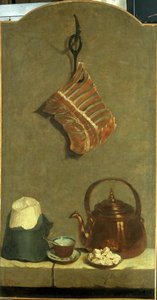
While Oudry is most celebrated for his hunting scenes, limiting him to this genre overlooks the diversity of his artistic output. He also produced portraits – often incorporating animals as symbolic elements – still lifes demonstrating a keen eye for texture and light, and even mythological paintings where animals played prominent roles. His portraiture, though less numerous than his animal studies, reveals a sensitivity to character and an ability to capture the nuances of human expression. Furthermore, his work wasn’t solely confined to canvas; Oudry was also a skilled engraver, producing prints that further popularized his designs among a wider audience. He even ventured into stage design, creating elaborate backdrops for courtly performances. This versatility underscores his position as a truly multi-faceted artist capable of excelling in various mediums and genres.Legacy and Historical Significance
Jacques-Charles Oudry’s influence extended far beyond the confines of 18th-century France. His naturalistic depictions of animals, combined with his Rococo sensibility, profoundly impacted subsequent generations of artists. He helped elevate animal painting to a new level of respectability, paving the way for later *animaliers* like Jean-Léon Gérôme and Rosa Bonheur. More broadly, Oudry’s work embodies the spirit of the Rococo – its celebration of pleasure, elegance, and an idealized vision of nature. His paintings offer a fascinating glimpse into the aristocratic world of pre-revolutionary France, capturing not only the beauty of the animal kingdom but also the values and aspirations of the elite who commissioned them. He remains a significant figure in art history, celebrated for his technical mastery, artistic versatility, and enduring contribution to the Rococo aesthetic.问答详情
Jacques Charles Oudry 属于哪些艺术流派?
全部流派 页面按艺术流派对 Jacques Charles Oudry 的作品进行了分类。
我可以通过色谱来探索 Jacques Charles Oudry 的作品吗?
Jacques Charles Oudry 的 色彩索引 页面按色彩对艺术家的作品进行了分类整理。
Jacques Charles Oudry 的艺术风格是如何随时间演变的?
您可以在艺术家的 艺术历程 页面上查阅 Jacques Charles Oudry 作品的编年史,其作品按创作顺序分章节依次呈现。