Gianfranco Ferré: The Architect of Fashion
Gianfranco Ferré, a name synonymous with Italian elegance and architectural precision, left an indelible mark on the world of fashion during his tragically short but intensely influential career. Born in Legnano, Italy, in 1944, Ferré’s journey from aspiring architect to celebrated designer is a testament to a restless intellect and a profound understanding of form and space – qualities he seamlessly translated into breathtaking garments. His legacy extends far beyond mere clothing; it represents a shift in how fashion was conceived, viewed, and experienced, bridging the gap between art, design, and the very fabric of daily life.
Ferré’s early life was steeped in a rigorous academic environment. He initially pursued architecture at the Polytechnic University of Milan, developing a meticulous approach to structure and composition that would later inform his designs. This architectural background proved pivotal, imbuing his creations with a sense of geometric clarity, structural integrity, and an almost sculptural quality. Unlike many of his contemporaries who embraced fleeting trends, Ferré sought permanence and timelessness in his work – a desire reflected in the enduring appeal of his collections decades after their creation.
Early Career & The Rise of Gianfranco Ferré S.p.A.
Ferré’s foray into fashion began not with haute couture, but with accessories—belts and brooches—in the early 1970s. These seemingly modest creations quickly garnered attention from influential figures in the industry, including Walter Albini, a pioneer of Italian prêt-à-porter. This initial success paved the way for the establishment of Gianfranco Ferré S.p.A. in 1978, marking the official launch of his eponymous brand. The early years were characterized by a deliberate and considered approach – Ferré wasn’t interested in chasing trends; he was building a distinct aesthetic rooted in precision, restraint, and an underlying sense of luxury.
Crucially, Ferré maintained his own design studio while serving as the creative director for Christian Dior from 1989 to 1996. This dual role allowed him to cultivate both his signature style and to inject a new dynamism into one of the world’s most prestigious fashion houses. His time at Dior was marked by a renewed focus on quality, craftsmanship, and a subtle yet powerful elegance – qualities that resonated deeply with discerning clientele.
Notable Designs & The Influence of Geometry
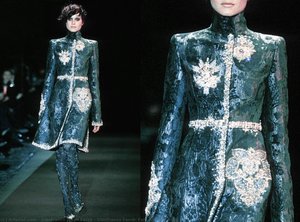
Ferré's designs are instantly recognizable for their geometric precision, clean lines, and masterful use of fabric. His collections consistently showcased a sophisticated restraint, favoring understated luxury over ostentatious display. Key examples illustrate his unique vision: the “Blu 4” Spring/Summer 1977 collection, an early demonstration of his architectural influence in fashion, featured sharply tailored silhouettes and bold color combinations; the “Runway Photograph of Gianfranco Ferré, Spring/Summer 1984 Collection,” a testament to his ability to seamlessly blend fashion with art; and the iconic “Lady Dior” handbag from 1994, a design that became synonymous with elegance and sophistication.
His approach wasn’t simply about creating beautiful clothes; it was about crafting wearable sculptures – garments that possessed both structural integrity and an inherent sense of movement. He frequently employed innovative techniques, such as the use of pleats and draping to create dynamic forms, further emphasizing his architectural sensibilities.
Legacy & Lasting Impact
Gianfranco Ferré’s influence on fashion is profound and enduring. He demonstrated that design could be both intellectually stimulating and aesthetically pleasing – a rare combination in the often-superficial world of high fashion. His commitment to quality, craftsmanship, and timelessness has inspired generations of designers, while his architectural approach continues to inform contemporary trends.
Despite his untimely death in Milan in 2007, Ferré’s legacy remains vibrant. The Gianfranco Ferré Research Center at the Polytechnic University of Milan serves as a testament to his enduring influence and a repository for his extensive archive of sketches and designs. His work continues to be celebrated and studied, solidifying his position as one of the most important and innovative figures in the history of Italian fashion – truly, the architect of style.