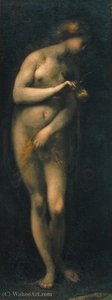
The Sacred Brush of Francesco Montelatici: A Life Devoted to Divine Representation
Francesco Montelatici, a name perhaps less celebrated than some of his Renaissance contemporaries, nevertheless occupies a significant niche in the history of Italian religious painting. Born and active primarily during the 17th century – precise dates remain somewhat elusive, adding to the mystique surrounding this artist – Montelatici dedicated his considerable talent to capturing the fervor and emotional depth of Catholic devotion on canvas. While biographical details are sparse, the sheer volume and quality of works attributed to him suggest a prolific career centered in Italy, likely with strong ties to religious orders and aristocratic patrons who sought art for private chapels and devotional spaces. He wasn’t merely replicating scenes; he was crafting visual experiences intended to inspire faith and contemplation. His paintings aren't grand statements meant for public display as much as intimate dialogues between the viewer and the divine.
Early Influences and Artistic Development
Montelatici’s artistic formation likely began within a traditional workshop environment, absorbing the prevailing styles of his time. The influence of Caravaggio is palpable in many of his works – not necessarily in direct imitation of the master's dramatic *tenebrism* (though strong contrasts between light and shadow are frequently employed), but rather in a shared commitment to realism and emotional intensity. However, Montelatici’s style quickly evolved beyond simple emulation. He demonstrated a particular affinity for the Venetian school, evident in his rich color palettes and soft modeling of forms.
Early Training: Likely apprenticed within an established Italian workshop.
Venetian School Influence: Adopted rich colors and soft modeling techniques characteristic of Venetian masters like Titian and Veronese.
His early works often depict smaller-scale devotional scenes, focusing on the lives of saints and key moments in biblical narratives. These paintings reveal a meticulous attention to detail – the textures of fabrics, the expressions on faces, the symbolic objects carefully placed within the composition. It’s clear from these initial efforts that Montelatici possessed a keen eye for observation and a desire to imbue his subjects with a sense of tangible humanity.
Major Achievements: Portraits of Faith and Piety
Montelatici's reputation rests largely on his portraits, particularly those depicting saints – especially Saint Catherine of Alexandria. These are not idealized representations; they are deeply personal studies of faith and inner life. He masterfully captured the vulnerability and strength of these figures, often portraying them in moments of quiet contemplation or profound spiritual experience. The artist’s skill extended beyond portraiture to include larger-scale altarpieces and narrative scenes, frequently commissioned for churches and private chapels throughout Italy.
His signature style involved a harmonious blend of realism, emotional intensity, and symbolic detail. He wasn't interested in simply depicting the outward appearance of his subjects; he sought to reveal their inner spiritual state. This is particularly evident in the way he used light – not merely as a means of illumination, but as a metaphor for divine grace. The soft glow that often surrounds his figures creates an atmosphere of reverence and mystery, drawing the viewer into the scene and inviting them to share in the subject’s devotion.
Historical Significance and Legacy
While Montelatici may not be a household name, his work provides valuable insight into the religious culture of 17th-century Italy. His paintings reflect the Counter-Reformation's emphasis on emotional piety and the importance of visual imagery in promoting Catholic doctrine. He catered to a clientele deeply invested in personal faith and sought art that would enhance their devotional practices.
Montelatici’s legacy lies not in groundbreaking innovation, but in his consistent dedication to quality craftsmanship and profound spiritual sensitivity. His paintings are testaments to the power of art to inspire faith, evoke emotion, and connect viewers with the divine. Though research into his life remains ongoing, each newly attributed work further solidifies his position as a significant – and deeply moving – figure within the Italian Renaissance artistic landscape. He represents a quieter voice in a period filled with giants, but one whose message of devotion continues to resonate centuries later.
Explore the profound mastery of Caravaggio's tenebrism. Discover how his dramatic use of chiaroscuro revolutionized Baroque art through intense emotion and realism. An expert guide for classic art enthusiasts seeking to understand the power of shadow in historical masterpieces.
Journey through the divine elegance of Duccio di Buoninsegna. Explore 25 iconic Sienese masterpieces, from the Maestà to the Rucellai Madonna. Find inspiration for museum-quality art reproductions and timeless decor. Discover all masterpieces on WahooArt.com.
Hagar and the Angel, Joseph and the wife of Potiphar, Aurora Surrounded by Genii
Cecco Bravo 的作品具有怎样的色调特征?
earthy
Cecco Bravo 的出生时间与地点是哪里?
1601, Florence, Italy
谁是 Cecco Bravo?
The Sacred Brush of Francesco Montelatici: A Life Devoted to Divine Representation
Francesco Montelatici, a name perhaps less celebrated than some of his Renaissance contemporaries, nevertheless occupies a significant niche in the history of Italian religious painting. Born and active primarily during the 17th century – precise dates remain somewhat elusive, adding to the mystique surrounding this artist – Montelatici dedicated his considerable talent to capturing the fervor and emotional depth
Cecco Bravo 还有哪些其他称呼?
Francesco Montelatici, Il Cecco Bravo, Francesco Montlatici, Francesco Montilatici, Fr. Montelatrici, detto Cecco Bravo Francesco Montelatici, Ceco Bravo, Montelatto, Чекко Браво, 切科·布拉沃