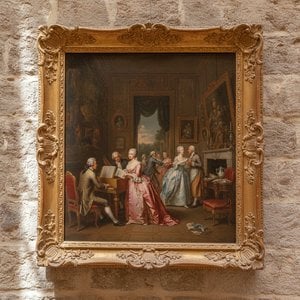
Alexander George Fraser (1786-1865): A Highland Visionary
Alexander George Fraser (1786-1865) stands as a significant figure in Scottish genre painting of the early 19th century, celebrated for his depictions of everyday life and spirited highland pursuits. Born in Scotland, Fraser’s artistic journey unfolded amidst the burgeoning Romantic movement, shaping him into an artist deeply attuned to both domestic tranquility and the rugged beauty of the Highlands. His works at the Royal Academy cemented his reputation as a meticulous observer and skillful painter, capturing moments of rural charm with remarkable detail and sensitivity.
Early Life & Training: Fraser’s formative years were spent in Edinburgh, where he received instruction from John Ramsay, a prominent landscape artist who instilled in him a foundational understanding of tonal painting and compositional principles. This early influence would prove crucial to his later artistic endeavors.
Royal Academy Years: Fraser gained considerable acclaim during his tenure at the Royal Academy between 1858 and 1862. During this period, he produced numerous canvases showcasing scenes from rural Scotland—particularly Highland sports like archery and shooting—and intimate interiors populated by families engaged in domestic activities.
Style & Technique: Fraser’s artistic style is characterized by a restrained palette dominated by muted browns, greys, and ochres, reflecting the atmospheric conditions prevalent in his highland subjects. He employed meticulous brushwork to convey texture and depth, achieving an unparalleled level of realism—particularly evident in his depictions of Highland landscapes and portraits.
Notable Works: Among Fraser’s most celebrated paintings are “Opening Oysters,” a lively portrayal of a convivial seaside gathering, and “Portrait Of A Young Man,” which exemplifies the classical tradition of portraiture with its elegant pose and subtle tonal gradations. These pieces exemplify his ability to capture not only visual accuracy but also psychological nuance.
Legacy & Influence: Alexander Fraser’s contribution to Scottish art is undeniable. His meticulous observation and masterful technique established him as a pioneer in genre painting, influencing subsequent generations of artists who sought to emulate his understated elegance and profound connection to the natural world. He remains an enduring symbol of Scottish artistic excellence during the Romantic era.
Connections & Influences
Fraser’s artistic sensibilities were undoubtedly shaped by the prevailing intellectual currents of his time—the Romantic movement—which championed emotion, imagination, and a reverence for nature. Like many artists of his generation, he drew inspiration from the picturesque landscapes of Scotland, mirroring the aesthetic ideals promoted by painters such as George Caleb Bingham and Thomas Moran. Furthermore, Fraser’s meticulous attention to detail aligns with the stylistic conventions established by Rembrandt Harmenszoon van Rijn and Joshua Reynolds, demonstrating a deep understanding of artistic history.
Further Exploration
To delve deeper into Alexander Fraser's artistic achievements, consider examining his works at the Royal Academy and exploring scholarly analyses focusing on his tonal painting technique and compositional strategies. Examining Simon Fraser, 11th Lord Lovat’s biography can provide insight into the broader social context of Fraser’s life and artistic pursuits—a connection underscored by their shared heritage and involvement in Jacobite sympathies.
Explore the profound beauty of genre painting. From Dutch Golden Age masters to global traditions, discover how artists capture the essence of everyday life through masterful realism and timeless storytelling.