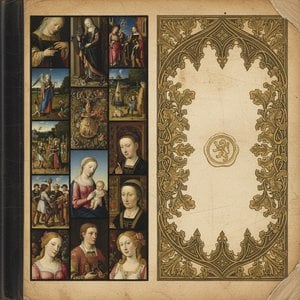
Aert van Ortkens: A Dramatic Voice in the Early Netherlandish Tradition
The name Aert van Ortkens, though perhaps less immediately recognizable than his contemporaries like Jan van Scorel or Geertgen tot Sint Jans, represents a significant and compelling figure within the landscape of 16th-century Dutch painting. Born around 1490 in Nijmegen, Netherlands, Van Ortkens emerged during a period of artistic transition, bridging the late medieval tradition with the burgeoning influence of Renaissance humanism. His relatively short life – he died in 1536 – belies a concentrated body of work characterized by intense emotionality, dramatic narrative, and a distinctly Flemish sensibility. While biographical details remain scarce, piecing together his career reveals an artist deeply engaged with religious themes and skilled in conveying complex psychological states through expressive figures and carefully constructed compositions. He is known under several variations of his name – Aert Of Nijmegen, Aert Van Hort, Arnoud Van Nijmegen, Arnt Van Ort Van Nijmegen, to name a few – reflecting the common practice of the time for artists to be identified by their place of origin or workshop affiliations.Early Life and Artistic Formation
Van Ortkens’s early training remains largely undocumented, but it is reasonable to assume he began his artistic journey within the established workshops of Nijmegen. The city itself was a thriving center for religious life and art production, providing fertile ground for an aspiring painter. It's likely that he absorbed the stylistic conventions prevalent in the region – a meticulous attention to detail, rich color palettes, and a focus on realistic depictions of figures and textures. However, his work suggests more than just local influence; a clear debt to early Netherlandish masters like Rogier van der Weyden and Hugo van der Goes is evident. These artists’ emphasis on emotional realism and their ability to imbue religious scenes with profound human drama undoubtedly shaped Van Ortkens's developing style. The impact of the Antwerp school, particularly the work of painters active there in the early 16th century, also appears to have played a role, as he later became associated with that city.A Style Defined by Narrative Intensity
Van Ortkens’s paintings are immediately striking for their dramatic intensity and psychological depth. He specialized in biblical scenes, often choosing subjects laden with moral or emotional weight. His most celebrated work, Susanna & the Elders, exemplifies his artistic strengths. The composition is dynamic, focusing on the moment of Susanna's distress as she is spied upon by the two lecherous elders. Van Ortkens masterfully conveys her vulnerability and fear through expressive gestures, carefully rendered facial expressions, and a palpable sense of claustrophobia within the garden setting. This isn’t merely a depiction of an event; it’s an exploration of temptation, judgment, and the power dynamics between men and women. His use of light and shadow further enhances the emotional impact, highlighting key figures and creating a theatrical atmosphere. Other notable works include depictions of The Last Judgment, scenes from the life of Christ, and various representations of saints.Antwerp and Later Years
Around 1520, Van Ortkens moved to Antwerp, then one of the most important artistic centers in Northern Europe. His association with this city marked a turning point in his career. He became a member of the Guild of Saint Luke in 1523, solidifying his position as a professional artist. While in Antwerp, he continued to produce altarpieces and devotional panels, catering to the growing demand for religious art among the wealthy merchant class. His style evolved during this period, becoming more refined and incorporating elements of Italian Renaissance painting that were beginning to circulate in Northern Europe. However, he never fully abandoned his distinctly Flemish roots, maintaining a focus on emotional realism and meticulous detail. The influence of artists like Quentin Matsys, active in Antwerp at the same time, is also discernible in his later works.Legacy and Historical Significance
Despite not achieving widespread fame during his lifetime, Aert van Ortkens left behind a compelling body of work that continues to resonate with viewers today. His paintings offer valuable insights into the religious beliefs and artistic sensibilities of the early 16th century Netherlands. He stands as an important link between the late medieval tradition and the emerging Renaissance style, demonstrating a unique ability to blend emotional intensity with technical skill. Today, his works are held in prominent museum collections, including the Museum Smidt Van Gelder, where they provide a glimpse into the dramatic world of Early Netherlandish painting. His contribution lies not in groundbreaking innovation but in the powerful and moving expression of established themes – a testament to his mastery of narrative and psychological portraiture within the context of his time.- Born: c. 1490, Nijmegen, Netherlands
- Died: 1536
- Known for: Dramatic biblical scenes, particularly 'Susanna & the Elders'
- Style: Flemish painting, Early Netherlandish, influenced by Rogier van der Weyden and Hugo van der Goes.
- Guild Membership: Guild of Saint Luke, Antwerp (1523)
问答详情
在哪里可以按色调浏览 Aert Van Ortkens 的作品?
您可以在Aert Van Ortkens的按色调分类页面上,按色调浏览其作品。
可以按媒介类型浏览 Aert Van Ortkens 的作品吗?
全部媒介 页面按技法对 Aert Van Ortkens 的作品进行了分类。
在哪里可以找到关于Aert Van Ortkens作品的相关统计数据?
Aert Van Ortkens 的 访问统计 页面展示了基于 本网站 上列出的艺术家作品所计算出的统计数据。