The Pioneering Vision of Aerofilms Ltd: A History Written in the Skies
Aerofilms Ltd, established on May 9th, 1919, wasn’t merely a company; it was the birth of an entirely new perspective. Emerging from the aftermath of the First World War, and based initially in Edgware, Greater London, Aerofilms represented a bold attempt to translate the military technology of aerial reconnaissance into a commercially viable art form and scientific tool. The founders – Francis Lewis Wills, a trained architect who had served as an observer with the Royal Naval Air Service, and Claude Grahame-White, a celebrated aviation pioneer famed for his groundbreaking 1910 night flight from London to Manchester – possessed a unique synergy of skills and vision. Herbert William Matthews, another architect, also played a crucial role in the company’s early development. Wills, driven by an ambition to apply wartime photographic techniques to peacetime applications, provided the core impetus, while Grahame-White brought both financial backing and a spirit of daring innovation. The humble beginnings – developing glass plates in a hotel bathroom at the London Flying Club – belie the extraordinary journey that lay ahead, one that would fundamentally alter how Britain perceived itself and its evolving landscape.
From Oblique Angles to National Record: Early Operations and Technological Advancement
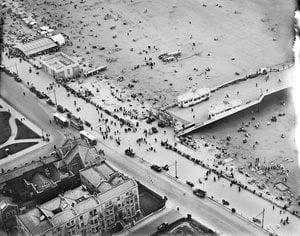
The initial years were characterized by resourceful adaptation. Aerofilms didn’t begin with a dedicated fleet; instead, they rented aircraft, notably a DH9 from the Aircraft Manufacturing Company (later De Havilland), forging crucial partnerships within the burgeoning aviation industry. Alan Cobham, a pioneering pilot entrepreneur, became an early collaborator. The company's earliest work focused on oblique aerial photography – images captured at an angle, offering a more visually engaging and contextual perspective than the strictly vertical views favored for surveying. These photographs were initially marketed to postcard manufacturers, capitalizing on a public fascination with aviation and a desire for novel imagery. However, Wills’ architectural background soon steered Aerofilms towards more ambitious applications. By 1921, they began undertaking vertical photography specifically for survey and mapping purposes, laying the groundwork for their future dominance in this field. The 1930s witnessed a period of significant technological advancement, with Aerofilms pioneering the science of *photogrammetry* – the art and science of making measurements from aerial photographs. This innovation, coupled with collaborations with institutions like the Ordnance Survey, cemented their reputation as leaders in aerial mapping and established a crucial role in documenting Britain’s physical infrastructure. The company also maintained links with Claude Friese-Greene, an early cinematographer, demonstrating a broader interest in visual technologies beyond still photography.
Wartime Service and Post-War Expansion
The outbreak of World War II dramatically altered Aerofilms' trajectory. In 1940, the company’s staff and cutting-edge equipment were absorbed into the war effort, forming the core of the Allied Photographic Interpretation Unit at Medmenham. This unit played a vital role in intelligence gathering, analyzing aerial reconnaissance photographs to identify enemy positions and infrastructure. Sir Percy Hunting's interest in Aerofilms during this period led to its integration within the Hunting Group of Companies in 1942, providing stability and resources for post-war expansion. Following the war, a restructuring saw Aerofilms responsible for oblique photography while Hunting Aerosurveys focused on vertical mapping. This division of labor allowed both entities to flourish, contributing significantly to Britain’s reconstruction efforts and industrial growth. The post-war era was marked by an insatiable demand for aerial imagery documenting urban redevelopment, infrastructure projects, and the changing face of the nation.
A Legacy Preserved: The Acquisition of the Archive and “Britain From Above”
Throughout its history, Aerofilms amassed a remarkable collection – approximately 1.1 million photographic images spanning from 1919 to 2006. Unlike many other photographic archives, a substantial portion of these photos entered the public domain due to the company’s practice of distributing prints to public libraries. This accessibility ensured that Aerofilms' visual record became deeply embedded within British cultural memory. In 1997, Simmons Mapping (UK) Ltd acquired Aerofilms Limited, leading to a merger in 2001 and the formation of Simmons Aerofilms Ltd. However, it was the acquisition of the historic oblique library by English Heritage (now Historic England), in partnership with The Royal Commission on the Ancient and Historical Monuments of Scotland (RCAHMS) and The Royal Commission on the Ancient and Historical Monuments of Wales (RCAHMW) in 2007, that secured the archive’s long-term preservation. This pivotal moment paved the way for “Britain From Above,” a groundbreaking digitization project funded by the Heritage Lottery Fund and Friends of the National Libraries. The project involved painstakingly digitizing, geo-referencing, and making available online the bulk of Aerofilms' negatives from 1919 to the early 1950s, creating an invaluable resource for researchers in archaeology, architecture, agriculture, coastal studies, and urban history.
Historical Significance: A Unique Visual Record
Aerofilms Ltd’s enduring legacy lies not simply in its technological innovations or commercial success, but in the unparalleled visual record it created of Britain over nearly a century. The oblique aerial photographs – often capturing everyday life alongside grand landscapes and architectural marvels – offer a unique perspective on social change, industrial development, and environmental transformation. The archive provides an extraordinary window into the past, allowing us to trace the evolution of towns and cities, document agricultural practices, and understand the impact of major historical events. The images are more than just documentation; they are evocative works that capture a sense of place and identity, reflecting the spirit of innovation, entrepreneurialism, and national pride that defined Aerofilms’ remarkable journey from humble beginnings to becoming an integral part of Britain's visual heritage. The company didn’t merely *record* history; it actively *shaped* how history was perceived and remembered, leaving an indelible mark on our understanding of the British landscape and its people.