Introduction
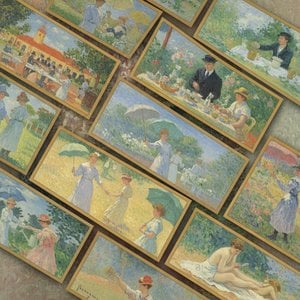
There is a specific, quiet ache that occurs when we encounter an image that feels less like a new discovery and more like a recovered memory. This is the essence of nostalgia—not merely a longing for the past, but a profound emotional resonance triggered by colors, light, and composition that mirror the landscapes of our own histories. To walk through a gallery of nostalgic works is to traverse the corridors of human sentiment, revisiting the warmth of childhood summers, the bittersweet sting of lost eras, and the comforting familiarity of ancestral homes.
Throughout history, artists have acted as the ultimate archivists of the human soul. From the soft, hazy light of Impressionist landscapes that capture the fleeting nature of a moment, to the dramatic, heavy shadows of the Old Masters that evoke the gravity of tradition, art has always provided a visual language for what we cannot express in words. These masterpieces do not just document historical periods; they preserve the sensory textures of life—the scent of rain on cobblestones, the glow of candlelight, and the stillness of an empty room.
<In our modern, fast-paced world, these artworks remain deeply meaningful because they offer a sanctuary of permanence. They allow us to pause and reconnect with a sense of continuity in an age of constant change. As we prepare to explore this curated selection, we invite you to look beyond the canvas. We will journey through ten exceptional works that do more than represent history; they evoke the very essence of longing, inviting you to find your own stories reflected within their brushstrokes.
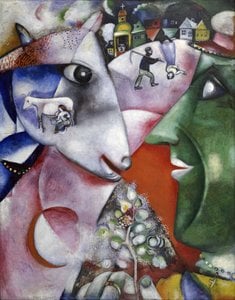
I and the Village - Marc Chagall
 I and the Village - Marc Chagall
I and the Village by Marc Chagall exists as a luminous fragment of a dream, where the boundaries between past and present dissolve into a kaleidoscope of memory. This 1911 masterpiece is immortalized among the top 10 artworks that evoke deep 'nostalgic' emotions because it does not merely depict a landscape; it reconstructs the very soul of Chagall’s childhood in Vitebsk. The composition breathes with a rhythmic, surreal energy, utilizing bold, non-naturalistic colors and fragmented Cubist forms to mirror the fluidity of recollection.
As you gaze upon the interlocking faces and symbolic figures—the vibrant horse, the gentle cow, and the pastoral architecture—you experience a sensory journey through layers of impasto texture and ethereal light. The deep blues and earthy greens whisper of a lost, idyllic era, creating a profound sense of longing. In contemporary interiors, this piece serves as a sophisticated focal point, bringing a rich, narrative depth and an emotionally charged atmosphere that inspires quiet contemplation and a connection to the universal human experience of looking back.
The Grand Canal and the Church of the Salute - Canaletto
 The Grand Canal and the Church of the Salute - Canaletto
Long before the advent of modern photography, Canaletto utilized the camera obscura to project the light of Venice directly onto his canvas, allowing him to capture the city's architectural soul with a precision that feels almost supernatural. In 1730, as he painted The Grand Canal and the Church of the Salute , he wasn't merely documenting buildings; he was freezing a moment of Venetian splendor that has since become a cornerstone of nostalgic art. The way the warm, earthy tones of the facades interact with the shimmering reflections of gondolas evokes a profound longing for a lost era of maritime grandeur.
The technical mastery required to balance such intricate geometric structures with the fluid, organic movement of the water is nothing short of breathtaking. This interplay of light and shadow creates a sense of timelessness that transcends centuries. For the modern professional, hanging such a masterpiece in a study or home office provides more than just decoration; it introduces an atmosphere of focused tranquility and historical depth, inspiring a sophisticated environment where clarity of thought and creative ambition can flourish.
Peasant wedding - Pieter Bruegel the Elder
 Peasant wedding - Pieter Bruegel the Elder
There is a profound sense of communal warmth in Peasant Wedding by Pieter Bruegel the Elder that transcends the centuries. This masterpiece does not merely depict a 16th-century feast; it acts as a mirror to our own fundamental human desires for connection, celebration, and shared joy. As you gaze into this densely populated scene, the earthy ochres, muted reds, and rustic browns wrap around you like a familiar memory of simpler times.
Bruegel’s meticulous brushwork captures the chaotic vibrancy of the wedding—the clinking of pottery, the textured wooden beams, and the lively, overlapping figures engaged in merriment. It is an immersive experience where the scent of heavy ale and roasted meats seems almost tangible. This artwork's place among the top artworks that evoke deep nostalgic emotions stems from its ability to make the invisible threads of human tradition visible. When placed in your space, this painting does not just decorate a wall; it serves as a constant, soulful reminder that you are part of a much larger, enduring human story.
Family Reunion - Frédéric Bazille
 Family Reunion - Frédéric Bazille
In Family Reunion by Frédéric Bazille, the nostalgia lies within the meticulous interplay of light and texture. To observe this 1867 masterpiece is to witness the precise, rhythmic brushstrokes that define the emerging Impressionist movement. The way the light filters through the canopy, catching the intricate patterns of fine fabrics and the lush, verdant foliage, creates a sensory window into a lost era of social harmony. Bazille’s technique—balancing academic precision with a vibrant, atmospheric luminosity—captures a fleeting moment of togetherness that feels both monumental and deeply intimate.
At WahooArt.com, we understand that the emotional power of such works depends on their physical presence. Our hand-painted oil reproductions are engineered to preserve this tactile, three-dimensional quality . By utilizing authentic impasto techniques on 100% cotton canvas, we ensure that the visible brushwork and rich tonal range of Bazille’s original are translated into your space. We bring the soul of this nostalgic gathering to collectors and professionals, providing a high-fidelity experience that honors the true materiality of art history.
Snap the Whip - Winslow Homer
 Snap the Whip - Winslow Homer
Imagine the scent of sun-warmed grass and the distant, rhythmic sound of laughter echoing across a rolling pasture. Winslow Homer’s 1872 masterpiece, Snap the Whip , captures this exact sensory fragment of a vanishing era. Through a vibrant tug-of-war between young boys, Homer preserves the pulse of American pastoral life—a moment of pure, uninhibited joy set against the steady, comforting presence of a rustic red schoolhouse.
This painting earns its place among the top artworks evoking deep nostalgic emotions because it serves as a window into a simpler, more connected human history. The earthy palette of deep greens and warm reds, combined with the dynamic energy of the children’s movement, pulls the viewer into a state of wistful longing for the innocence of youth. In our fast-paced modern world, bringing such a piece into a professional or residential space does more than decorate a wall; it introduces a sense of enduring stability and warmth, allowing the timeless charm of the countryside to anchor your environment with peace and historical meaning.
Young Girls at the Piano - Pierre-Auguste Renoir
 Young Girls at the Piano - Pierre-Auguste Renoir
In Pierre-Auguste Renoir's 1892 masterpiece, Young Girls at the Piano , the lines of the composition aren’t merely drawn; they are choreographed . This is not a static scene of domesticity; it is a dance frozen in time , where the soft, flowing brushstrokes move in rhythm with the silent melody suggested by the keys. Renoir captures a profound sense of nostalgia through a luminous, pastel palette—delicate whites, soft pinks, and gentle blues that evoke the fleeting innocence of childhood.
The atmosphere is thick with the warmth of a golden hour, as light diffuses across opulent fabrics and polished wood, making the chaos of the outside world feel like perfect harmony. The piano serves as an anchor for this serene moment, symbolizing a period of cultural refinement and quiet companionship. As you stand before this work, you might wonder: What if your living room could hold that same balance? What if your walls could breathe rhythm? This painting remains a cornerstone of emotional art, inviting viewers to rediscover the simple, tender joys of a bygone era.
Rue Mosnier with Flags, J. Paul Getty Museum, Ma - Édouard Manet
 Rue Mosnier with Flags, J. Paul Getty Museum, Ma - Édouard Manet
In Rue Mosnier with Flags , the mastery of Édouard Manet is felt through the rhythmic, broken brushstrokes that dance across the canvas, capturing the flickering light of a celebratory Parisian afternoon. The materiality of this work lies in its tactile energy; the thick, expressive application of oil paint creates a shimmering effect, where the vibrant reds and yellows of the festive banners seem to vibrate against the cool, atmospheric blues of the urban backdrop. This technique does more than depict a scene; it captures the fleeting, ephemeral pulse of 19th-century life, evoking a profound sense of nostalgia for a lost era of communal joy.
At WahooArt.com, we specialize in preserving this essential three-dimensional quality. Our handmade oil reproductions are meticulously crafted on 100% cotton canvas, ensuring that the visible brushwork and rich tonal depth of Manet’s original are translated into a physical masterpiece for your collection. We bring the soul of the J. Paul Getty Museum directly to your space, maintaining the textured, impasto essence that defines this iconic moment in art history.
Free hour at Amsterdam orphanage - Max Liebermann
 Free hour at Amsterdam orphanage - Max Liebermann
Max Liebermann’s 1876 masterpiece, Free hour at Amsterdam orphanage , serves as a profound window into a vanished era, capturing the tender, communal pulse of 19th-century life. The painting evokes deep nostalgic emotions by transporting the viewer to a sun-drenched courtyard where the simple rhythms of care and connection take center stage. Through a delicate blend of Realism and Impressionism, Liebermann utilizes loose, visible brushstrokes to animate a scene of women in traditional white caps and red aprons, their figures bathed in dappled, golden light filtering through the trees.
The artwork’s enduring power lies in its ability to find the extraordinary within the ordinary. The earthy palette and rhythmic composition—structured by architectural lines yet softened by organic movement—create a sense of warmth and cultural heritage that resonates in modern, curated interiors. In an age of digital detachment, this painting remains a vital cultural talking point, offering a sensory retreat into a world defined by human togetherness and the quiet beauty of everyday existence. It is not merely a depiction of history, but a soulful reminder of our shared human connection to community and tradition.
Carnation, Lily, Lily, Rose - John Singer Sargent
 Carnation, Lily, Lily, Rose - John Singer Sargent
John Singer Sargent’s Carnation, Lily, Lily, Rose stands as a profound pillar among the top 10 artworks that evoke deep nostalgic emotions, acting as a sensory portal to a vanished era of innocence. The painting captures a fleeting twilight in an English garden, where the soft, rhythmic glow of Japanese lanterns illuminates the faces of two young girls amidst a lush profusion of blooms. Sargent masterfully employs Impressionistic brushwork to render the transition from day to dusk, using a palette of deep purples and luminous whites that stir a bittersweet longing for childhood's ephemeral beauty.
Beyond its visual splendor, the work resonates with modern aesthetic trends toward organic, atmospheric interiors. The symbolic interplay of light and flora—representing purity, passion, and the transient nature of time—creates a contemplative mood that remains a cultural talking point in curated spaces. For collectors seeking to anchor a room with emotional depth, this masterpiece offers more than mere decoration; it provides a timeless, soulful connection to the quiet magic of memory.
Le Moulin de la Galette - vincent willem van gogh
 Le Moulin de la Galette - vincent willem van gogh
To gaze upon a scene from a lost era is to feel the gentle ache of time passing. Le Moulin de la Galette by Vincent van Gogh serves as a profound window into the late 19th-century soul, capturing the rhythmic pulse of Montmartre before the modern world accelerated. This piece earns its place among the top artworks evoking deep nostalgic emotions through its ability to transport the viewer to a bustling Parisian streetscape that feels both vibrant and hauntingly distant.
Van Gogh’s transition toward Post-Impressionism is palpable here; his characteristic impasto technique creates a tactile landscape where thick, expressive brushstrokes breathe life into the historic windmill. The palette, though capturing a diffused, overcast light, vibrates with an energy that suggests the warmth of community and the charm of old Paris. As the eye wanders through the asymmetrical composition, the movement of the figures evokes a sense of shared human history. Today, bringing this masterpiece into a contemporary space does more than decorate a wall; it anchors a room with a timeless, emotive depth that continues to inspire awe.
Conclusion
As the light fades on our journey through these evocative canvases, we are reminded that these masterpieces are far more than mere relics of a bygone era or static treasures locked behind museum glass. They are living presences, breathing with the pulse of human experience, carrying the soft echoes of memories we have yet to make and the bittersweet ache of moments long passed. To encounter them is to touch the very essence of our shared humanity—a profound connection that transcends time, geography, and language.
We invite you to do more than simply admire these works from a distance; we invite you to bring their warmth, their texture, and their quiet grace into the sanctuary of your own home. Let the soft glow of an Impressionist morning or the deep, soulful shadows of a classical portrait become part of your daily landscape, serving as gentle reminders of the beauty, resilience, and enduring creativity that define us. When you surround yourself with such profound emotion, your space transforms into a gallery of the soul, where every brushstroke offers a moment of reflection and every color tells a story of timeless grace.
To explore more works that resonate with this same evocative power, we invite you to wander through our full collection and discover the piece that speaks to your own heart's history.