
由我们的艺术家按需定制,为您提供您所选尺寸及画框的布面手工油画。 ( 切换至版画销售渠道 切换至数字图像销售渠道)





























从与原作比例一致的预设尺寸中进行选择。

您可以输入自定义尺寸,以适配特定的画框或空间。如果所选尺寸与原图比例不符,我们将通过裁剪作品或添加手绘元素来扩展画面。数字样稿将在制作开始前发送给您确认。
请注意,屏幕预览无法准确反映实际的裁剪或扩展效果,只有样稿才能真实呈现最终的构图。
虽然我们提供定制尺寸服务,但为了保留原作比例,建议您从预设列表中选择尺寸。

untitled (8774)
复制品尺寸
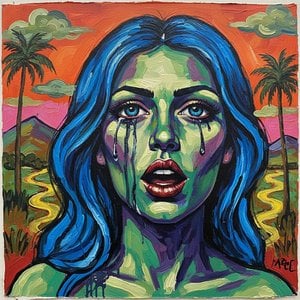
Henri Matisse's "Untitled (8774)," a captivating work brimming with vibrant hues and dynamic energy, stands as a testament to the artist’s revolutionary approach to color and form. Painted in 1906, during his pivotal period as a leading figure of Fauvism, this piece transcends mere representation; it plunges directly into the realm of emotion and sensation. The painting depicts a woman caught mid-movement – perhaps dancing, perhaps lost in thought – her limbs extended outwards in an embrace of pure, unadulterated motion. Her silhouette is defined by bold black lines against a backdrop of cerulean blue, punctuated by flashes of crimson, yellow, and white, creating a visual symphony that immediately draws the eye.
Matisse’s technique here is deliberately loose and expressive. He eschews meticulous detail in favor of broad, sweeping brushstrokes that convey a sense of immediacy and spontaneity. The colors aren't blended smoothly; instead, they are applied in flat, unmodulated blocks, intensifying their impact and creating an almost sculptural quality to the forms. This deliberate flatness, characteristic of Fauvism, rejects traditional notions of perspective and realism, prioritizing the emotional resonance of color over accurate depiction. Notice how the blue sky seems to ripple with movement, mirroring the dynamism of the figure below.
To fully appreciate “Untitled (8774),” it’s crucial to understand the context in which it was created – the burgeoning Fauvist movement. Emerging in France around 1905, Fauvism represented a radical departure from established artistic conventions. Artists like Matisse, André Derain, and Maurice de Vlaminck rejected academic traditions of muted tones and realistic representation, embracing instead the unrestrained use of color as an end in itself. They believed that color possessed its own inherent power to evoke emotion and create visual excitement. Matisse’s work was initially met with skepticism and criticism, labeled by some as “wild beasts” due to the intensity and unconventionality of their palette.
This painting exemplifies this revolutionary spirit perfectly. The vibrant colors aren't simply decorative; they are imbued with psychological significance. Red suggests passion and energy, yellow embodies joy and optimism, while blue evokes a sense of serenity and expansiveness. The deliberate contrast between these hues amplifies their impact, creating a visual dialogue that engages the viewer on an emotional level.
While the subject matter appears simple – a woman in motion – “Untitled (8774)” is rich with symbolic potential. The figure's outstretched arms and dynamic pose suggest freedom, vitality, and perhaps even a yearning for connection. The prominent "C" above her head, a recurring motif in Matisse’s work, has been interpreted as representing the circle of life, or simply as an element of decorative abstraction that enhances the painting’s visual harmony. The lettered elements scattered throughout the composition – seemingly random yet strategically placed – add to the sense of mystery and invite contemplation.
It's important to note that Matisse rarely provided explicit explanations for his work, preferring instead to allow viewers to interpret its meaning through their own experiences and emotions. The painting’s power lies in its ability to evoke a feeling—a sense of movement, joy, and perhaps even a touch of wistful longing.
"Untitled (8774)" is more than just a beautiful painting; it’s a pivotal work in the history of modern art. Its bold use of color, dynamic composition, and expressive brushwork continue to captivate audiences today. WahooArt offers high-quality reproductions that faithfully capture the vibrancy and energy of this iconic piece, making it an ideal addition to any collection or interior space. The painting’s striking colors and sense of movement will add a touch of sophistication and emotional depth to your home or office, bringing a touch of Matisse's revolutionary vision into your world.

1869 - 1954 , 法国
Embark on a journey through the vibrant world of Fauvism. Discover how masters like Henri Matisse revolutionized art through bold colors and raw emotion in this expert-led guide to one of modern art's most powerful movements.

Explore the vibrant revolution of Fauvism. Discover how masters like Matisse liberated color to redefine modern art. Dive into an expert-led journey through the 'Wild Beasts' movement and learn how to bring this bold, expressive energy into your personal collection.

Explore the vibrant world of Fauvism with our expert guide. Discover how Matisse and Derain revolutionized art through bold colors and expressive strokes. Perfect for classic art enthusiasts seeking to deepen their passion for modern masterpieces.


 效果预览
效果预览
 分享
分享 分享
分享
 详情
详情

 下载
下载
 相似作品
相似作品 X射线
X射线 幻灯片播放
幻灯片播放 统计数据
统计数据
 展开详情
展开详情









 玻璃选项仅适用于110厘米以下的尺寸。


