藏品详情
A Glimpse into the Soul: Edvard Munch’s “The Painter Jacob Bratland”
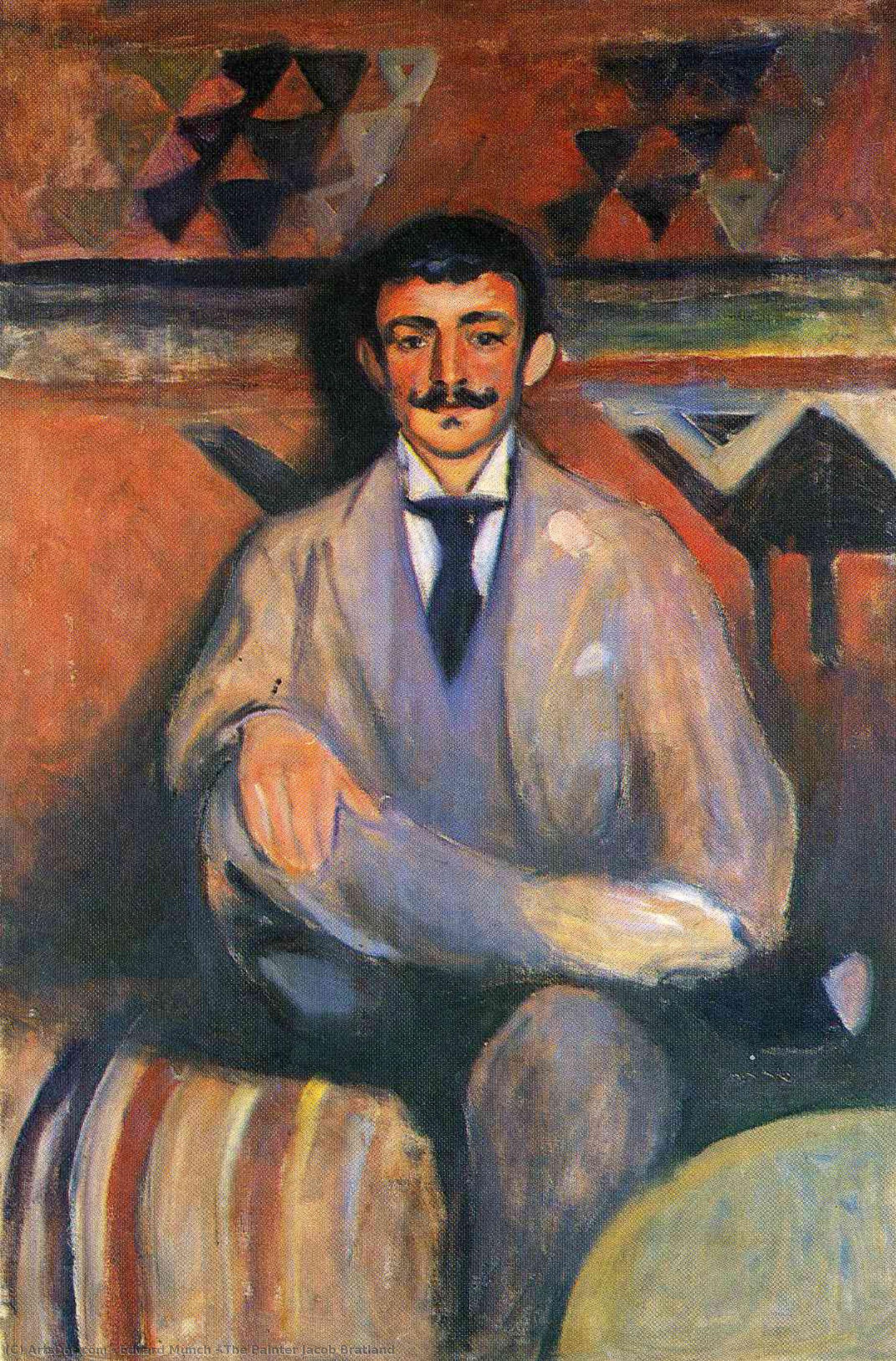
This captivating portrait, painted in 1892, offers a compelling window into the artistic world of Edvard Munch and his burgeoning Expressionist style. “The Painter Jacob Bratland” is more than just a likeness; it's an intimate psychological study rendered with striking emotional depth. The subject, fellow artist Jacob Bratland, is presented not as a static figure but as a presence imbued with thought and feeling.
Subject & Composition
The composition centers on Bratland seated comfortably in an armchair – a deliberate choice that suggests relaxation, contemplation, and perhaps even vulnerability. He dominates the canvas, his form filling much of the vertical space, drawing the viewer directly into his presence. Munch eschews precise detail, opting instead for fluid lines and organic shapes to define Bratland’s features and clothing. The background isn't merely a backdrop; it’s an active element composed of layered abstract forms in warm tones – reds, oranges, and browns – that create depth and complexity while subtly mirroring the internal state of the sitter.
Style & Technique: A Proto-Expressionist Vision
Painted with visible, expressive brushstrokes, “The Painter Jacob Bratland” exemplifies Munch’s move away from academic realism towards a more subjective interpretation of reality. The technique is characterized by layering paint and utilizing impasto – the thick application of pigment – to build up form and texture. This creates a tactile surface that enhances the painting's immediacy and emotional impact. While rooted in Impressionistic principles, particularly its emphasis on color and light, the work foreshadows Munch’s later fully-fledged Expressionist style. The flattened perspective further contributes to this expressive effect, prioritizing feeling over strict representation.
Historical Context & Artistic Influences
Created during a pivotal period in art history, “The Painter Jacob Bratland” reflects the growing anxieties and uncertainties of the late 19th century. Munch was deeply influenced by philosophical currents like nihilism, which encouraged artists to explore inner turmoil and reject conventional norms. His early exposure to Hans Jæger’s radical ideas spurred him toward a more personal and emotionally charged artistic expression. This painting stands as an example of this transition, bridging the gap between Impressionism and the burgeoning Expressionist movement that would soon revolutionize modern art.
Symbolism & Emotional Resonance
The armchair itself is symbolic, representing comfort, introspection, and a private sphere. Bratland’s relaxed pose suggests a moment of respite, but the intensity of Munch's brushwork and the swirling background hint at underlying emotional currents. The warm color palette, while inviting, also carries a sense of melancholy – a recurring theme in Munch’s work. The painting isn’t simply *about* Jacob Bratland; it’s about the human condition itself, exploring themes of isolation, contemplation, and the search for meaning.
Impact & Legacy
“The Painter Jacob Bratland” is a powerful example of Munch's ability to convey profound psychological states through color, form, and texture. It’s a work that resonates with viewers on an emotional level, inviting them to contemplate the complexities of human experience. As a precursor to Expressionism, it paved the way for future generations of artists who sought to express inner emotions rather than simply depict external reality. This piece is ideal for collectors seeking significant works from a pivotal artist and interior designers aiming to introduce depth, emotion, and historical resonance into their spaces.