
БЕЗКОШТОВНА КОНСУЛЬТАЦІЯ З МИСТЕЦТВА


x
Для кожного питання є лише одна правильна відповідь.
Born in Changhua, Taiwan, in 1980, tung ming-chin – also known as Ming-Chin Tung – has emerged as a compelling voice in contemporary sculpture. His work isn’t merely about carving wood; it's an intimate conversation with the material itself, a patient unveiling of figures seemingly struggling to break free from their wooden confines. Tung doesn’t impose form *onto* the wood, but rather discovers and liberates what already exists within its grain and texture. This approach lends his sculptures a unique sense of dynamism, as if they are caught in a perpetual state of becoming.
Tung’s artistic journey began with a focus on traditional sculptural techniques, emphasizing smooth lines and refined forms. However, a pivotal shift occurred as he deepened his connection to the inherent qualities of wood – its lightness, its age, and the stories etched into its surface through natural weathering. This realization led him towards exploring excavation and hollowing, methods designed to reduce weight and reveal the organic beauty hidden within. He began to see the potential for capturing not just physical shapes but also the passage of time and the subtle interplay between human intervention and nature’s forces.
His academic foundation at Taipei National University of the Arts, where he earned both his BFA and MFA, provided a crucial framework for this evolution. The university fostered an environment that encouraged experimentation and conceptual depth, allowing Tung to refine his unique artistic language. He wasn't simply learning *how* to sculpt; he was developing a philosophy about sculpture – one rooted in respect for the material and a fascination with the boundaries between artificiality and the natural world.
Tung’s sculptures are instantly recognizable for their polished surfaces, which create an almost ethereal quality. This smoothness isn't merely aesthetic; it serves to heighten the contrast between the solid wood and the emerging figures within. He masterfully manipulates negative space, creating a sense of tension and movement as forms press outwards, straining against their wooden boundaries. The result is often unsettlingly beautiful – a suggestion of both confinement and liberation.
His thematic concerns are broad, encompassing explorations of the human figure, nature, everyday objects, and the very concept of space itself. He doesn’t shy away from ambiguity; his sculptures invite viewers to contemplate the relationship between interiority and exteriority, presence and absence. The organic lines he captures echo natural weathering patterns, seamlessly integrating traces of time and human touch into his work. This blending is deliberate, prompting us to question where nature ends and art begins.
Tung Ming-Chin’s sculptures have garnered increasing attention in recent years, exhibited in galleries and museums across Taiwan and beyond. His work has been featured in prominent online publications such as My Modern Met, TCAA, Creapills, Monica Haven, Moongallery, Freeyork, Happenart, and Creativosonline, broadening his reach to a global audience.
He is not only recognized for his artistic achievements but also for his dedication to education. From 2017-2021 he served as an Adjunct Lecturer at the Department of Fine Arts, National Taipei University of the Arts, and previously taught Wood Creation Classes at Huaideju Woodworking School (2019–2021). This commitment underscores his belief in fostering a deeper understanding and appreciation for sculptural practice.
Tung Ming-Chin’s work represents a significant contribution to contemporary Taiwanese art. He challenges conventional notions of form and material, creating sculptures that are both visually striking and intellectually stimulating. His ability to imbue wood with such profound emotional resonance ensures his place as a leading figure in the evolving landscape of modern sculpture.
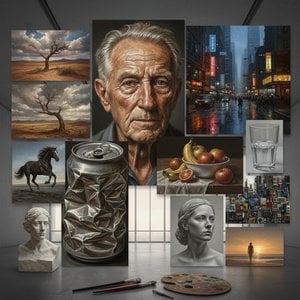
Відкрийте для себе 10 шедеврів сучасного реалізму! Дізнайтесь історії художників, техніки та значення культових картин. Репродукції високої якості від WahooArt.com – мистецтво для вашого дому. Дослідіть колекцію онлайн!

Замовте ексклюзивний персоналізований портрет від професійних художників! Індивідуальний підхід, висока якість, емоційний резонанс. Створіть унікальний подарунок або прикрасьте свій інтер'єр шедевром мистецтва.
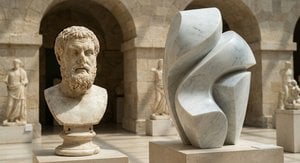
Explore the captivating history of marble sculpture from ancient Greece to modern art. Discover renowned artists like Canova & Michelangelo, carving techniques, and investment insights at WahooArt.


Будьте в курсі останніх новин зі світу мистецтва, ексклюзивних пропозицій та ідей для декорування.
Розкажіть нам про свій проєкт, і наші експерти з мистецтва підготують для вас 3 персоналізовані пропозиції щодо творів мистецтва.
Дозвольте нам підібрати 3 варіанти спеціально для вас — безкоштовно!


