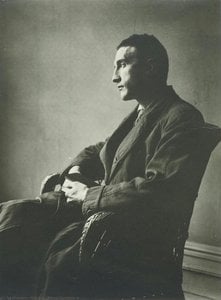
Ман Рей, 1890 – 1976

100 найвідоміших картин Ман Рей

Картина, яка принесла славу Ман Рей, — це La Galerie Surréaliste, rue Jacques Callot; вона експонується в Музей Оскара Німейера, Куритиба. Pisces (1938) та Rayograph (The Kiss) (1922) не поступаються їм у серцях колекціонерів та відвідувачів музеїв. З 142 робіт Ман Рей у нашому каталозі ці 100 є найбільш шанованими; кожна з них представлена з датою створення, назвою музею та описом її унікальності.

Рейтинг сформовано на основі нашого показника популярності, що поєднує кількість пошукових запитів, переглядів та замовлень для кожної роботи. Оновлено Жовтень 2026.

Портрет Ман Рей
Ман Рей · 1890 – 1976
Народився · помер
1890 – 1976, Філадельфія
Рух
Сюрреалізм
Роботи в нашому каталозі
142
Найвідоміші
La Galerie Surréaliste, rue Jacques Callot
Найбільше робіт у
Музей Оскара Німейера

Ман Рей: десять шедеврів

La Galerie Surréaliste, rue Jacques Callot роботи Ман Рей
1

La Galerie Surréaliste, rue Jacques Callot

Acrylic On Canvas · Музей Оскара Німейера, Куритиба

La Galerie Surréaliste et l'Étoile Scellée : Un Voyage au Cœur de la Créativité Dadaiste La Galerie Surréaliste, située rue Jacques Callot à Paris, fut bien plus qu’une simple adresse artistique ; elle incarnait les aspirations radicales d’une génération marquée par les bouleversements du début du XXe siècle. Fondée en 1926 et dirigée avec passion par Marcel Duchamp et Sophie Babet, cette galerie devint un véritable laboratoire d'expérimentation esthétique et…

Pisces (1938) роботи Ман Рей
2

Pisces

1938 · Олія

Introduction to Man Ray and Surrealism Man Ray, born Emmanuel Radnitzky in 1890, was an American visual artist who spent most of his career in France. He was a significant contributor to the Dada and Surrealist movements, although his ties to each were informal. Man Ray produced major works in a variety of media but considered himself a painter above all. Surrealism is an art movement that emerged in the…

Rayograph (The Kiss) (1922) роботи Ман Рей
3

Rayograph (The Kiss)

1922 · Black and White Photography · Музей сучасного мистецтва (MoMA), Нью-Йорк

A Dance Between Light and Shadow: Exploring Man Ray’s “The Kiss” Man Ray's "The Kiss," created in 1922 during the heady days of Dada and Surrealism, transcends mere photographic representation; it embodies a radical reimagining of artistic process and perception. This striking photogram—a technique pioneered by Ray himself—captures an intimate moment frozen in time, transforming commonplace objects into symbols of desire and connection. Unlike traditional painting, where artists meticulously render…

Solarisation (1931) роботи Ман Рей
4

Solarisation

1931 · Black and White Photography

In this 1931 black and white photograph, titled Solarisation, Man Ray presents us with a quiet, intimate moment of repose. The subject is a man lying down, his head resting upon his arm in a state of sleep or deep rest. There is a profound sense of stillness here, a pause in time captured through the lens of a man who sought to redefine how we perceive the physical form.

The Pavillion of Elegance роботи Ман Рей
5

The Pavillion of Elegance

Black and White Photography · Музей Оскара Німейера, Куритиба

To gaze upon this image is to step directly into the shimmering, slightly unsettling dreamscape of 1925 Paris. It captures not merely a moment in time, but an entire cultural sensibility—the breathless anticipation surrounding modern fashion and the burgeoning power of the photographic gaze. The subject, a woman draped in what appears to be an ocean green Georgette crepe, moves with an almost choreographed grace down a sun-dappled thoroughfare or…

Tristan Tzara and Jean Cocteau роботи Ман Рей
6

Tristan Tzara and Jean Cocteau

Black and White Photography · Музей Оскара Німейера, Куритиба

This evocative black and white photograph transports us directly into the vibrant, often bewildering intellectual ferment of the early 20th century. It captures a moment steeped in the spirit of Dadaism and the burgeoning currents of Surrealism—movements that dared to dismantle the very definition of reality. The composition itself feels less like a mere documentation and more like a carefully staged dream sequence, inviting the viewer to question what they…

Nusch eluard with mirror (1935) роботи Ман Рей
7

Nusch eluard with mirror

1935 · Black and White Photography · Kobe Fashion Museum, Kyoto

In the hauntingly beautiful monochrome of "Nusch Eluard with Mirror," captured in 1935, we are invited into a private, ephemeral moment that transcends the boundaries of traditional portraiture. The photograph features Nusch Eluard, a woman who was not only a muse but a profound presence in the Surrealist circle, draped in a delicate veil that clings to her form like a soft shadow. As she holds a mirror before her…

Indestructible Object (or Object to Be Destroyed) (1923) роботи Ман Рей
8

Indestructible Object (or Object to Be Destroyed)

1923 · Photography · Музей сучасного мистецтва (MoMA), Нью-Йорк

In the annals of modern art, few images possess the unsettling, magnetic pull of Man Ray’s 1923 masterpiece, Indestructible Object (often known as Object to Be Destroyed). To gaze upon this work is to step directly into the fractured psyche of the Surrealist movement, where the boundaries between the living and the mechanical begin to dissolve. The composition presents a disconcerting tableau: a stark, wooden structure that serves as a…

Veiled Erotica роботи Ман Рей
9

Veiled Erotica

Black and White Photography · Музей Оскара Німейера, Куритиба

Born in Philadelphia to Russian Jewish immigrant parents, Emmanuel Radnitzky—known universally as Man Ray—was a restless spirit who defied easy categorization. His formative years coincided with the tumultuous period of Dadaism, born from disillusionment with World War I’s horrors and fueled by an uncompromising critique of bourgeois values. Marcel Duchamp's provocative embrace of “ready-made” objects – like *The Gift* – served as a catalyst for Dada artists to dismantle accepted…

(Untitled) роботи Ман Рей
10

(Untitled)

Black and White Photography · Музей Оскара Німейера, Куритиба

In the quiet, evocative realm of Man Ray’s photography, we encounter a profound dialogue between the mundane and the metaphysical. This stark black and white composition, often associated with the enigmatic spirit of “The Gift,” transcends mere documentation to become a window into the avant-garde mind. At first glance, the viewer is presented with an abstract arrangement of draped fabric—perhaps a heavy wool—rendered in exquisite detail against a textured surface.…

Більше шедеврів Ман Рей, від 11 до 100

The Enigma of Isidore Ducasse (1920) роботи Ман Рей
#11

The Enigma of Isidore Ducasse

1920 · Національна галерея Австралії

The Enigma of Isidore Ducasse is an assemblage created by the artist Man Ray. This work originated in 1920 and was later remade in 1972. The object consists…

Nusch with Mirror роботи Ман Рей
#12

Nusch with Mirror

Музей Оскара Німейера

In the hauntingly beautiful photograph Nusch with Mirror, the boundaries between reality and illusion dissolve into a singular, breathtaking moment of modernist introspection. Captured by the legendary American…

Dada Portrait роботи Ман Рей
#13

Dada Portrait

Музей Оскара Німейера

In the realm of early twentieth-century avant-garde, few names resonate with as much transformative power as Man Ray. His 1923 masterpiece, Dada Portrait, stands as a profound testament…

Natalie Paley Wearing a Sequined Gown by Lelong роботи Ман Рей
#14

Natalie Paley Wearing a Sequined Gown by Lelong

Музей Оскара Німейера

Ultimately, “Natalie Paley Wearing a Sequined Gown by Lelong” stands as an enduring emblem of artistic experimentation—a captivating portrait that exemplifies Man Ray’s visionary genius and cements his…

Marcel Duchamp роботи Ман Рей
#15

Marcel Duchamp

Музей Оскара Німейера

The photograph by Man Ray of Marcel Duchamp, captured in 1920-21, isn't merely a portrait; it’s a carefully constructed tableau of intellectualism and quiet contemplation. More than just…

Rayograph - 1925 (1925) роботи Ман Рей
#17

Rayograph - 1925

1925 · Музей Бойманса-ван-Бёнінгена

Rayograph - 1925 is a Dadaist photogram photographic print created by the artist Man Ray in 1925. This work belongs to the Dadaist movement, a period characterized by…

Café Man Ray роботи Ман Рей
#18

Café Man Ray

Музей Оскара Німейера

Café Man Ray: A Surrealist Reverie Revisited The American artist Man Ray (1890-1976) fundamentally reshaped the perception of photography, elevating it from mere documentation to an expressive art…

Dust Breeding (detail) роботи Ман Рей
#19

Dust Breeding (detail)

Музей Оскара Німейера

In the hauntingly beautiful detail of Man Ray’s 1920 masterpiece, Dust Breeding, we are invited into a world where the boundaries between reality and dream dissolve into a…

Noire et Blanche роботи Ман Рей
#23

Noire et Blanche

Музей Оскара Німейера

Man Ray’s evocative photograph, Noire et Blanche, immediately draws the viewer into a realm where identity blurs and cultural narratives collide. This piece is more than a mere…

Georges Braque роботи Ман Рей
#24

Georges Braque

Музей Оскара Німейера

This striking black and white photograph transports us into a moment suspended between the familiar and the avant-garde. At its heart stands a commanding figure, whose direct gaze…

The couple (1914) роботи Ман Рей
#25

The couple

1914 · Sezon Museum of Modern Art

Born Emmanuel Radnitzky in 1890 in Philadelphia, Man Ray was a leading artist of 20th century America. Man Ray awakened to the European avant-garde art at Armory Show…

Pablo Picasso at the Count Étienne de Beaumont’s Ball роботи Ман Рей
#26

Pablo Picasso at the Count Étienne de Beaumont’s Ball

Музей Оскара Німейера

Man Ray's captivating photograph, "Pablo Picasso at the Count Étienne de Beaumont’s Ball," isn’t merely a snapshot; it’s a meticulously constructed tableau vivant, a frozen moment brimming with…

Gertrude Stein роботи Ман Рей
#27

Gertrude Stein

Музей Оскара Німейера

In the quiet, monochromatic depths of Man Ray’s portrait of Gertrude Stein, we encounter more than just a photographic likeness; we enter a profound dialogue between light and…

Count Étienne de Beaumont роботи Ман Рей
#28

Count Étienne de Beaumont

Музей Оскара Німейера

Man Ray’s portrait of Count Étienne de Beaumont isn't merely a likeness; it’s a carefully constructed tableau vivant, a frozen moment capturing the essence of 1920s Parisian high…

ABC роботи Ман Рей
#29

ABC

Музей Оскара Німейера

Man Ray's “ABC,” created in 1947, isn’t merely a photograph; it’s an invitation to deconstruct visual language and embrace the inherent ambiguity of perception. Born Emmanuel Radnitzky, later…

Square роботи Ман Рей
#30

Square

Музей Оскара Німейера

The Enigma of the Spiral In the quiet intensity of Man Ray’s Square, one is immediately drawn into a rhythmic, swirling dance of typography and form. Created during…

Magnolia роботи Ман Рей
#32

Magnolia

Музей Оскара Німейера

In the quiet intersection of reality and dreamscape lies Man Ray’s Magnolia, a breathtaking monochrome study that transcends the boundaries of traditional photography. At first glance, the viewer…

(Untitled) роботи Ман Рей
#33

(Untitled)

Музей Оскара Німейера

In the quiet, evocative realm of Man Ray’s “Untitled,” we encounter a profound dialogue between the mundane and the metaphysical. At first glance, the viewer is presented with…

Неназваний (Д2Х7С9) (1916) роботи Ман Рей
#35

Неназваний (Д2Х7С9)

1916 · Метрополітен-музей

Роздуми про Картину «Незвучний» Ман Рей Ман Рей, чимало відомий як Еммануель Радницкий, був художником без меж та сумнівів у творчості. Його народження у Філадельфії в російськомовній сім’ї…

Self-Portrait роботи Ман Рей
#37

Self-Portrait

Музей Оскара Німейера

Man Ray's "Self-Portrait," painted in 1927, isn’t merely a depiction of an individual; it’s a carefully constructed meditation on identity, the gaze, and the very act of representation.…

Glass Tears роботи Ман Рей
#38

Glass Tears

Музей Оскара Німейера

Man Ray's "Glass Tears," created between 1930 and 1932, isn’t merely a photograph; it’s a distilled emotion captured in stark black and white. The image, a close-up of…

Butterflies роботи Ман Рей
#39

Butterflies

Музей Оскара Німейера

Man Ray’s “Butterflies,” created between 1930 and 1935, isn't merely a photograph; it’s a shimmering portal into the heart of Surrealism. This arresting image, captured during a pivotal…

Serious Man, or The Serious One роботи Ман Рей
#40

Serious Man, or The Serious One

Музей Оскара Німейера

Serious Man, or The Serious One The American artist Man Ray (1890-1976) fundamentally reshaped photography’s role—shifting it from mere documentation of reality into an expressive art form itself.…

Kiki in Mechanical Ballet, by Fernand Léger роботи Ман Рей
#44

Kiki in Mechanical Ballet, by Fernand Léger

Музей Оскара Німейера

Fernand Léger’s “Kiki in Mechanical Ballet,” painted in 1924, isn't merely a depiction of a woman dancing; it’s an immersive plunge into the heart of early 20th-century anxieties…

Lee Miller роботи Ман Рей
#46

Lee Miller

Музей Оскара Німейера

In this mesmerizing black and white photograph, the boundaries between reality and dreamscape dissolve, inviting the viewer into the intimate world of Man Ray and his muse, Lee…

Dora Maar роботи Ман Рей
#47

Dora Maar

Музей Оскара Німейера

Man Ray’s Dora Maar: A Portrait of Surrealist Intensity Dora Maar, Picasso's muse and enigmatic collaborator, occupies a singular place in the canon of 20th-century art. Man Ray’s…

Yves Tanguy роботи Ман Рей
#49

Yves Tanguy

Музей Оскара Німейера

Yves Tanguy: A Surrealist Landscape of Inner Consciousness Yves Tanguy’s “The J. Paul Getty Museum Collection” isn't merely a depiction of an artist; it’s a portal into the…

Untitled (Aztec figurine of the goddess Tlazoteotl) (1932) роботи Ман Рей
#50

Untitled (Aztec figurine of the goddess Tlazoteotl)

1932 · Музей сучасного мистецтва (MoMA)

To gaze upon this photograph is to encounter a profound dialogue across millennia—a conversation between the vibrant spiritual life of ancient Mesoamerica and the experimental, shadow-drenched vision of…

Reflections роботи Ман Рей
#51

Reflections

Музей Оскара Німейера

Man Ray’s “Reflections,” painted in 1931, stands as a testament to the burgeoning surrealist movement’s fascination with exploring subconscious landscapes and challenging conventional perceptions of reality. Created during…

Arnold Schönberg роботи Ман Рей
#54

Arnold Schönberg

Музей Оскара Німейера

Man Ray's 1924 photograph of Arnold Schoenberg isn’t merely a likeness; it’s a carefully constructed tableau, a visual embodiment of the composer’s complex and revolutionary spirit. Captured during…

Kiki роботи Ман Рей
#55

Kiki

Музей Оскара Німейера

Man Ray's Kiki de Montparnasse: A Portrait of Liberation The photograph by Man Ray, titled “Kiki de Montparnasse,” transcends mere documentation; it’s an emblem of the exuberant spirit…

Tableau (Untitled) (1929) роботи Ман Рей
#62

Tableau (Untitled)

1929 · Смитсонівський музей американського мистецтва
Flying Dutchman (1920) роботи Ман Рей
#73

Flying Dutchman

1920 · Метрополітен-музей

In the realm of early twentieth-century modernism, few works capture the ephemeral boundary between reality and imagination as hauntingly as Man Ray’s Flying Dutchman. Created in 1920, this…

Landscape (Paysage Fauve) (1913) роботи Ман Рей
#75

Landscape (Paysage Fauve)

1913 · Смитсонівський музей американського мистецтва

We are looking at Landscape (Paysage Fauve), a painting by Man Ray. Created in 1913, this work captures the artist during a formative period of his early career.…

Me, She (1934) роботи Ман Рей
#76

Me, She

1934

A Surreal Encounter: Exploring Man Ray's "Me, She" Man Ray’s “Me, She,” created in 1934, is a captivating example of surrealist photography that continues to intrigue and inspire.…

The Coat Stand (1920) роботи Ман Рей
#77

The Coat Stand

1920

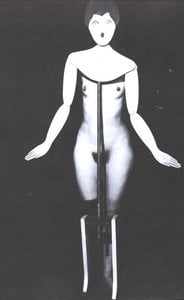
A Surreal Encounter: Deconstructing Identity in Man Ray's "The Coat Stand" Man Ray’s “The Coat Stand” (1920) is a striking black and white photograph that encapsulates the spirit…

Juan Gris роботи Ман Рей
#78

Juan Gris

Музей Оскара Німейера

Juan Gris: A Geometric Vision of Surrealism Juan Gris (José Victoriano González-Pérez), born in Madrid in 1887, stands as an enigmatic figure within the vibrant tapestry of early…

Percolator (1917) роботи Ман Рей
#79

Percolator

1917 · Art Institute of Chicago

The work, titled Percolator, is an oil on board painting dating from 1917. It presents a non-representational arrangement of geometric and organic shapes. A vertical, pole-like element occupies…

Departure of Summer (1914) роботи Ман Рей
#80

Departure of Summer

1914 · Art Institute of Chicago

The canvas holds the tension of a moment frozen in 1914. In this oil on canvas work, titled Departure of Summer, the artist Man Ray explores a world…

The Village (1913) роботи Ман Рей
#85

The Village

1913 · Ізраїльський музей
The Mime (1916) роботи Ман Рей
#87

The Mime

1916 · Метрополітен-музей

Картини Ман Рей за періодами

Теми, які найчастіше писав Ман Рей

Чотири сюжети, які найчастіше зустрічаються серед цих шедеврів, з найкращими прикладами кожного з них.

Де можна побачити картини Ман Рей

8 музеїв, у яких зберігається найбільша кількість картин із цього списку.

Музеї Місто Твори Ман Рей Картини з цього списку
Музей Оскара Німейера, КуритибаМузей Оскара Німейера Куритиба 40 La Galerie Surréaliste, rue Jacques Callot, The Pavillion of Elegance, Tristan Tzara and Jean Cocteau
Музей сучасного мистецтва (MoMA), Нью-ЙоркМузей сучасного мистецтва (MoMA) Нью-Йорк 3 Rayograph (The Kiss), Indestructible Object (or Object to Be Destroyed), Untitled (Aztec figurine of the goddess Tlazoteotl)
Метрополітен-музей, Нью-ЙоркМетрополітен-музей Нью-Йорк 3 Неназваний (Д2Х7С9), Flying Dutchman, The Mime
Музей Бойманса-ван-Бёнінгена, РоттердамМузей Бойманса-ван-Бёнінгена Роттердам 2 Rayograph - 1925, The Riddle of Isidore Ducasse
Смитсонівський музей американського мистецтва, Вашингтон, округ КолумбіяСмитсонівський музей американського мистецтва Вашингтон, округ Колумбія 2 Tableau (Untitled), Landscape (Paysage Fauve)
Art Institute of Chicago, ЧикагоArt Institute of Chicago Чикаго 2 Percolator, Departure of Summer
Ізраїльський музей, ЄрусалимІзраїльський музей Єрусалим 4 The Village
Sezon Museum of Modern Art, КаруізаваSezon Museum of Modern Art Каруізава 2 The couple

Ман Рей, десятиліття за десятиліттям: визначальна картина кожного етапу

  1. 1900s
    Untitled (1908) роботи Ман Рей
    Місце 83 з 100

    Untitled

    Вік 10 – 19 років
  2. 1910s
    The couple (1914) роботи Ман Рей
    #25 з 100

    The couple

    Вік 20 – 29 років · Sezon Museum of Modern Art

    Born Emmanuel Radnitzky in 1890 in Philadelphia, Man Ray was a leading artist of 20th century America. Man Ray awakened to the European avant-garde art at Armory Show…

  3. 1920s
    Rayograph (The Kiss) (1922) роботи Ман Рей
    #3 з 100

    Rayograph (The Kiss)

    Вік 30 – 39 років · Музей сучасного мистецтва (MoMA)

    A Dance Between Light and Shadow: Exploring Man Ray’s “The Kiss” Man Ray's "The Kiss," created in 1922 during the heady days of Dada and Surrealism, transcends mere…

  4. 1930s
    Pisces (1938) роботи Ман Рей
    Місце 2 з 100

    Pisces

    Вік 40 – 49 років

    Introduction to Man Ray and Surrealism Man Ray, born Emmanuel Radnitzky in 1890, was an American visual artist who spent most of his career in France. He was…

  5. 1940s
  6. 1960s
  7. 1970s
    Cadeau (1972) роботи Ман Рей
    № 48 із 100

    Cadeau

    Вік 80 – 86 років

Шедеври Ман Рей: запитання та відповіді

Яка картина є найвідомішою у Ман Рей?Показати відповідь

La Galerie Surréaliste, rue Jacques Callot, Музей Оскара Німейера, Куритиба. Далі йдуть Pisces (1938) та Rayograph (The Kiss) (1922).

Які десять найкращих картин Ман Рей?Показати відповідь

La Galerie Surréaliste, rue Jacques Callot, Pisces, Rayograph (The Kiss), Solarisation, The Pavillion of Elegance, Tristan Tzara and Jean Cocteau, Nusch eluard with mirror, Indestructible Object (or Object to Be Destroyed), Veiled Erotica та (Untitled). У рейтингу вище вказано рік створення та музей для кожної картини.

Скільки робіт написав Ман Рей?Показати відповідь

У нашому каталозі представлено 142 робіт Ман Рей, датованих періодом з 1908 по 1972.

У яких музеях можна побачити шедеври Ман Рей?Показати відповідь

Більшість із них знаходяться в Музей Оскара Німейера (Куритиба), Музей сучасного мистецтва (MoMA) (Нью-Йорк) та Метрополітен-музей (Нью-Йорк). У таблиці вище перелічені музеї по черзі.

Коли Ман Рей створив свої шедеври?Показати відповідь

У 1910s: 19 із 100 робіт на цій сторінці датуються цим часом, серед них The couple.

Які перша та остання відомі картини Ман Рей?Показати відповідь

Найдавніша робота на цій сторінці датована Untitled (1908), найновіша — Cadeau (1972).

Якими були улюблені сюжети Ман Рей?Показати відповідь

Photography (25), Man ray (10) та Black and white (10), серед 100 робіт на цій сторінці.

Яку техніку віддавав перевагу Ман Рей?Показати відповідь

Black and White Photography: 17 із 100 робіт на цій сторінці.

До якого художнього напряму належить Ман Рей?Показати відповідь

Сюрреалізм та Dadaism, як демонструють картини на цій сторінці.

Які шедеври Ман Рей експонуються в Музей Оскара Німейера?Показати відповідь

La Galerie Surréaliste, rue Jacques Callot, The Pavillion of Elegance та Tristan Tzara and Jean Cocteau — це одні з 35 робіт на цій сторінці, що належать Музей Оскара Німейера, Куритиба.

Життя Ман Рей

A Life Illuminated by Shadows

Emmanuel Radnitzky, a name forever intertwined with the enigmatic “Man Ray,” was born in Philadelphia in 1890 to Russian Jewish immigrant parents. His early life, steeped in the vibrant energy of New York City, proved formative, exposing him to the burgeoning modernist scene and instilling within him a lifelong fascination with experimentation – a restless spirit determined to forge an identity unbound by convention. The shift from “Manny” Radnitzky to the iconic Man Ray wasn’t merely a pseudonym; it represented a deliberate assertion of artistic independence, a rejection of societal expectations, and a commitment to exploring uncharted creative territories. His family's move to New York City proved pivotal, immersing him in the avant-garde circles that would shape his artistic trajectory. Early influences included the European modernist movements showcased at Alfred Stieglitz’s 291 gallery – a space that served as a crucial incubator for radical ideas and a gateway to a world of artistic innovation. Simultaneously, he absorbed the gritty realism of the Ashcan School, a distinctly American movement capturing the raw energy and social realities of urban life. This potent combination—European sophistication and American grit—would subtly inform his later work, creating a unique visual language characterized by both elegance and unflinching honesty.

Dada, Surrealism, and the Pursuit of the Impossible

Man Ray’s artistic journey took an extraordinary turn with his encounter with Marcel Duchamp in New York around 1915. This meeting ignited a shared rebellion against established artistic norms, leading to explorations of “ready-mades”—ordinary manufactured objects elevated to the status of art – a concept that fundamentally challenged traditional notions of creativity and authorship. This radical spirit propelled Ray into the heart of the Dada movement, an anti-art protest born from the disillusionment following World War I. Dada artists sought to dismantle conventional values, questioning everything from aesthetics to morality. Man Ray embraced this ethos wholeheartedly, participating in numerous Dada gatherings and exhibitions, contributing to a climate of irreverence and iconoclasm. He quickly became associated with the Surrealist movement shortly after, drawn by its exploration of the subconscious mind, dreams, and the irrational. The Surrealists sought to liberate art from the constraints of reason and logic, embracing chance, automatism, and the power of the imagination. Man Ray’s work during this period reflects these influences—a dreamlike quality infused with a sense of mystery and unease. He wasn't interested in simply representing reality; he aimed to capture its essence – its hidden emotions, its unspoken desires, its fragmented nature. His collaborations with other Surrealist artists, such as Salvador Dalí, further solidified his position within the movement, though he always maintained a distinct artistic voice.

Rayographs and the Alchemy of Light

Perhaps Man Ray is most renowned for his invention of the “rayograph,” a groundbreaking technique that fundamentally altered the possibilities of photography. Almost by accident, while experimenting with light and objects, he discovered a method of creating images without using a camera lens. He would place objects – anything from fruit to shoes to portraits – directly onto light-sensitive paper and expose them to light, often utilizing a small electric lamp. The resulting photographs—known as rayographs—were ethereal, ghostly, and utterly unlike traditional photographic representations. The key wasn’t simply the absence of a camera; it was the way in which Ray manipulated light itself. He treated the photograph not as a record of reality but as an artistic medium, capable of evoking mood, emotion, and suggestion. The rayograph wasn't merely an alternative method; it was a philosophical statement about the nature of photography—a rejection of objectivity and an embrace of subjectivity. These images possessed a unique beauty, a sense of mystery that captivated audiences and inspired countless artists. Beyond rayographs, Man Ray’s photographic portraits – particularly those of his contemporaries like Lee Miller – are celebrated for their striking compositions and psychological depth. He experimented relentlessly with solarization—a technique that reverses the tones of a photograph, creating dramatic contrasts and an otherworldly effect—and multiple exposures, pushing the boundaries of what photography could achieve. His innovative approach to portraiture revealed not just physical likenesses but also glimpses into the inner lives of his subjects.

Beyond Stillness: Film and a Lasting Legacy

Man Ray’s artistic curiosity extended beyond still images into the realm of filmmaking. Recognizing the potential for experimentation, he ventured into the world of cinema, producing a series of groundbreaking films that defied conventional narrative structures and embraced surreal imagery. His early experimental films, such as *Le Retour à la Raison* (1923) and *L'Étoile de Mer* (1928), were characterized by their dreamlike sequences, unconventional editing techniques, and a deliberate rejection of traditional storytelling. These weren’t stories told in a linear fashion; they were visual poems— explorations of form, rhythm, and the subconscious. He employed innovative techniques like stop-motion animation and superimposition to create disorienting and mesmerizing effects, challenging viewers' perceptions of reality. While his film work remained relatively small in scale compared to his photography, it was profoundly influential on subsequent generations of avant-garde filmmakers—demonstrating Man Ray’s commitment to pushing the boundaries of artistic expression across multiple mediums. His legacy extends far beyond his own lifetime, continuing to inspire artists and audiences today.

A Continuing Influence

  • Photography: Man Ray's techniques, particularly rayography and solarization, continue to be explored by contemporary photographers seeking innovative ways to manipulate light and create evocative images.
  • Surrealism: His contributions solidified the movement’s visual language and inspired countless artists across disciplines, influencing everything from painting and sculpture to literature and design.
  • Experimental Film: His pioneering work in film laid the groundwork for future generations of avant-garde filmmakers, demonstrating a willingness to challenge conventional cinematic practices.
  • Fashion Photography: Ray’s innovative approach to portraiture and composition influenced the development of modern fashion photography, emphasizing mood, atmosphere, and psychological depth.
Man Ray's impact resonates profoundly across various artistic fields, solidifying his position as a pivotal figure in 20th-century art. His unwavering commitment to experimentation, his rejection of convention, and his fearless pursuit of the impossible serve as an enduring inspiration for those who seek to push the boundaries of creative expression—a true pioneer whose work continues to challenge, provoke, and delight.

Усі 142 робіт Ман Рей →