Френк Стелла, 1936 – 2024

Френк Стелла: 55 найвідоміших картин

Hyena Stomp (1962) — найвідоміша картина Френк Стелла. Die Fahne Hoch! (1959) та Gran Cairo (1962) — наступні дві найвідоміші у світі роботи. З 55 робіт Френк Стелла у нашому каталозі ми обрали 55 найбільш затребуваних колекціонерами та відвідувачами музеїв — із зазначенням року, музею та історії кожної з них.

Рейтинг сформовано на основі нашого показника популярності, що поєднує кількість пошукових запитів, переглядів та замовлень для кожної роботи. Оновлено Жовтень 2026.

Портрет Френк Стелла
Френк Стелла · 1936 – 2024
Народився · помер
1936 – 2024, Малден
Рух
Post-painterly abstraction
Роботи в нашому каталозі
55
Найвідоміші
Hyena Stomp (1962)
Найбільше робіт у
Музей американського мистецтва Уітні

Топ-10: найвідоміші картини Френк Стелла

Hyena Stomp (1962) роботи Френк Стелла
1

Hyena Stomp

1962

In the vast landscape of twentieth-century abstraction, few works capture the electric pulse of innovation quite like Frank Stella’s 1962 masterpiece, Hyena Stomp. This painting serves as a breathtaking testament to a pivotal moment in art history when the boundaries of the canvas were being radically redefined. At first glance, the viewer is met with an explosion of color—a rhythmic dance of concentric squares that seem to pulse with their…

Die Fahne Hoch! (1959) роботи Френк Стелла
2

Die Fahne Hoch!

1959 · Acrylic On Canvas · Музей американського мистецтва Уітні, Нью-Йорк

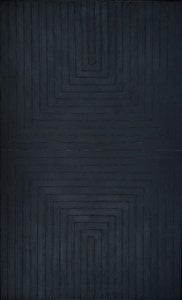
Frank Stella’s 1959 painting, *Die Fahne Hoch!*, isn't merely a composition of black lines on white canvas; it’s an arresting declaration of form and a subtle provocation. Emerging from the vibrant, emotionally charged world of Abstract Expressionism, Stella deliberately distanced himself from its subjective gestures, seeking instead to establish art as an object in itself – a flat surface with paint on it, as he famously stated. This painting embodies…

Gran Cairo (1962) роботи Френк Стелла
3

Gran Cairo

In the vast landscape of twentieth-century abstraction, few works capture the hypnotic allure of pure form as effectively as Frank Stella’s Gran Cairo. Created in 1962, this masterpiece serves as a profound exploration of visual perception, where the boundaries between color and shape begin to dissolve into a mesmerizing dance. At first glance, the viewer is met with a striking interplay of concentric squares, each layer pulsating with a spectrum…

Composition (S/1) (1958) роботи Френк Стелла
4

Composition (S/1)

In 1958, Frank Stella entered his first year of independent work. This period marked a departure from his studies, as he moved to New York City to establish a singular practice. During this pivotal year, he produced a series of monumental abstract canvases. Composition (S/1) emerged from this intense period of production, a time when the artist began to assert a new visual language through scale and form.

Basra Gate III роботи Френк Стелла
5

Basra Gate III

Acrylic On Canvas · Музей Фолькванг, Ессен

To stand before Basra Gate III is to encounter a moment of pure, structured contemplation. This large-scale composition does not whisper; it declares with the confident precision of mathematical certainty. It presents itself as a magnificent semi-circular expanse, immediately drawing the eye into its vibrant, organized complexity. The dominant field of deep purple acts less as a background and more as a resonant void against which color can finally breathe…

Мантенейя II роботи Френк Стелла
6

Мантенейя II

Акрил на полотні · Chrysler Museum of Art, Норфолк

Френк Стелла, безсумнівний новатор американського мистецтва, який помер 4 травня 2024 року у віці 87 років, був фігурою першокласного рівня, що кар'єра якого сягала семи десятиліть і кинула виклик традиційним поглядам на живопис, скульптуру та архітектурний дизайн. Він народився в Малдені, штат Массачусетс, у 1936 році до батьків італійсько-американського походження, і мистецький шлях Стелли почався з раннього впливу візуального світу через матір, яка писала пейзажі та формування в Філіпса Академії…

Marrakech (1964) роботи Френк Стелла
7

Marrakech

1964

This painting is part of Stella’s Morocco series (1964–65), which was inspired in part by Arabic tiles. Using fluorescent paint to disrupt the picture plane, Stella creates not only an illusion of depth but also a pulsating effect that belies the work’s simple, geometric lines.

Darabjerd III (1967) роботи Френк Стелла
9

Darabjerd III

1967

The Darabjerd III painting by Frank Stella is a seminal work in the realm of geometric abstraction. Created in 1967, this acrylic on canvas piece measures 305 x 458 cm and is housed at the National Portrait Gallery in the United States. As a prominent artist of his time, Frank Stella was known for pushing the boundaries of traditional art forms, and Darabjerd III is a testament to his innovative…

Решта рейтингу Френк Стелла, від 11 до 55

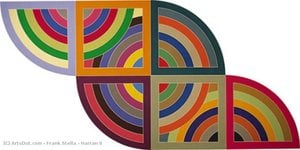
Harran II (1967) роботи Френк Стелла
#12

Harran II

1967 · Музей Соломона Р. Гуггенхайма

To stand before a work like Harran II is not merely to observe paint on canvas; it is to engage in an optical dialogue with the artist’s intellect.…

Haines City (1963) роботи Френк Стелла
#17

Haines City

1963 · Метрополітен-музей
Lac Laronge IV (1969) роботи Френк Стелла
#22

Lac Laronge IV

1969 · Толедський музей мистецтв
Jablonow I (1971) роботи Френк Стелла
#28

Jablonow I

1971 · Музей мистецтва Джона та Мебл Рінґлінґів
Shards III (1983) роботи Френк Стелла
#42

Shards III

1983 · Детройтський інститут мистецтв
The Marriage of Reason and Squalor (1959) роботи Френк Стелла
#47

The Marriage of Reason and Squalor

1959 · Музей сучасного мистецтва (MoMA)

Frank Stella’s “The Marriage of Reason and Squalor,” painted in 1959, isn't merely a painting; it’s an architectural proposition rendered in enamel paint. Emerging from the crucible of…

Untitled (Kufa Gate Shape) (1967) роботи Френк Стелла
#48

Untitled (Kufa Gate Shape)

1967

Untitled (Kufa Gate Shape) belongs to Stella"s Protractor series, begun in 1967 and concluded in 1971. The Protractor series, which consists of ninety-three paintings based on thirty-one distinct…

Shoubeegi (1978) роботи Френк Стелла
#53

Shoubeegi

1978 · Сан-Францисский музей сучасного мистецтва

Frank Stella's “Shoubeegi,” completed in 1978, is more than just a painting; it’s an immersive experience, a vibrant explosion of color and form that embodies the artist’s revolutionary…

Louisiana Lottery Co (1962) роботи Френк Стелла
#54

Louisiana Lottery Co

1962

The Louisiana Lottery Co painting by Frank Stella is a quintessential example of geometric abstraction, showcasing the artist's innovative use of shape and color. Created in 1962, this…

Wolfeboro IV (1966) роботи Френк Стелла
#55

Wolfeboro IV

1966

The Wolfeboro IV painting, created by Frank Stella in 1966, is a seminal work of art that embodies the principles of Formalist Abstraction. This movement, characterized by its…

Картини Френк Стелла за періодами

Теми, які найчастіше писав Френк Стелла

Чотири сюжети, які найчастіше зустрічаються серед цих шедеврів, з найкращими прикладами кожного з них.

Де можна побачити картини Френк Стелла

8 музеїв, у яких зберігається найбільша кількість картин із цього списку.

Музеї Місто Твори Френк Стелла Картини з цього списку
Музей американського мистецтва Уітні, Нью-ЙоркМузей американського мистецтва Уітні Нью-Йорк 2 Die Fahne Hoch!, Gran Cairo
Національна галерея Канади, ОттаваНаціональна галерея Канади Оттава 2 Maquette for the Mural in the Orchestra Level Lobby, Princess of Wales Theatre, Toronto, Firuzabad (Variation) I
Клівлендський музей мистецтва, КлівлендКлівлендський музей мистецтва Клівленд 2 Gray Scramble (Single), VIII, Giufa e la Statua de Gesso
Баварські державні художні колекції, МюнхенБаварські державні художні колекції Мюнхен 1 Composition (S/1)
Музей Фолькванг, ЕссенМузей Фолькванг Ессен 1 Basra Gate III
Chrysler Museum of Art, НорфолкChrysler Museum of Art Норфолк 1 Мантенейя II
Національна галерея Австралії, КанберраНаціональна галерея Австралії Канберра 1 The Fountain
Музей Соломона Р. Гуггенхайма, Нью-ЙоркМузей Соломона Р. Гуггенхайма Нью-Йорк 1 Harran II

Френк Стелла крізь десятиліття: по одному шедевру на кожне десятиліття

  1. 1950s
    Die Fahne Hoch! (1959) роботи Френк Стелла
    № 2 із 55

    Die Fahne Hoch!

    Вік 14 – 23 років · Музей американського мистецтва Уітні

    Frank Stella’s 1959 painting, *Die Fahne Hoch!*, isn't merely a composition of black lines on white canvas; it’s an arresting declaration of form and a subtle provocation. Emerging…

  2. 1960s
    Hyena Stomp (1962) роботи Френк Стелла
    #1 з 55

    Hyena Stomp

    Вік 24 – 33 років

    In the vast landscape of twentieth-century abstraction, few works capture the electric pulse of innovation quite like Frank Stella’s 1962 masterpiece, Hyena Stomp. This painting serves as a…

  3. 1970s
    Uzlany II (1973) роботи Френк Стелла
    #27 з 55

    Uzlany II

    Вік 34 – 43 років · Kunstmuseum Den Haag
  4. 1980s
    Shards III (1983) роботи Френк Стелла
    Місце 42 з 55

    Shards III

    Вік 44 – 53 років · Детройтський інститут мистецтв
  5. 1990s
    The Fountain (1992) роботи Френк Стелла
    № 8 із 55

    The Fountain

    Вік 54 – 63 років · Національна галерея Австралії
  6. 2000s

Картини Френк Стелла: часто задавані питання

Яка найвідоміша картина Френк Стелла?Показати відповідь

Hyena Stomp (1962). Далі йдуть Die Fahne Hoch! (1959) та Gran Cairo (1962).

У якому віці Френк Стелла написав(ла) Hyena Stomp?Показати відповідь

26 років: Hyena Stomp датована 1962 роком, а Френк Стелла народився(-лася) у 1936.

Які 10 найвідоміших картин Френк Стелла?Показати відповідь

Hyena Stomp, Die Fahne Hoch!, Gran Cairo, Composition (S/1), Basra Gate III, Мантенейя II, Marrakech, The Fountain, Darabjerd III та Maquette for the Mural in the Orchestra Level Lobby, Princess of Wales Theatre, Toronto. У рейтингу вище вказано рік створення та музей для кожної картини.

Скільки картин має Френк Стелла?Показати відповідь

У нашому каталозі представлено 55 робіт Френк Стелла, датованих періодом з 1958 по 2001.

Де я можу побачити найвідоміші картини Френк Стелла?Показати відповідь

Більшість із них знаходяться в Музей американського мистецтва Уітні (Нью-Йорк), Національна галерея Канади (Оттава) та Клівлендський музей мистецтва (Клівленд). У таблиці вище перелічені музеї по черзі.

У який період Френк Стелла написав свої найвідоміші роботи?Показати відповідь

У 1960s: 20 із 55 робіт на цій сторінці датуються цим часом, серед них Hyena Stomp.

Яка найдавніша та найновіша відомі картини Френк Стелла?Показати відповідь

Найдавніша робота на цій сторінці датована Composition (S/1) (1958), найновіша — Prinz Friedrich von Homburg, Ein Schauspiel, 3X (2001).

Які сюжети писав Френк Стелла?Показати відповідь

Geometric (5), Abstract (4) та Op art (3), серед 55 робіт на цій сторінці.

На чому та якими матеріалами малював Френк Стелла?Показати відповідь

Acrylic On Canvas: 4 із 55 робіт на цій сторінці.

До якого напряму належить мистецтво Френк Стелла?Показати відповідь

Post-painterly abstraction, як демонструють картини на цій сторінці.

Які картини Френк Стелла зберігаються в Музей американського мистецтва Уітні?Показати відповідь

Die Fahne Hoch! та Gran Cairo — це одні з 2 робіт на цій сторінці, що належать Музей американського мистецтва Уітні, Нью-Йорк.

Френк Стелла: біографія

Frank Stella

Frank Stella, who passed away on May 4, 2024, at the age of 87, was a towering figure in American art, a relentless innovator whose career spanned seven decades and challenged conventional notions of painting, sculpture, and architectural design. Born in Malden, Massachusetts, in 1936 to first-generation Italian-American parents, Stella’s artistic journey began with an early exposure to the visual world through his mother's landscape paintings and a formative education at Phillips Academy Andover, where he encountered the rigorous color theories of Josef Albers and the expressive power of Hans Hofmann. These influences, coupled with studies in history at Princeton University and frequent trips to New York City galleries, laid the groundwork for a radical departure from the prevailing Abstract Expressionism of the time. Stella wasn’t interested in the emotional turmoil or subjective gesture that defined artists like Pollock and Kline; he sought something purer, more objective—a distillation of painting down to its most fundamental elements.

Rejecting Illusion: The Rise of Minimalism

Stella's emergence onto the art scene in the late 1950s was nothing short of revolutionary. He famously declared that “a painting should be a flat surface with paint on it—nothing more,” a statement that became a manifesto for the burgeoning Minimalist movement. This philosophy materialized most strikingly in his *Black Paintings* (1958-1960), a series of canvases defined by precisely spaced, symmetrical black stripes separated by bands of exposed canvas. Works like Die Fahne Hoch! (1959) – a title deliberately provocative, referencing the Nazi anthem – weren’t intended as expressions of political sentiment but rather as explorations of form and surface, challenging viewers to confront the painting as an object in itself. The deliberate coolness and rejection of emotional content were jarring at the time, signaling a decisive break from Abstract Expressionism's emphasis on subjective experience. He wasn’t aiming to depict something *about* the world; he was presenting the world—or rather, the painting—as it *is*. This focus on materiality and geometric precision extended into his shaped canvases of the 1960s, where Stella abandoned the traditional rectangular format in favor of complex polygons, often crafted from aluminum and copper paint. These weren’t merely paintings; they were sculptural objects that blurred the boundaries between two and three dimensions, further emphasizing the artwork's physical presence.

Expanding Boundaries: From Protractor Series to Maximalism

The 1970s witnessed a dramatic shift in Stella’s artistic trajectory. Influenced by Caravaggio and Rubens, he embarked on a quest for baroque painting’s expressive potential—a journey that resulted in the *Protractor Series* (1967–71), characterized by sweeping arcs and vibrant colors arranged within square borders. Simultaneously, Stella explored printmaking with fervor, mastering techniques like lithography, screenprinting, and etching to produce abstract prints mirroring his painting's geometric vocabulary. His engagement transcended artistic mediums; he collaborated on Merce Cunningham’s dance piece *Scramble* in 1967, demonstrating a willingness to integrate disciplines. A retrospective at the Museum of Modern Art in 1970 solidified Stella’s position as a leading voice within contemporary art. During this decade, he experimented with relief constructions—the *Polish Village* series (1970–73) and *Exotic Bird Paintings* (1976–80)—incorporating collage elements and aluminum supports. Departing from his earlier hard-edged style, Stella embraced a baroque aesthetic marked by gestural brushstrokes and architectural references.

A Legacy of Innovation

Stella’s later career continued to push artistic boundaries—particularly with the *Moby Dick* series (1985–97), consisting of 260 prints, sculptures, and reliefs that investigated abstraction's illustrative capacity. He received numerous accolades, including the National Medal of Arts in 2009 and the Lifetime Achievement Award in Contemporary Sculpture from the International Sculpture Center in 2011. Frank Stella’s enduring influence on art history is undeniable; he redefined painting as an object—a singular surface adorned with pigment—challenging conventional artistic conventions and inspiring generations of artists to pursue formal exploration and innovation. His work remains a testament to his unwavering dedication to artistic rigor and courage, securing his place among the most significant figures in 20th-century art.

Усі 55 робіт Френк Стелла →