Еммануель де Вітте, 1617 – 1692

Еммануель де Вітте: 99 найвідоміших картин

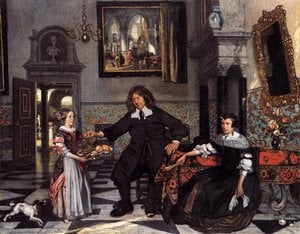
Portrait of a Family in an Interior (detail) (1678) — найвідоміша картина Еммануель де Вітте, що зберігається в Альте Пінакотека у Мюнхен. The Interior of a Dutch Church (1680) та Interior of the Nieuwe Kerk in Delft (1664) — наступні дві найвідоміші у світі роботи. З 99 робіт Еммануель де Вітте у нашому каталозі ми обрали 99 найбільш затребуваних колекціонерами та відвідувачами музеїв — із зазначенням року, музею та історії кожної з них.

Рейтинг сформовано на основі нашого показника популярності, що поєднує кількість пошукових запитів, переглядів та замовлень для кожної роботи. Оновлено Жовтень 2026. Кожен шедевр на цій сторінці можна замовити як художню олійну репродукцію ручної роботи музейного рівня або як високоякісний арт-принт у будь-якому обраному вами розмірі.

Портрет Еммануель де Вітте
Еммануель де Вітте · 1617 – 1692
Народився · помер
1617 – 1692, Алкмар
Рух
Dutch golden age
Роботи в нашому каталозі
99
Найвідоміші
Portrait of a Family in an Interior (detail) (1678)
Найбільше робіт у
Музей Бойманса-ван-Бёнінгена

Топ-10: найвідоміші картини Еммануель де Вітте

Portrait of a Family in an Interior (detail) (1678) роботи Еммануель де Вітте
1

Portrait of a Family in an Interior (detail)

1678 · Oil On Canvas · Альте Пінакотека, Мюнхен

Emanuel de Witte's “Portrait of a Family in an Interior” (1678) isn’t merely a depiction of a wealthy household; it’s a carefully constructed tableau vivant, a frozen moment brimming with quiet dignity and subtle narrative. Painted during the height of the Dutch Golden Age, this oil on canvas offers a rare glimpse into the lives of a prosperous family within their richly appointed home—a space designed to project status, comfort,…

The Interior of a Dutch Church (1680) роботи Еммануель де Вітте
2

The Interior of a Dutch Church

1680 · Oil On Canvas · Шотландська національна галерея, Едінбург

The Interior of a Dutch Church is an oil on canvas by Emanuel de Witte. Created about 1680, the work reflects the artist's specialization in the architectural spaces of the Netherlands. De Witte, who was born in Alkmaar, Netherlands, spent much of his career capturing the specific atmosphere and light within these sacred environments.

Interior of the Nieuwe Kerk in Delft (1664) роботи Еммануель де Вітте
3

Interior of the Nieuwe Kerk in Delft

1664 · Oil On Canvas · Residenzgalerie, Зальцбург

To stand before an interior scene like this depiction of the Nieuwe Kerk in Delft is to step across a threshold, leaving the clamor of the outside world behind. The artwork does not merely show us a church; it envelops us within its monumental silence. Emanuel de Witte masterfully captures that unique atmosphere found only in grand, aged sacred architecture—a place where history seems palpable in the very dust motes…

Rest During the Flight (1654) роботи Еммануель де Вітте
4

Rest During the Flight

The oil painting titled Rest During the Flight by Emanuel de Witte depicts a specific narrative from religious history. Created about 1654, the work presents a scene likely representing the Flight into Egypt. This biblical event is rendered through a composition centered on a nocturnal landscape where light and shadow define the primary figures.

The Interior of the Oude Kerk, Amsterdam, during a Sermon (1658) роботи Еммануель де Вітте
5

The Interior of the Oude Kerk, Amsterdam, during a Sermon

1658 · Oil On Canvas · Національна галерея, Лондон

To stand before this depiction of The Interior of the Oude Kerk in Amsterdam is to step across the threshold of time itself. This painting, executed in 1658 by Emanuel de Witte, is far more than a mere record of an architectural space; it is a meticulously crafted meditation on faith, community, and the sublime interplay between human life and divine structure. The high-angle perspective immediately envelops the viewer, drawing…

Portrait of a woman (1648) роботи Еммануель де Вітте
6

Portrait of a woman

1648 · Oil On Canvas · Музей Бойманса-ван-Бёнінгена, Роттердам

A single female figure occupies the center of this oval vignette, presented in a bust-length view. She wears a dark garment, accented by a prominent white collar with scalloped edges and a small black bow. The composition draws the eye directly to her face, where a calm and composed expression suggests a dignified emotional tone. Light originates from the upper left, casting gentle shadows across the right side of her…

Portrait of a man (1648) роботи Еммануель де Вітте
7

Portrait of a man

is an oil painting by the Dutch artist Emanuel de Witte. Executed about 1648, the work represents a significant example of the artist's early engagement with portraiture before his later specialization in church interiors. The sitter is presented in a bust-length composition, positioned slightly off-center to create a sense of depth and presence.

Interior of a Protestant Gothic Church (1669) роботи Еммануель де Вітте
8

Interior of a Protestant Gothic Church

1669 · Oil On Canvas · Рейксмюзеум, Амстердам

Emanuel de Witte's "Interior of a Protestant Gothic Church," painted in 1669, isn’t merely a depiction of a sacred space; it’s an immersive experience. This remarkable work transcends the simple act of recording architecture, instead capturing the very *feeling* of being within a grand, dimly lit cathedral – a testament to de Witte's unique artistic vision. Unlike his contemporary Pieter Saenredam, who meticulously documented architectural details with photographic precision, de…

Решта рейтингу Еммануель де Вітте, від 11 до 99

Теми, які найчастіше писав Еммануель де Вітте

Чотири сюжети, які найчастіше зустрічаються серед цих шедеврів, з найкращими прикладами кожного з них.

Де можна побачити картини Еммануель де Вітте

8 музеїв, у яких зберігається найбільша кількість картин із цього списку.

Музеї Місто Твори Еммануель де Вітте Картини з цього списку
Музей Бойманса-ван-Бёнінгена, РоттердамМузей Бойманса-ван-Бёнінгена Роттердам 11 Portrait of a woman, Portrait of a man, Vertumnus and Pomona
Рейксмюзеум, АмстердамРейксмюзеум Амстердам 8 Interior of a Protestant Gothic Church, Interior of a Protestant Gothic Church, Interior of the Portuguese Synagogue in Amsterdam
Національна галерея, ЛондонНаціональна галерея Лондон 4 The Interior of the Oude Kerk, Amsterdam, during a Sermon, The Interior of the Oude Kerk, Amsterdam, The Interior of the Oude Kerk, Amsterdam, during a Sermon
Amsterdam Museum, АмстердамAmsterdam Museum Амстердам 3 Interior of the Oude Kerk in Amsterdam, Interior of the Oude Kerk in Amsterdam, Interior of the Oude Kerk in Amsterdam
Gemäldegalerie, БерлінGemäldegalerie Берлін 3 Interior View of a Synagogue, Interior of a Gothic Church, Interior of the Nieuwe Kerk in Amsterdam
Державний музей-заповідник «Ермітаж», Санкт-ПетербургДержавний музей-заповідник «Ермітаж» Санкт-Петербург 3 Square in front of the Palace in an Italian Town, Old Church in Delft, Interior of a Church
Метрополітен-музей, Нью-ЙоркМетрополітен-музей Нью-Йорк 3 Interior of the Oude Kerk, Delft, Interior of the Oude Kerk, Delft (detail), Interior of the Oude Kerk, Delft
Детройтський інститут мистецтв, ДетройтДетройтський інститут мистецтв Детройт 3 The Nieuwe Kerk at Delft with the Tomb of Willem the Silent, Interior of a Protestant Church, Interior of the Oude Kerk in Amsterdam

Еммануель де Вітте крізь десятиліття: по одному шедевру на кожне десятиліття

  1. 1640s
    Portrait of a woman (1648) роботи Еммануель де Вітте
    #6 з 99

    Portrait of a woman

    Вік 23 – 32 років · Музей Бойманса-ван-Бёнінгена

    A single female figure occupies the center of this oval vignette, presented in a bust-length view. She wears a dark garment, accented by a prominent white collar with…

  2. 1650s
    Rest During the Flight (1654) роботи Еммануель де Вітте
    #4 з 99

    Rest During the Flight

    Вік 33 – 42 років · Баварські державні художні колекції

    The oil painting titled Rest During the Flight by Emanuel de Witte depicts a specific narrative from religious history. Created about 1654, the work presents a scene likely…

  3. 1660s
    Interior of the Nieuwe Kerk in Delft (1664) роботи Еммануель де Вітте
    № 3 із 99

    Interior of the Nieuwe Kerk in Delft

    Вік 43 – 52 років · Residenzgalerie

    To stand before an interior scene like this depiction of the Nieuwe Kerk in Delft is to step across a threshold, leaving the clamor of the outside world…

  4. 1670s
    Portrait of a Family in an Interior (detail) (1678) роботи Еммануель де Вітте
    № 1 із 99

    Portrait of a Family in an Interior (detail)

    Вік 53 – 62 років · Альте Пінакотека

    Emanuel de Witte's “Portrait of a Family in an Interior” (1678) isn’t merely a depiction of a wealthy household; it’s a carefully constructed tableau vivant, a frozen moment…

  5. 1680s
    The Interior of a Dutch Church (1680) роботи Еммануель де Вітте
    Місце 2 з 99

    The Interior of a Dutch Church

    Вік 63 – 72 років · Шотландська національна галерея

    The Interior of a Dutch Church is an oil on canvas by Emanuel de Witte. Created about 1680, the work reflects the artist's specialization in the architectural spaces…

  6. 1690s

Картини Еммануель де Вітте: часто задавані питання

Яка найвідоміша картина Еммануель де Вітте?Показати відповідь

Portrait of a Family in an Interior (detail) (1678), Альте Пінакотека, Мюнхен. Далі йдуть The Interior of a Dutch Church (1680) та Interior of the Nieuwe Kerk in Delft (1664).

У якому віці Еммануель де Вітте написав(ла) Portrait of a Family in an Interior (detail)?Показати відповідь

61 років: Portrait of a Family in an Interior (detail) датована 1678 роком, а Еммануель де Вітте народився(-лася) у 1617.

Які 10 найвідоміших картин Еммануель де Вітте?Показати відповідь

Portrait of a Family in an Interior (detail), The Interior of a Dutch Church, Interior of the Nieuwe Kerk in Delft, Rest During the Flight, The Interior of the Oude Kerk, Amsterdam, during a Sermon, Portrait of a woman, Portrait of a man, Interior of a Protestant Gothic Church, Danaë and the Shower of Gold та Vertumnus and Pomona. У рейтингу вище вказано рік створення та музей для кожної картини.

Скільки картин має Еммануель де Вітте?Показати відповідь

У нашому каталозі представлено 99 робіт Еммануель де Вітте, датованих періодом з 1641 по 1692.

Де я можу побачити найвідоміші картини Еммануель де Вітте?Показати відповідь

Більшість із них знаходяться в Музей Бойманса-ван-Бёнінгена (Роттердам), Рейксмюзеум (Амстердам) та Національна галерея (Лондон). У таблиці вище перелічені музеї по черзі.

У який період Еммануель де Вітте написав свої найвідоміші роботи?Показати відповідь

У 1650s: 27 із 99 робіт на цій сторінці датуються цим часом, серед них Rest During the Flight.

Яка найдавніша та найновіша відомі картини Еммануель де Вітте?Показати відповідь

Найдавніша робота на цій сторінці датована Danaë and the Shower of Gold (1641), найновіша — The Nieuwe Vismarkt (New Fish Market) in Amsterdam, Emanuel de Witte, 1655 - 1692 (1692).

Які сюжети писав Еммануель де Вітте?Показати відповідь

Church interior (16), 17th century (10) та Architecture (10), серед 99 робіт на цій сторінці.

На чому та якими матеріалами малював Еммануель де Вітте?Показати відповідь

Oil On Canvas: 22 із 99 робіт на цій сторінці.

До якого напряму належить мистецтво Еммануель де Вітте?Показати відповідь

Dutch golden age та Baroque, як демонструють картини на цій сторінці.

Які картини Еммануель де Вітте зберігаються в Музей Бойманса-ван-Бёнінгена?Показати відповідь

Portrait of a woman, Portrait of a man та Vertumnus and Pomona — це одні з 11 робіт на цій сторінці, що належать Музей Бойманса-ван-Бёнінгена, Роттердам.

Де я можу купити репродукцію Еммануель де Вітте?Показати відповідь

Так. Кожну картину на цій сторінці можна замовити як музейну репродукцію, написану олією вручну, або як художній принт у будь-якому обраному вами розмірі — безпосередньо зі сторінки самої картини.

Еммануель де Вітте: біографія

A Life in Perspective: The World of Emanuel de Witte

Emanuel de Witte, a name perhaps less instantly recognizable than some of his Dutch Golden Age contemporaries, nevertheless occupies a significant and fascinating niche within the pantheon of 17th-century masters. Born in Alkmaar in 1617, De Witte’s artistic journey was one marked by both remarkable talent and considerable personal turmoil – a duality that seems to subtly infuse itself into the very atmosphere of his paintings. He wasn't driven by meticulous architectural documentation like Pieter Saenredam; instead, he sought to capture the *feeling* of space, the quality of light, and the subtle drama unfolding within sacred interiors. His canvases aren’t merely representations of churches; they are immersive experiences, inviting viewers into a world of quiet contemplation and spiritual resonance.

From Delft Training to Amsterdam's Embrace

De Witte’s early life provided a solid foundation for his artistic pursuits. His father, a schoolmaster, instilled in him an appreciation for learning and intellectual curiosity – qualities that would later manifest in his careful observation of perspective and light. He formally entered the art world by joining the Guild of St Luke in Alkmaar in 1636, but it was his subsequent apprenticeship with Evert van Aelst in Delft that proved particularly formative. Van Aelst, a renowned still-life painter, imparted to De Witte a keen eye for detail and a masterful command of light and shadow – skills that would become hallmarks of his mature style. Initially, De Witte explored various genres—portraits, mythological scenes, religious narratives—but it was upon relocating to Amsterdam in 1651 that he truly found his calling. The city’s wealth of magnificent churches provided an inexhaustible source of inspiration, and he began to specialize in depicting their awe-inspiring interiors. The scale and grandeur of these spaces, combined with the play of light filtering through stained glass windows, presented a unique challenge – one De Witte embraced with remarkable skill.

Master of Atmosphere and Imaginary Spaces

Amsterdam proved pivotal for De Witte's artistic development. He didn’t simply replicate existing church interiors; rather, he skillfully synthesized elements from different buildings, creating idealized spaces that felt both familiar and subtly otherworldly. The Oude Kerk in Amsterdam became a frequent subject on his canvases, appearing repeatedly from various vantage points – sometimes elevated to emphasize its imposing height, other times viewed from the bustling streets below. But these weren’t straightforward depictions. De Witte manipulated perspective, played with light and shadow, and populated the spaces with carefully arranged figures—often depicting worshippers in prayer or contemplation—to evoke a specific mood or atmosphere. He wasn't interested in photographic accuracy; he was striving to capture the *essence* of sacred space – its sense of reverence, tranquility, and spiritual depth. As Walter Liedtke noted, his primary interest lay not in the architecture itself but in “the space itself – its light, color, sheer extent, and mood.” This emphasis on atmospheric effect distinguishes him from more rigidly topographical painters of the era. He wasn’t concerned with precise measurements or architectural details; he was interested in creating a *feeling*—a sense of awe, peace, and connection to something greater than oneself.

A Life Marked by Shadows

Despite his artistic success, De Witte's personal life was plagued by hardship. The death of his first wife brought profound grief, and subsequent legal troubles involving his second wife and daughter cast a long shadow over his later years. Financial difficulties led him to the humiliating position of indentured servitude to an art dealer, Joris de Wijs, a situation he ultimately breached, leading to further complications. Contemporary accounts paint a picture of a volatile temperament – a man prone to shouting at clients and engaging in disputes. This inner turmoil perhaps contributed to the unevenness of his later work, but it also adds another layer of complexity to our understanding of the artist and his creations. Tragically, De Witte’s life came to a devastating end in 1692 when he reportedly attempted suicide by hanging himself from a canal bridge; the rope broke, and he drowned. It was a grim finale for a man who had dedicated his life to capturing the beauty and serenity of sacred spaces.

Legacy and Enduring Influence

Emanuel de Witte stands as an important figure in the last phase of architectural painting in the Netherlands, bridging the gap between meticulous documentation and atmospheric interpretation. His innovative use of light and perspective influenced subsequent generations of artists, and his paintings continue to offer valuable insights into 17th-century Dutch religious life and social customs. Today, works by De Witte are held in prestigious collections worldwide – at the Metropolitan Museum of Art in New York, the National Gallery of Art in Washington, D.C., and the Rijksmuseum in Amsterdam—testifying to his enduring legacy as a master of perspective, atmosphere, and emotional resonance. He reminds us that art is not merely about what we see but how we *feel* when we look.

Усі 99 робіт Еммануель де Вітте →