Антоніс ван Дейк, 1599 – 1641

Антоніс ван Дейк: The 100 Most Famous Paintings

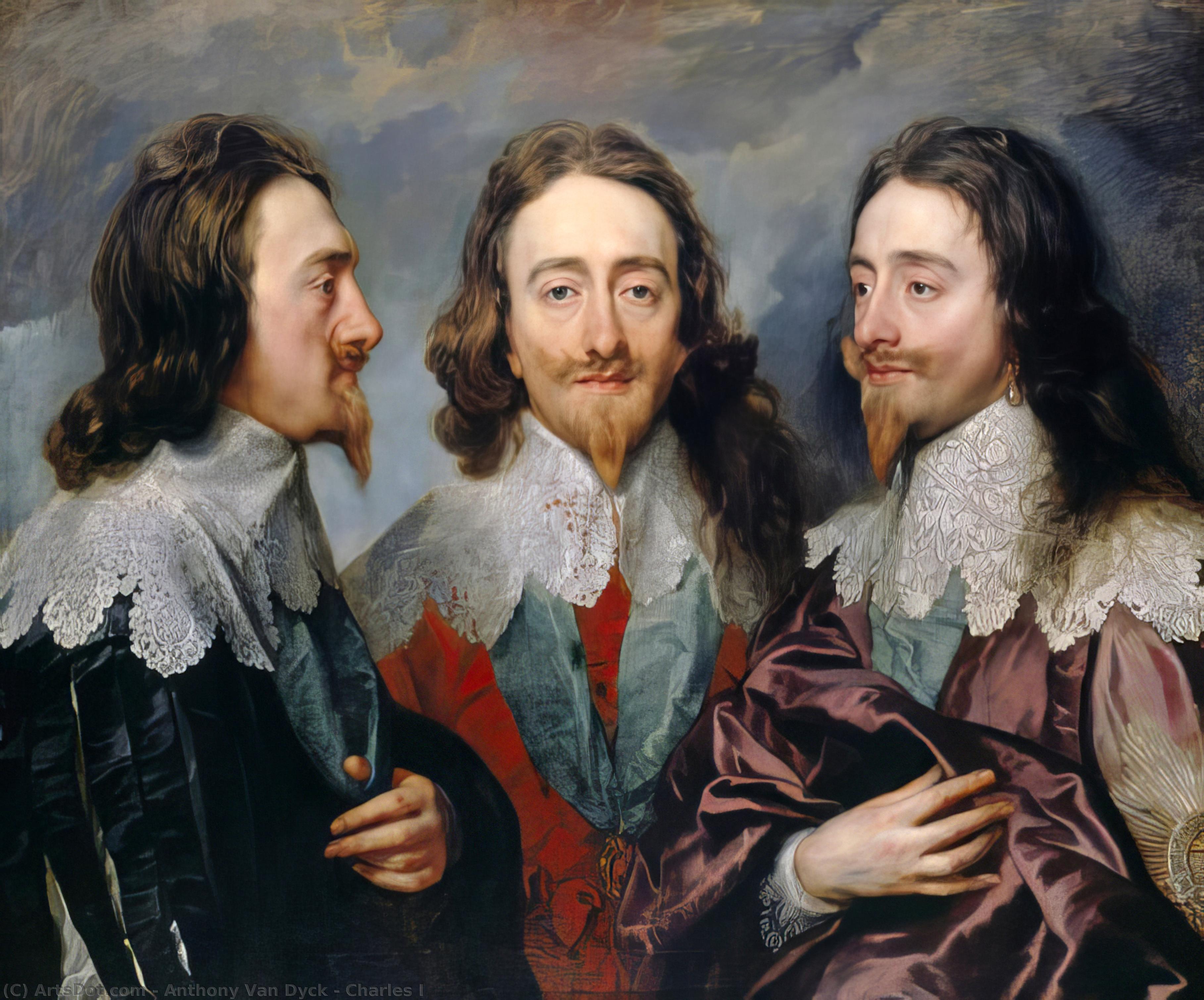
Чарльз I у трьох позах (1636) is the most famous painting by Антоніс ван Дейк, held by the Королівська колекція in Лондон. Family Portrait (1621) and Portrait of Isabella Clara Eugenia as Widow (1628) are the next two works the world knows best. From the 1,620 works of Антоніс ван Дейк in our catalogue, here are the 100 that collectors and museum visitors look at most, with the year, the museum and the story of each.

Ranked by our popularity score, which combines the searches, visits and orders for each work. Updated Жовтень 2026. Every masterpiece on this page can be ordered as a museum-quality, hand-painted oil reproduction or a fine art print, at the size you choose.

Portrait of Антоніс ван Дейк
Антоніс ван Дейк · 1599 – 1641
Born · died
1599 – 1641, Антверпен
Movement
Baroque style
Works in our catalogue
1 620
Most famous
Чарльз I у трьох позах (1636)
Most works at
Баварські державні художні колекції

Top 10: Антоніс ван Дейк's best-known paintings

Чарльз I у трьох позах (1636) by Антоніс ван Дейк
1

Чарльз I у трьох позах

1636 · Олія на полотні · Королівська колекція, Лондон

Картина “Чарльз I у трьох позах” – це не просто портрет, а справжній візуальний діалог з епохою. Створена 1635-1636 років фламандським майстром Антоніо ван Дюком, ця олійная картина на полотні стала символом епохи бароко та відображенням складної особистості короля Чарльза I Англії. Розташована у Королівській колекції, в Віндзорському замку, вона продовжує притягувати увагу глядачів своєю витонченістю, драматизмом та глибоким історичним значенням.

Family Portrait (1621) by Антоніс ван Дейк
2

Family Portrait

1621 · Oil On Canvas · Державний музей-заповідник «Ермітаж», Санкт-Петербург

To gaze upon this magnificent family portrait is to step directly into the opulent drawing rooms of the early seventeenth century. It captures not merely three figures—a distinguished man, an elegant woman, and a cherished child—but an entire tableau of familial pride and societal standing. The composition itself speaks volumes; every fold of fabric, every carefully placed hand, contributes to a narrative of enduring connection. The rich, dramatic red background…

Portrait of Isabella Clara Eugenia as Widow (1628) by Антоніс ван Дейк
3

Portrait of Isabella Clara Eugenia as Widow

1628 · Oil On Canvas · Museo de Arte de Ponce, Ponce

Sir Anthony van Dyck’s “Portrait of Isabella Clara Eugenia as Widow” is more than just a depiction of a noblewoman; it's a carefully constructed tableau of power, grief, and the enduring legacy of a formidable ruler. Painted in 1628, this oil-on-canvas work transports us to the heart of the Spanish Netherlands during a period of significant political and personal upheaval. Isabella Clara Eugenia, daughter of Philip II of Spain, served…

Jacqueline van Caestre (1622) by Антоніс ван Дейк
4

Jacqueline van Caestre

1622 · Oil On Panel · Королівський музей Лазенки, Варшава

The portrait of Jacqueline van Caestre, painted in 1622 by the masterful Sir Anthony van Dyck, is more than a mere likeness; it’s a carefully constructed tableau of wealth, status, and burgeoning domesticity. Within its richly layered composition lies a captivating story of a noblewoman navigating the complexities of marriage and courtly life in 17th-century Antwerp. Van Dyck, already establishing his signature style—characterized by an almost sensual realism and a…

Сусанна та старійшини (1622) by Антоніс ван Дейк
5

Сусанна та старійшини

1622 · Олія на полотні · Альте Пінакотека, Мюнхен

Бароковий шедевр: «Сусанна та Старійшини» Ентоні ван Дейка «Сусанна та Старійшини» Сіра Ентоні ван Дейка виходить за межі простого портретування; він уособлює велич і інтелектуальний запал епохи Бароко, закріпивши за собою місце однієї з найяскравіших вершин творчості Ван Дейка. Написана в 1622 році, ця монументальна полотно — розміром 194 x 144 см — наразі зберігається у музеї Альте Пінакотек у Мюнхені, Німеччина, пропонуючи відвідувачам рідкісний погляд на художні чуття фламандського…

Genoese Noblewoman (1622) by Антоніс ван Дейк
6

Genoese Noblewoman

1622 · Oil On Canvas · The Frick Collection, Нью-Йорк

Anthony van Dyck's "Genoese Noblewoman," painted circa 1625-1627, isn’t merely a portrait; it’s a meticulously crafted window into the opulent world of early 17th-century Genoa. This captivating work, now residing within The Frick Collection in New York City, offers a rare glimpse into the refined tastes and social dynamics of a wealthy Italian city-state – a vibrant hub of commerce, art, and cultural exchange during a period of immense artistic…

Henrietta Maria (1635) by Антоніс ван Дейк
7

Henrietta Maria

1635 · Oil On Canvas

The gaze of Henrietta Maria meets the viewer through this commanding portrait by Anthony van Dyck. Executed in 1636, the work captures Henrietta Maria of France in a moment of poised royal dignity. She exists here as the Queen of England, a position she holds through her marriage to King Charles I. The painting functions as a visual declaration of her status and her presence within the English court.

Portrait of Queen Henrietta-Maria (1638) by Антоніс ван Дейк
8

Portrait of Queen Henrietta-Maria

1638 · Oil On Canvas · Державний музей-заповідник «Ермітаж», Санкт-Петербург

To stand before this portrait is to encounter the quiet gravity of the seventeenth-century English court. The Queen stands slightly off-center, her figure anchored by the heavy weight of crimson drapery and a draped table. There is a certain stillness here, a moment caught between the political tensions of 1638 and the personal dignity of the sitter. Van Dyck uses light to sculpt her form, pulling her face and chest…

The healing of the paralytic (1620) by Антоніс ван Дейк
9

The healing of the paralytic

In this oil painting, titled The healing of the paralytic, Anthony van Dyck explores a moment of profound spiritual intervention. The work, which dates to about 1618-20, captures the immediate aftermath of a miracle. We find ourselves witnessing the precise instant of transition between infirmity and restoration. The subject matter is drawn from the New Testament, specifically the narratives found in Matthew 9:1-8 or John 5:1-15.

Portrait of Alexandre della Faille (1589-1653) (1632) by Антоніс ван Дейк
10

Portrait of Alexandre della Faille (1589-1653)

A dignified three-quarter length portrait, this work captures a middle-aged man positioned centrally against a dark, atmospheric background. The subject, Alexandre della Faille, is rendered with a sense of quiet authority and formal composure. A voluminous white ruff collar acts as the primary focal point, its crisp texture contrasting sharply against the heavy, dark fabric of his cloak. Light enters from the upper left, casting soft shadows across the right…

The rest of the Антоніс ван Дейк ranking, 11 to 100

The Pietà (1629) by Антоніс ван Дейк
#12

The Pietà

1629 · Музей Прадо

Step closer to observe the weight of this scene. In this 1629 composition, we find the Virgin Mary cradling the limp, pale body of Christ. The arrangement is…

Order a reproduction →
The Lomellini Family (1627) by Антоніс ван Дейк
#16

The Lomellini Family

1627

To stand before 'The Lomellini Family' is to step directly into the gilded drawing rooms of 17th-century Genoese aristocracy. Anthony van Dyck, a painter whose elegance seemed to…

Order a reproduction →
Moses and the Brazen Serpent (1530) by Антоніс ван Дейк
#19

Moses and the Brazen Serpent

1530

Moses and the Brazen Serpent by Anthony van Dyck captures a moment of divine intervention from the Book of Numbers. The oil painting on canvas depicts the biblical…

Samson and Delilah (1630) by Антоніс ван Дейк
#24

Samson and Delilah

1630 · Kunsthistorisches Museum

In the grand tapestry of the Flemish Baroque, few moments capture the tension between divine strength and human frailty as poignantly as Sir Anthony van Dyck’s Samson and…

Bring it home →
Charles I (1600-49) on Horseback (1635) by Антоніс ван Дейк
#26

Charles I (1600-49) on Horseback

1635 · Hampton Court Palace

The scene unfolds with the commanding presence of Charles I (1600-49) on Horseback, a work by the artist Anthony van Dyck. Created in 1635, the portrait captures the…

Bring it home →
Cupid and Psyche (1640) by Антоніс ван Дейк
#27

Cupid and Psyche

1640 · Королівська колекція

Anthony van Dyck's "Cupid and Psyche," painted in 1640, is more than just a depiction of a mythological romance; it’s a distillation of the Baroque spirit – a…

Bring it home →
Queen Henrietta Maria of England (1620) by Антоніс ван Дейк
#28

Queen Henrietta Maria of England

1620 · Баварські державні художні колекції

In this three-quarter length portrait, Anthony van Dyck positions Queen Henrietta Maria of England slightly off-center. This subtle shift creates a quiet tension within the frame. A luminous…

Bring it home →
A Family Group (1634) by Антоніс ван Дейк
#29

A Family Group

1634 · Детройтський інститут мистецтв

A Family Group is an oil on canvas painting by the Flemish artist Anthony van Dyck. This work dates to about 1634. It is a formal and elegant…

Commission a hand-painted copy →
Queen Henrietta Maria of England (1639) by Антоніс ван Дейк
#30

Queen Henrietta Maria of England

1639 · Statens Museum For Kunst

Queen Henrietta Maria of England, painted by Anthony van Dyck, captures the queen consort of Charles I. Dated 1636, the portrait presents the woman who was born in…

Bring it home →
Saint Sebastian and the Angel (1631) by Антоніс ван Дейк
#31

Saint Sebastian and the Angel

1631 · Galleria Sabauda

A diagonal line cuts through the composition, pulling the eye from the descending angel down to the slumped, pale form of Saint Sebastian. The saint’s skin is luminous,…

Bring it home →
Portrait of a painter (1640) by Антоніс ван Дейк
#32

Portrait of a painter

1640 · Kunstmuseum Basel

We are looking at Portrait of a painter, a work by Sir Anthony van Dyck. Created about 1640, this piece presents a man whose identity is tied closely…

Bring it home →
Queen Henrietta Maria (1635) by Антоніс ван Дейк
#33

Queen Henrietta Maria

1635 · Стейтлехі Кунстсаммельшґен Дрезден

Queen Henrietta Maria is an oil on canvas portrait by Sir Anthony van Dyck, executed in 1636. The work identifies the subject as Henrietta Maria of France, who…

Commission a hand-painted copy →
St Jerome (1620) by Антоніс ван Дейк
#35

St Jerome

1620 · Національний музей Швеції

The composition centers on the muscular, elderly figure of St. Jerome, positioned in a wilderness setting. His torso is partially exposed, draped in a voluminous red cloth that…

Order a reproduction →
Venetia, Lady Digby (1634) by Антоніс ван Дейк
#36

Venetia, Lady Digby

1634

To stand before this magnificent portrait is to step directly into the dramatic heart of the seventeenth century. Sir Anthony van Dyck’s depiction of Venetia, Lady Digby is…

Order a reproduction →
Crucifixion (1622) by Антоніс ван Дейк
#38

Crucifixion

1622 · Сан-Закарія

Sir Anthony van Dyck's 1622 depiction of the Crucifixion is not merely a representation of a biblical event; it’s a visceral exploration of human suffering and spiritual anguish,…

Commission a hand-painted copy →
Ottaviano Canevari (1627) by Антоніс ван Дейк
#40

Ottaviano Canevari

1627 · The Frick Collection

Sir Anthony van Dyck’s 1627 portrait of Ottaviano Canevari is more than simply a likeness; it's a carefully constructed tableau of intellect, status, and the quiet dignity of…

Bring it home →
Lamentation of Christ (1620) by Антоніс ван Дейк
#41

Lamentation of Christ

1620 · Баварські державні художні колекції

In this 1620 work, we find ourselves drawn into a tight, pyramidal arrangement of figures that centers entirely on the lifeless body of Christ. A heavy, sacred silence…

Commission a hand-painted copy →
Saint Sebastian (1620) by Антоніс ван Дейк
#44

Saint Sebastian

1620 · Баварські державні художні колекції

The oil on canvas known as Saint Sebastian is an artwork by Anthony van Dyck. Created about 1620, the painting captures a moment of martyrdom. The figure is…

Order a reproduction →
The Martyrdom of Saint Sebastian (1616) by Антоніс ван Дейк
#45

The Martyrdom of Saint Sebastian

1616 · Баварські державні художні колекції

The Martyrdom of Saint Sebastian emerges from the shadows of the Baroque era, a religious work that captures a moment of profound transition. In this painting by Sir…

Order a reproduction →
Sir Kenelm Digby (1640) by Антоніс ван Дейк
#47

Sir Kenelm Digby

1640 · Національна портретна галерея

To gaze upon this portrait of Sir Kenelm Digby is to step directly into the opulent, charged atmosphere of the early seventeenth century English court. The subject, depicted…

Commission a hand-painted copy →
Portrait of an Old Man (1618) by Антоніс ван Дейк
#49

Portrait of an Old Man

1618 · Liechtenstein Museum

Sir Anthony van Dyck's "Portrait of an Old Man," painted circa 1618, is more than a simple likeness; it’s a profound meditation on time, wisdom, and the quiet…

Order a reproduction →
Portrait of a Man (1922) by Антоніс ван Дейк
#50

Portrait of a Man

1922 · Баварські державні художні колекції

This work is a Portrait of a Man by the Flemish Baroque artist Anthony van Dyck. Dated 1922, the painting presents a formal, full-length composition. The subject is…

Order a reproduction →
Charles I in Three Positions (1636) by Антоніс ван Дейк
#51

Charles I in Three Positions

1636 · Королівська колекція

In the grand tapestry of Baroque portraiture, few works command the room with as much quiet authority as Sir Anthony van Dyck’s “Charles I in Three Positions.” Completed…

Order a reproduction →
Portrait of a Genovese Gentleman (1621) by Антоніс ван Дейк
#53

Portrait of a Genovese Gentleman

1621 · Gemäldegalerie

To stand before this portrait is to step directly into the opulent, sophisticated world of early 17th-century European aristocracy. Sir Anthony van Dyck, the Flemish master whose brushstrokes…

Order a reproduction →
The Martyrdom of Saint Sebastian (1620) by Антоніс ван Дейк
#56

The Martyrdom of Saint Sebastian

1620 · Баварські державні художні колекції

The Martyrdom of Saint Sebastian emerges from the shadows as a profound piece of religious art by Sir Anthony van Dyck. In this scene, the saint faces his…

Order a reproduction →
Portrait of a Man (1618) by Антоніс ван Дейк
#58

Portrait of a Man

1618 · Liechtenstein Museum

Sir Anthony van Dyck's “Portrait of a Man,” painted circa 1618-1619, is not merely a likeness; it’s a carefully constructed meditation on presence and authority. This small yet…

Commission a hand-painted copy →
Marie de Raet (1631) by Антоніс ван Дейк
#59

Marie de Raet

1631 · Wallace Collection

To stand before Marie de Raet is to be enveloped in the profound stillness of the early seventeenth century. This magnificent portrait by Sir Anthony van Dyck, dating…

Bring it home →
The Virgin and Child (1631) by Антоніс ван Дейк
#63

The Virgin and Child

1631 · Букінгемський палац

In this Baroque oil painting, the Virgin Mary is positioned at the center of a pyramidal structure, cradling the Christ Child. She wears a rose-colored tunic beneath a…

Order a reproduction →
Lord George Stuart (1638) by Антоніс ван Дейк
#64

Lord George Stuart

1638 · Національна портретна галерея

To gaze upon this portrait of Lord George Stuart is to step directly into the opulent, yet deeply thoughtful, world of early seventeenth-century English aristocracy. Sir Anthony van…

Order a reproduction →
Queen Henrietta Maria (1760) by Антоніс ван Дейк
#66

Queen Henrietta Maria

1760 · Birmingham Museum and Art Gallery

In this oil on canvas work from 1636, Sir Anthony van Dyck presents Queen Henrietta Maria. The portrait captures the queen, who lived from 1609 to 1669, with…

Order a reproduction →
The Polish Rider (1620) by Антоніс ван Дейк
#69

The Polish Rider

1620 · Баварські державні художні колекції

The composition is dominated by the diagonal movement of the horse and rider. This movement creates a sense of forward momentum across the canvas. The subject is a…

Order a reproduction →
Королева Генрієтта Марія (1636) by Антоніс ван Дейк
#73

Королева Генрієтта Марія

1636 · Метрополітен-музей

Картина Антоніса ван Дейка «Королева Генрієтта Марія», написана у 1636 році, — це не просто портрет; це ретельно створений документ влади, віри та витонченого дипломатичного танцю, що визначав…

Order a reproduction →
Lady Dacre (1633) by Антоніс ван Дейк
#74

Lady Dacre

1633 · Денверський художній музей

Sir Anthony van Dyck’s “Lady Dacre” is not merely a portrait; it's a carefully constructed tableau of Renaissance elegance, imbued with subtle symbolism and the quiet dignity of…

Commission a hand-painted copy →
Francis Junius (1591–1677) (1640) by Антоніс ван Дейк
#75

Francis Junius (1591–1677)

1640 · Бібліотека Оксфордського університету Бодлея

Sir Anthony van Dyck’s “Francis Junius (1591–1677)” is more than just a portrait; it's a carefully constructed tableau of intellect, serenity, and the quiet dignity of scholarly life.…

Commission a hand-painted copy →
Charles i - (16) by Антоніс ван Дейк
#76

Charles i - (16)

In this work, titled Charles i - (16), Anthony van Dyck presents a formal bust-length depiction of the monarch. The subject is Charles I, who held the titles…

Bring it home →
Deux têtes d (1650) by Антоніс ван Дейк
#77

Deux têtes d

1650 · Museum of Fine Arts

Sir Anthony van Dyck's "Deux têtes d" – literally, “Two Heads” – is not merely a painting; it’s an arresting tableau of psychological depth and subtle drama. Completed…

Bring it home →
Christ carrying the Cross by Антоніс ван Дейк
#83

Christ carrying the Cross

Musei di Strada Nuova

In Christ carrying the Cross by Anthony van Dyck, the viewer is met with a tightly cropped, bust-length portrait. The composition focuses entirely on the upper torso and…

Bring it home →
Ecce Homo (1626) by Антоніс ван Дейк
#85

Ecce Homo

1626 · The Barber Institute of Fine Arts

Sir Anthony van Dyck’s “Ecce Homo,” painted circa 1625-1626, is not merely a depiction of Christ before Pilate; it's an intensely human portrayal of sorrow, humility, and the…

Bring it home →
Margareta Snyders (1620) by Антоніс ван Дейк
#86

Margareta Snyders

1620

To gaze upon Anthony Van Dyck's portrait of Margareta Snyders is to step directly into the opulent, emotionally charged world of the early seventeenth century. This painting, executed…

Bring it home →
Margareta de Vos (1620) by Антоніс ван Дейк
#87

Margareta de Vos

1620 · The Frick Collection

Sir Anthony van Dyck’s “Margareta de Vos,” painted in 1620, is more than just a portrait; it's a meticulously crafted tableau of wealth, status, and subtle artistry. This…

Order a reproduction →
Portrait of a Man (1618) by Антоніс ван Дейк
#90

Portrait of a Man

1618 · Liechtenstein Museum

In this formal portrait from 1618, Sir Anthony van Dyck presents a man positioned slightly off-center, facing forward to engage the viewer directly. The composition is characterized by…

Bring it home →
Portrait of James Hamilton (1630) by Антоніс ван Дейк
#92

Portrait of James Hamilton

1630 · Liechtenstein Museum

A Noble Presence: Unveiling Anthony van Dyck’s Portrait of James Hamilton The image before you captures not merely a likeness, but the very essence of 17th-century power and…

Bring it home →
Карл I на коні (1635) by Антоніс ван Дейк
#93

Карл I на коні

1635 · Національна галерея

Sir Anthony van Dyck's “Charles I on Horseback” is more than just a portrait; it’s a carefully constructed tableau of power, authority, and the idealized image of a…

Bring it home →
The Lomellini Family (1626) by Антоніс ван Дейк
#96

The Lomellini Family

1626 · Національна галерея Шотландії

To stand before Sir Anthony van Dyck’s “The Lomellini Family” is to step directly into the gilded drawing rooms of seventeenth-century Genoa, where the air feels heavy with…

Commission a hand-painted copy →
Самуил і Делила (1620) by Антоніс ван Дейк
#97

Самуил і Делила

1620

Цей потужний шедевр живописно відтворює біблійну історію про Самсона і Делілу, закарбовуючи вирішальний момент, сповнений напруги, зради та емоційної інтенсивності. Сцена змальовує Делілу, чиє обличчя виражає суміш каяття…

Order a reproduction →
Abraham and Isaac (1617) by Антоніс ван Дейк
#98

Abraham and Isaac

1617 · Національна галерея Праги

Sir Anthony van Dyck's “Abraham and Isaac,” painted in 1617, is more than just a biblical scene; it’s a profound meditation on faith, obedience, and the agonizing weight…

Commission a hand-painted copy →
Portrait of Anna van Craesbecke (1635) by Антоніс ван Дейк
#99

Portrait of Anna van Craesbecke

1635 · Державні музеї Касселя

Sir Anthony van Dyck’s “Portrait of Anna van Craesbecke,” painted in 1635, is more than just a likeness; it's a meticulously crafted tableau of aristocratic life and the…

Bring it home →
A wooded ridge (1630) by Антоніс ван Дейк
#100

A wooded ridge

1630 · Art Gallery of South Australia

Sir Anthony van Dyck's "A Wooded Ridge," painted around 1630, isn’t merely a landscape; it’s an invitation into a hushed and contemplative realm. This evocative piece, rendered in…

Bring it home →

Антоніс ван Дейк's paintings by period

The subjects Антоніс ван Дейк painted most

The four subjects that return most often among these masterpieces, with the finest example of each.

Where to see Антоніс ван Дейк's paintings

The 8 museums that hold the most of the paintings on this page.

Museum City Works by Антоніс ван Дейк Paintings from this list
Баварські державні художні колекції, МюнхенБаварські державні художні колекції Мюнхен 57 The healing of the paralytic, Equestrian Portrait of Charles I of England, Queen Henrietta Maria of England
Державний музей-заповідник «Ермітаж», Санкт-ПетербургДержавний музей-заповідник «Ермітаж» Санкт-Петербург 25 Family Portrait, Portrait of Queen Henrietta-Maria, Portrait of Charles I, King of the Great Britain (1600-1649)
Королівська колекція, ЛондонКоролівська колекція Лондон 29 Чарльз I у трьох позах, Cupid and Psyche, Charles I in Three Positions
Liechtenstein Museum, ВіденьLiechtenstein Museum Відень 23 Portrait of an Old Man, Portrait of a Man, Portrait of a Man
The Frick Collection, Нью-ЙоркThe Frick Collection Нью-Йорк 8 Genoese Noblewoman, Ottaviano Canevari, Margareta de Vos
Wallace Collection, ЛондонWallace Collection Лондон 9 Queen Henrietta Maria, Marie de Raet
Національна портретна галерея, ЛондонНаціональна портретна галерея Лондон 6 Sir Kenelm Digby, Lord George Stuart
Шотландська національна галерея портретів, ЕдінбургШотландська національна галерея портретів Едінбург 5 Thomas Hamilton, 2nd Earl of Haddington, 1600 - 1640, Alexander Henderson (c.1583–1646), Presbyterian Divine and Diplomatist

Антоніс ван Дейк through the decades: one masterpiece for each

  1. 1610s
    The Martyrdom of Saint Sebastian (1616) by Антоніс ван Дейк
    #45 of 100

    The Martyrdom of Saint Sebastian

    Age 11 – 20 · Баварські державні художні колекції

    The Martyrdom of Saint Sebastian emerges from the shadows of the Baroque era, a religious work that captures a moment of profound transition. In this painting by Sir…

  2. 1620s
    Family Portrait (1621) by Антоніс ван Дейк
    #2 of 100

    Family Portrait

    Age 21 – 30 · Державний музей-заповідник «Ермітаж»

    To gaze upon this magnificent family portrait is to step directly into the opulent drawing rooms of the early seventeenth century. It captures not merely three figures—a distinguished…

  3. 1630s
    Чарльз I у трьох позах (1636) by Антоніс ван Дейк
    Rank 1 / 100

    Чарльз I у трьох позах

    Age 31 – 40 · Королівська колекція

    Картина “Чарльз I у трьох позах” – це не просто портрет, а справжній візуальний діалог з епохою. Створена 1635-1636 років фламандським майстром Антоніо ван Дюком, ця олійная картина…

  4. 1640s
    Queen Henrietta Maria (1640) by Антоніс ван Дейк
    No. 17 of 100

    Queen Henrietta Maria

    Age 41 – 42 · Wallace Collection

    The Queen sits in a moment of quiet poise, her figure angled slightly away from the viewer to create a sense of graceful movement. She is draped in…

Антоніс ван Дейк's paintings: frequently asked questions

What is the most famous Антоніс ван Дейк painting?Show the answer

Чарльз I у трьох позах (1636), Королівська колекція, Лондон. Next come Family Portrait (1621) and Portrait of Isabella Clara Eugenia as Widow (1628).

At what age did Антоніс ван Дейк paint Чарльз I у трьох позах?Show the answer

37 years old: Чарльз I у трьох позах dates from 1636 and Антоніс ван Дейк was born in 1599.

Which are the 10 most famous Антоніс ван Дейк paintings?Show the answer

Чарльз I у трьох позах, Family Portrait, Portrait of Isabella Clara Eugenia as Widow, Jacqueline van Caestre, Сусанна та старійшини, Genoese Noblewoman, Henrietta Maria, Portrait of Queen Henrietta-Maria, The healing of the paralytic and Portrait of Alexandre della Faille (1589-1653). The ranking above gives the year and the museum of each.

How many paintings by Антоніс ван Дейк are there?Show the answer

Our catalogue lists 1,620 works by Антоніс ван Дейк, dated from 1616 to 1641.

Where can I see the most famous Антоніс ван Дейк paintings?Show the answer

Most of them are in Баварські державні художні колекції (Мюнхен), Державний музей-заповідник «Ермітаж» (Санкт-Петербург) and Королівська колекція (Лондон). The table above lists the museums one by one.

In which period did Антоніс ван Дейк paint the best-known works?Show the answer

In 1630s: 44 of the 100 works on this page date from then, among them Чарльз I у трьох позах.

What is the earliest famous Антоніс ван Дейк painting, and the latest?Show the answer

The earliest on this page is The Martyrdom of Saint Sebastian (1616), the latest Portrait of Prince Charles Louis, Elector Palatine (1641).

What subjects did Антоніс ван Дейк paint?Show the answer

Man (22), Portraiture (20) and Woman (15), among the 100 works on this page.

What did Антоніс ван Дейк paint on, and with what?Show the answer

Oil On Canvas: 67 of the 100 works on this page.

Which movement does Антоніс ван Дейк's art belong to?Show the answer

Baroque style, as the paintings on this page show.

What Антоніс ван Дейк paintings does the Баварські державні художні колекції hold?Show the answer

The healing of the paralytic, Equestrian Portrait of Charles I of England and Queen Henrietta Maria of England are among the 10 works on this page held by the Баварські державні художні колекції, Мюнхен.

Where can I buy a Антоніс ван Дейк reproduction?Show the answer

Yes. Every painting on this page can be ordered as a museum-quality, hand-painted oil reproduction or a fine art print, in the size you choose, from the painting's own page.

Антоніс ван Дейк: biography

Ранні роки, родина та навчання

Народившись в Антверпені 22 березня 1599 року, Антоній Ван Дік увійшов у світ, де панували торгівля та ремесло. Він був сьомою дитиною з дванадцяти у сім'ї Марії Куперс та Франсуа «Франса» ван Діка, торговця шовком. Виховання в заможному домі заклало міцний фундамент для дитини, яка з ранніх років демонструвала надзвичайні, майже передчасні здібності до образотворчого мистецтва. Вже до десятирічного віку його офіційне навчання живопису розпочалося під наставництвом Гендріка ван Балена Старшого.

Його творчий шлях позначився стрімким сходженням крізь традиційні структури фламандського мистецького світу. Він не затримався надовго у статусі простого учня; технічна майстерність дозволила йому досягти незалежності з вражаючою швидкістю. До 18 жовтня 1617 року він подолав важливий етап, отримавши право бути прийнятим до Антверпенської гільдії Святого Луки як вільний майстер. Це раннє професійне визнання стало сигналом про появу таланту, який невдовзі вийде далеко за межі його рідного міста.

  • Автопортрет (датирується 1613–14 рр.)

Вплив Пітера Пауля Рубенса

Траєкторія кар'єри Антонія Ван Діка була докорінно сформована часом, проведеним у майстерні Пітера Пауля Рубенса. Це не було звичайне учнівство; молодий митець піднявся до рівня головного помічника майстра — посади, що вимагала не лише технічної точності, а й здатності вбирати в себе складну візуальну мову. Сам Рубенс визнавав винятковий талант свого протеже, називаючи юнака своїм найкращим учнем. Це наставництво забезпечило Антонію Ван Діку прямий зв'язок із провідними мистецькими течіями сімнадцятого століття, дозволяючи йому на власні очі спостерігати за створенням масштабних композицій та управлінням надзвичайно продуктивною майстернею.

Вплив Рубенса проявлявся у молодим художнику через спільний акцент на експресії, жесті та формі. Хоча згодом Антоній Ван Дік виробить більш витончений та стриманий манер, його ранні роки були присвячені наслідуванню енергії та спостережливості свого наставника. Він навчився перетворювати життєву вітальність на олію та пігмент — навичка, яка згодом дозволить йому вийти за межі потужної енергії стилю Рубенса у напрямку чогось більш тонкого та вишуканого. Технічний фундамент, закладений у цій майстерні, надав йому необхідних інструментів для майбутнього сходження до королівських дворів Європи.

Художні мандри Італією та Генуєю

До того як йому виповнилося двадцять, Антоній Ван Дік уже здобув визнання як самостійний майстер — цей успіх став тим самим імпульсом, що відкрив йому шлях за межі Нижніх Країн. У період з 1621 по кінець 1627 року він подорожував Італією, і ці роки стали визначальними для його вміння орієнтуватися у складних соціальних ієрархіях європейської знаті. Ці мандри не були просто випадковим переміщенням у просторі; це було стратегічне занурення у візуальну мову середземноморської еліти.

Особливо значущим став його час у Генуї. Тут він знайшов постійних покровительів серед генуезьких патриціїв, чиї аристократичні почуття ідеально резонували з його стилем, що тільки-но починав набувати своїх характерних рис. Його портрети місцевих родин були зустріті в місті з великою прихильністю, що утвердило за ним репутацію художника, здатного втілити ту особливу гідність, якої вимагало вище суспільство. У цих роботах він виходить за межі простого портретного сходства, намагаючись розкрити соціальний статус та глибинний характер своїх моделей.

Служба при англійському дворі

Зв'язок Антонія Ван Діка з англійською короною розпочався задовго до його остаточного оселення в Лондоні. Ще у 1620 році він вступив на службу до короля Якова I — це було коротке переконання, що стало лише прелюдією до його масштабних мандрів Італією та Іспанськими Нідерландами. Ці роки постійних рухів та різноманітних замовлень підготували його до справді глибокого та визначного приходу. До 1632 року він повернувся до Англії, оселившись при дворі, де його репутація видатного портретиста здобула остаточне підтвердження. Саме того року він був призначений «головним придворним художником Їхніх Величностей» — посада, що поставила його в самий центр королівського життя.

Його поява в Лондоні докорінно змінила візуальну мову монархії. Він відійшов від жорсткої, формальної портретної традиції минулого, натомість обрав шлях представлення короля та аристократії через призму невимушеної грації та природної влади. Здатність митця вловити найтонші риси характеру своїх моделей дозволила йому стати провідним придворним художником Англії. Він не просто фіксував обличчя; він створював образ могутності, який впливатиме на англійський двір протягом багатьох поколінь. Його роботи цього періоду принесли відчуття гідності та витонченої виваженості, що визначило естетику цілої епохи.

Техніка та художній стиль

Антоній Ван Дік володів надзвичайною технічною гнучкістю, що дозволяла йому вільно переходити від густого, насиченого нанесення олійних фарб до витончених, гострих ліній офорту. Як майстерний графік, він глибоко розумів структурну необхідність міцного фундаменту перед тим, як торкатися полотна кольором. Його композиції часто спиралися на майстерне розбудовування форми, використовуючи драматичну гру світла та тіні для окреслення контурів своїх героїв. Таке використання кьяроскуро створювало відчуття глибини та об'єму, особливо в релігійних та міфологічних сценах, де світло ніби виринало з темряви, щоб підкреслити певний жест або вираз обличчя.

Його палітра вирізнялася глибокими, насиченими кольорами та надзвичайною увагою до найдрібніших деталей текстури. Чи то передача м'якого блиску шовку, чи то ледь помітна зернистість людської шкіри — він зберігав відчуття витонченості, уникаючи грубості, притаманної деяким його сучасникам. Ця точність не обмежувалася лише офіційними замовленнями; здатність митця вловити рух та характер дозволяла йому досягати вершин у різних жанрах: від грандіозності міфологічних сюжетів до інтимної психологічної глибини портрета. Він мав особливий дар використовувати світло для того, щоб натякнути на соціальний статус або внутрішній темперамент моделі, часто вдаючись до широких жестів та ретельно підібраних фонів, щоб виділити особистість у кадрі.

Спадщина та незгасний вплив

Смерть сера Антонія Ван Діка в Лондоні 9 грудня 1641 року ознаменувала завершення кар'єри, яка вже встигла докорінно змінити візуальну мову європейських дворів. Ідучи стопами Пітера Пауля Рубенса, він утвердився як найвидатніший фламандський живописець XVII століття. Його присутність при англійському дворі встановила такі стандарти портретного жанру, що вони визначали вектор розвитку мистецтва протягом наступних 150 років. Він володів рідкісним даром — здатністю через витончену техніку передавати не лише соціальний статус, а й глибинний характер своїх моделей, створюючи еталон, на який орієнтувалися наступні покоління майстрів.

Вплив його творчості простягався далеко за межі Англії. Протягом усього свого життя він чинив глибокий вплив на мистецтво, що створювалося по всій Європі. Такої широти охоплення він досяг завдяки своїй неймовірній універсальності, легко переходячи від складних релігійних наративів до вишуканих і витончених запитів аристократії. Він не просто фіксував обриси облич; він конструював образ влади та грації, що став пріоритетною естетикою для тих, хто прагнув продемонструвати свій престиж та непереборну силу.

  • Charles I in Three Positions (1636)
  • The Balbi Children
  • Self-Portrait (1622)

All 1620 works by Антоніс ван Дейк →