A Dream Woven in Color: The Life and Art of Edward Burne-Jones
Edward Coley Burne-Jones, a name synonymous with Victorian romanticism and Pre-Raphaelite beauty, was born in the industrial heart of Birmingham in 1833. His early life, marked by the tragic loss of his mother, shaped a contemplative spirit deeply immersed in imaginative worlds – a foundation that would profoundly influence his artistic vision. Raised by his father and the steadfast housekeeper Ann Sampson, he received an education at King Edward VI Grammar School and later the Birmingham School of Art, honing his technical skills but it was his time at Exeter College, Oxford, that truly ignited his creative destiny. There, amidst the intellectual fervor of the Pre-Raphaelite movement, he forged a lifelong friendship with William Morris, a bond built on shared passions for beauty and a yearning to reclaim the artistic values of the Middle Ages – a rejection of the perceived ugliness and materialism of the modern world. This connection would not only shape Burne-Jones’s artistic trajectory but also become central to the establishment of Morris & Co., a firm dedicated to reviving traditional craftsmanship and elevating design to an art form in itself.
The Brotherhood and the Birth of a Unique Style
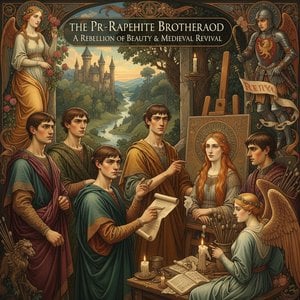
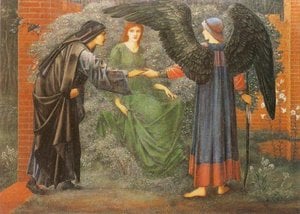
Oxford became a crucible for artistic experimentation, where Burne-Jones, alongside Morris and their circle – including Dante Gabriel Rossetti and John Ruskin – delved into medieval literature, mythology, and art. The writings of Ruskin, with his passionate defense of craftsmanship and his critique of industrial society, profoundly influenced the group’s aesthetic sensibilities. They sought to escape the perceived artificiality of contemporary art by returning to the idealized beauty and spiritual depth of the Middle Ages. This wasn't mere nostalgia; it was a deliberate act of rebellion against the prevailing trends of the era. The formation of "The Brotherhood" provided a space for these artists to collaborate, share ideas, and develop their individual styles – Burne-Jones’s quickly distinguishing itself through its ethereal beauty, melancholic grace, and meticulous attention to detail. His early works were heavily influenced by Rossetti's romanticism, but he soon developed his own distinctive voice, characterized by elongated figures, dreamlike landscapes, and a profound sense of longing. The influence of Botticelli and Filippo Lippi is evident in the delicate forms and muted colors that permeate many of his paintings, yet Burne-Jones infused these classical elements with a uniquely British sensibility – a blend of elegance, melancholy, and spiritual yearning.
From Painting to Tapestry: A Renaissance of Craft
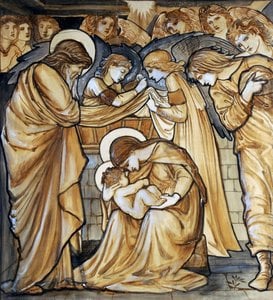
Burne-Jones’s artistic output extended far beyond the canvas. Recognizing the potential for art to permeate every aspect of life, he collaborated closely with William Morris in establishing Morris & Co., a revolutionary firm dedicated to reviving traditional crafts. He wasn't simply designing decorative patterns; he was reimagining the very concept of artistry, advocating for a holistic approach where beauty and functionality intertwined seamlessly. The firm produced exquisite textiles, wallpapers, furniture, ceramics, and stained glass – all bearing the hallmark of Burne-Jones’s refined aesthetic. His designs for stained glass windows are particularly remarkable, transforming churches and cathedrals into luminous realms of color and narrative. These weren't merely functional elements; they were works of art in their own right, imbued with symbolism and designed to evoke a sense of wonder and spiritual contemplation. This commitment to craftsmanship wasn’t simply about reviving ancient techniques; it was a deliberate attempt to elevate the status of decorative arts, challenging the prevailing hierarchy that placed painting and sculpture at the pinnacle of artistic achievement. Burne-Jones's designs for the "Story of Beauty and the Beast" tile exemplify this fusion of artistry and functionality, showcasing his ability to create both visually stunning and practically useful objects.
Mythic Visions and Personal Shadows
Burne-Jones’s subject matter often drew from medieval legends, Arthurian romances, and classical mythology – tales of chivalry, love, loss, and the eternal struggle between good and evil. His most famous works, such as *The Legend of King Arthur* (1878) and *The Lady of Shalott* (1888), capture this spirit with breathtaking beauty and emotional depth. He wasn’t simply illustrating these stories; he was interpreting them through his own unique artistic vision, imbuing them with a sense of melancholy and psychological complexity. However, Burne-Jones's personal life was not without its shadows. His marriage to Georgiana MacDonald, though enduring, was marked by a passionate affair with his Greek model, Maria Zambaco, which led to a dramatic crisis. Despite these emotional challenges, he continued to produce an astonishing body of work, exploring themes of love, loss, and the search for spiritual meaning throughout his career.
A Lasting Legacy
Edward Burne-Jones’s influence on British art and design is undeniable. His paintings continue to captivate audiences with their ethereal beauty, intricate detail, and profound emotional depth. He played a pivotal role in revitalizing traditional crafts through his collaboration with William Morris, establishing a new standard for decorative arts. His stained glass windows remain iconic examples of Victorian artistry, transforming sacred spaces with their luminous colors and evocative narratives. Burne-Jones’s work stands as a testament to the power of art to transcend time and touch the deepest recesses of the human soul – a reminder that beauty, spirituality, and craftsmanship can coexist in harmonious balance. His legacy endures not only through his paintings but also through the enduring influence he had on subsequent generations of artists and designers who sought to recapture the lost ideals of the Pre-Raphaelite movement.