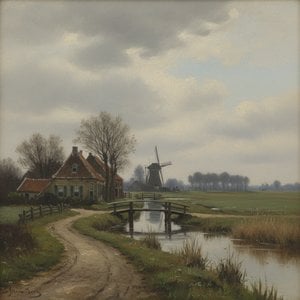
Життя, занурене в деталі: Світ Франса ван Мьєріса Старшого
Франс ван Мьєріс Старший — ім'я, що стало синонімом ретельної деталізації та витонченого артистизму, посідає значне місце в історії нідерландського Золотого віку. Народившись у Лейдені в 1635 році, він обрав шлях, що відрізнявся від сімейної справи ювеліра — ремесла, яким займався його батько, Ян Бастіанс ван Мьєріс, — і присвятив себе чарівному світу живопису. Ця рання схильність до малювання підготувала ґрунт для кар'єри, яка б визначила стиль «фійньшільдер» та запропонувала інтимний погляд на нідерландське суспільство XVII століття. Його перше навчання у Абрахама Тооренфліта, а згодом вирішальні уроки від шанованого Герріта Доу, заклали міцний фундамент, на якому він вибудував свій самобутній художній голос. Ці роки становлення прищепили йому не лише технічну майстерність, а й глибоке розуміння наративної нюанси та силу тонкого спостереження.Сходження «фійньшільдера»
Ван Мьєріс швидко здобув славу майстра *fijnschilder* — нідерландського терміна, що означає «тонке живописне письмо». Ця техніка характеризувалася майже одержимою увагою до деталей, гладким та відшліфованим мазком і перевагою невеликих полотен. Йшлося не просто про відтворення реальності, а про її піднесення через неймовірну точність. Поверхні на його картинах ніби мерехтять життям: блиск атласу, делікатна текстура оксамиту, відблиск металу — усе передано з приголомшливою точністю. Він не просто малював кімнату; він відтворював саму атмосферу всередині неї, запрошуючи глядача в сцени домашнього затишку та достатку. Тематика його робіт часто оберталася навколо життя заможних верств: елегантні зібрання, вишукані інтер'єри, портрети, що вловлювали не лише зовнішність, а й характер. Повторювані мотиви, такі як обіди з устрицями, візити лікарів до пацієнтів та жінки, залучені до повсякденних справ, ставали вікнами у звичаї та соціальні ритуали вищих класів. Хоча спочатку він перебував під сильним впливом стилю Герріта Доу, Ван Мьєріс поступово розробив власний унікальний підхід. Він відійшов від надмірної деталізації на користь більшого акценту на взаємодії між постатями та розвитку сюжету всередині композицій. Пізніші роботи іноді демонструють темніші тональні якості порівняно з яскравішою палітрою його ранніх полотен, що відображає зростання зрілості та художнього пошуку.Знакові твори та нев'януча спадщина
Кілька ключових творів слугують свідченням майстерності Ван Мьєріса та еволюції його стилю. «Візит лікаря» (1657), що вважається одним із його найперших датованих і найважливіших шедеврів, демонструє його зросталу незалежність від впливу Доу. Ця картина є майстерним класом у передачі тихої напруги медичного огляду, виконаного з приголомшливим рівнем реалізму. Його «Автопортрет із цитерною» не менш захоплює, демонструючи здатність зображувати розкішне вбрання, одночасно передаючи відчуття особистості та інтроспекції. «Портрет дружини художника, Кунери ван дер Кок» уособлює його майстерність у портретному жанрі, підкреслюючи як технічну вправність, так і розуміння *chiaroscuro* — драматичної гри світла й тіні. Окрім жанрових сцен та портретів, Ван Мьєріс також звертався до алегоричного живопису, наприклад, зображуючи такі пороки, як пияцтво, паління та азартні ігри, що демонструвало широту його творчих можливостей. Вплив Франса ван Мьєріса вийшов далеко за межі його власного життя. Його спадщина відгукнулася в межах родини: його син Віллем ван Мьєріс (1662–1747) та внук Франс ван Мьєріс Молодший (1689–1763) обоє стали видатними майстрами жанрового живопису, продовжуючи художню традицію. Популярність його стилю також породила численних послідовників, найбільш примітним з яких був А. Д. Снафхан, який працював у Лейпцигу та мав покровительство двору Ангальт-Дессау.Безцінний внесок у нідерландське мистецтво
Франс ван Мьєріс відіграв ключову роль у формуванні руху *fijnschilder* у живописі нідерландського Золотого віку. Його відданість ретельним деталям, реалістичне зображення повсякденного життя та вищого суспільства, а також технічний блиск зробили вагомий внесок в епоху, яка вже була відома своїми мистецькими інноваціями. Він користувався покровительством видатних постатей, включаючи архідука Леопольда та Козімо III де' Медічі, що є свідченням міжнародного визнання його таланту. Навіть сьогодні його роботи продовжують захоплювати аудиторію своєю вишуканою майстерністю та проникливим зображенням культури XVII століття. Крадіжка автопортрета з Художньої галереї Нового Південного Уельсу в Сіднеї слугує ще одним нагадуванням про незмінну цінність і привабливість його мистецтва — спадщини, що продовжує надихати та інтригувати колекціонерів і поціновувачів мистецтва. Його картини — це не просто історичні артефакти; це вікна в минулу епоху, ретельно створені та сповнені позачасової краси.Питання та відповіді
Як я можу переглянути всі роботи Франс ван Міріс Старший?
З усіма роботами Франс ван Міріс Старший на цей сайт можна ознайомитися на сторінці Усі роботи митця митця.
Як я можу простежити за творчістю Франс ван Міріс Старший рік за роком?
Твори Франс ван Міріс Старший можна переглянути в хронологічному порядку на сторінці Хронологія творів митця.
Чи є загальний огляд усіх сюжетів, які малював Франс ван Міріс Старший?
Роботи Франс ван Міріс Старший можна переглянути за тематикою на сторінці Атлас тематик митця.