
1
Elisabeth Locher, Mrs Hans Konrad Heidegger (1616 - 1673)
Копія олією ручної роботи від $199 29 × 35 cm
Розмір як у оригіналу $307 58 × 74 cm Замовити в оригінальному розмірі →

Картина, яка принесла славу Conrad Meyer, — це Elisabeth Locher, Mrs Hans Konrad Heidegger (1616 - 1673) (1661); вона експонується в Шотландська національна галерея, Едінбург. Portrait of Hans Conrad Lavater (1686) та Portrait of Cleophea Lavater (1686) не поступаються їм у серцях колекціонерів та відвідувачів музеїв. З 3 робіт Conrad Meyer у нашому каталозі ці 3 є найбільш шанованими; кожна з них представлена з датою створення, назвою музею та описом її унікальності.
Рейтинг сформовано на основі нашого показника популярності, що поєднує кількість пошукових запитів, переглядів та замовлень для кожної роботи. Оновлено Листопад 2026. Кожен шедевр на цій сторінці можна замовити як художню олійну репродукцію ручної роботи музейного рівня або як високоякісний арт-принт у будь-якому обраному вами розмірі.


2 музеїв, у яких зберігається більшість картин із цього списку.
| Музей | Місто | Твори Conrad Meyer | Картини зі цього списку |
|---|---|---|---|
 National Museum Zurich |
Zurich | 2 | Portrait of Hans Conrad Lavater, Portrait of Cleophea Lavater |
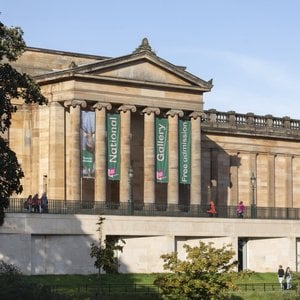 Шотландська національна галерея |
Едінбург | 1 | Elisabeth Locher, Mrs Hans Konrad Heidegger (1616 - 1673) |
Від 1661 до 1686 року — 26 років творчості Conrad Meyer, рік за роком, крізь її найкращі картини.


Elisabeth Locher, Mrs Hans Konrad Heidegger (1616 - 1673) (1661), Шотландська національна галерея, Едінбург. Далі йдуть Portrait of Hans Conrad Lavater (1686) та Portrait of Cleophea Lavater (1686).
43 років: Elisabeth Locher, Mrs Hans Konrad Heidegger (1616 - 1673) датована 1661 роком, а Conrad Meyer народився(-лася) у 1618.
У нашому каталозі представлено 3 робіт Conrad Meyer, датованих періодом з 1661 по 1686.
Більшість із них знаходяться в National Museum Zurich (Zurich) та Шотландська національна галерея (Едінбург). У таблиці вище перелічені музеї по черзі.
У 1686: 2 із 3 робіт на цій сторінці датуються цим часом, серед них Portrait of Hans Conrad Lavater.
Найдавніша робота на цій сторінці датована Elisabeth Locher, Mrs Hans Konrad Heidegger (1616 - 1673) (1661), найновіша — Portrait of Hans Conrad Lavater (1686).
Portrait of Hans Conrad Lavater та Portrait of Cleophea Lavater — це одні з 2 робіт на цій сторінці, що належать National Museum Zurich, Zurich.
Так. Кожну картину на цій сторінці можна замовити як музейну репродукцію, написану олією вручну, або як художній принт у будь-якому обраному вами розмірі — безпосередньо зі сторінки самої картини.
Born in Zurich on 3 October 1618, Conrad Meyer entered a world where art was a family trade. His father, Dietrich Meyer the Elder, provided his first lessons in painting and engraving, establishing a foundation of technical discipline that would define his career. This early training was not confined to the walls of a single studio; between 1638 and 1642, Meyer moved through Bern and Solothurn before reaching Germany. In Frankfurt, he sought the company of Matthäus Merian the Elder, an encounter that likely expanded his understanding of the printed image.
His life was anchored in the Old Swiss Confederacy, yet his vision was expansive. He returned to Zurich, where he established himself as a central figure in the local artistic community. His marriage to Susanna Murer in 1649 brought him into connection with established families, and his son, Johannes Meyer the Younger, would eventually follow his father's footsteps into the arts. While much of his life was spent within the familiar borders of Zurich, his work reflected a man who looked closely at the world around him.
Meyer possessed a versatility that allowed him to move between the heavy application of oil on canvas and the delicate precision of the needle. He was a prolific creator of prints, with approximately 1,000 surviving illustrations and designs. His hand was equally capable in religious and historical scenes as it was in the more intimate realms of portraiture. He accepted commissions from Catholic patrons, producing over 100 etched images of saints, demonstrating an ability to navigate the diverse spiritual landscape of his era.
His printmaking often served a civic purpose. In 1645, he created an etching regarding table manners for the Zurich civic library’s New Year publication, a work intended to instruct the youth on proper behavior. This tradition of annual publications became a fixture of the city's cultural life. His portraiture was another significant pillar of his practice; he produced around 200 portraits, capturing the likenesses of guild masters, councillors, and clergy members with a steady, observant eye.
Perhaps Meyer’s most enduring contribution to the Swiss tradition was his approach to the landscape. He was among the first to treat the natural world as an independent subject rather than a mere backdrop for human drama. His 1647 painting of the Rhine Falls is noted for being one of the earliest topographically accurate depictions of that site. He did not merely observe from a distance; he engaged with the terrain through direct study.
Between 1653 and 1657, Meyer traveled through Switzerland four times alongside Jan Hackaert. During a 1655 expedition through the Glarus region, he produced large drawings based on the close observation of mountain landscapes. These works are recognized as early landmarks in the development of Alpine painting. By documenting the high Alps with such topographical focus, he laid the groundwork for future generations of artists who would seek to capture the rugged character of the Swiss landscape.