Annette Thas: Deconstructing Dolls and Weaving Reality
Born in Ghent, Belgium, in 1960, Annette Thas’s artistic journey is a fascinating exploration of identity, consumer culture, and the unsettling beauty found within the familiar. Her work, now firmly rooted in Perth, Australia, began with a rigorous academic foundation – a degree in German Philology followed by studies in sculpture at the École des Beaux-Arts in France. This dual heritage—a grounding in language and logic juxtaposed with the tactile world of form—provides a crucial lens through which to understand her increasingly complex and layered installations.
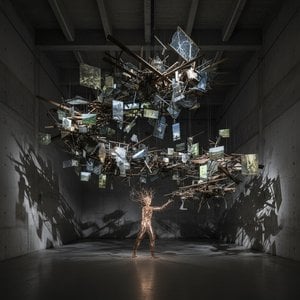
Thas’s artistic trajectory took an unexpected turn when she began incorporating Barbie dolls into her practice. Initially, this wasn't simply about recreating iconic figures; it was a deliberate act of subversion. The doll, a symbol deeply embedded in the history of femininity, advertising, and childhood fantasy, became a vehicle for critical commentary. Her early works, such as ‘Barbie Wave’ (2014), immediately established this approach – a monumental wave constructed entirely from Barbie limbs, capturing both the doll's inherent artificiality and its surprising capacity to evoke genuine emotion. This piece, and others like it, are not merely assemblages; they are carefully orchestrated dialogues with our collective understanding of beauty, desire, and representation.
The Language of Textiles and Assemblage
Beyond the Barbie figure, Thas’s work consistently utilizes textiles – silks, velvets, and often repurposed materials – to create a rich tapestry of texture and meaning. These fabrics aren't simply decorative elements; they are integral to the narrative she constructs. The layering, draping, and manipulation of these materials contribute significantly to the overall sense of unease and disorientation that characterizes her installations. She masterfully employs techniques reminiscent of both collage and assemblage, building up complex forms from seemingly disparate components. This process mirrors a dismantling and reassembling of societal expectations, challenging viewers to confront the constructed nature of reality.
The titles of her works – ‘Memememe’ (2017) and ‘Simulacrum’ (2017), for example – are deliberately ambiguous and evocative. ‘Memememe,’ referencing the internet phenomenon, speaks to the ephemeral nature of online culture and the replication of images without genuine context. 'Simulacrum,' drawing on Baudrillard's theories of simulation, suggests a world where signs have replaced reality, creating a distorted reflection of our experiences. These titles aren’t mere labels; they are keys that unlock deeper layers of interpretation within each piece.
Influences and Artistic Development
Thas’s work is profoundly influenced by several key artistic currents. The conceptual art movement, with its emphasis on challenging traditional notions of art and the role of the artist, undoubtedly played a significant part in shaping her approach. Furthermore, she draws inspiration from Surrealism, particularly the exploration of dreams, the subconscious, and the juxtaposition of unexpected imagery. The influence of feminist art is also palpable, as Thas’s engagement with the Barbie doll can be read as a critique of patriarchal representations of women.
Her artistic development has been marked by a gradual shift from more overtly sculptural forms to increasingly immersive installations. She's moved beyond simply presenting objects; she now creates environments that demand active participation from the viewer, prompting reflection on their own perceptions and biases. The Perth-based artist continues to push boundaries, solidifying her position as a significant voice in contemporary art.
A Legacy of Deconstruction
Annette Thas’s work is not easily categorized; it resists simple definitions and invites multiple readings. Her installations are unsettling yet strangely beautiful, provoking questions about consumerism, identity, and the nature of representation. Through her masterful manipulation of Barbie dolls and textiles, she has created a unique visual language that speaks to the complexities of our contemporary world. As an artist deeply engaged with the anxieties and possibilities of the 21st century, Thas’s work holds enduring significance, offering a powerful commentary on the constructed realities we inhabit.