Born: September 27, 1909, Fehérvárcsurgó, Austria-Hungary (now Hungary)
Died: December 13, 1984, Rome, Italy
Early life was spent in a small Hungarian village.
Studied under Ferenc Helbing and György Leszkovszky from 1926 until 1928.
Attended the Bauhaus in Germany, an influential school of art, architecture, and design known for its focus on functionalism and modern aesthetics. This experience significantly shaped his artistic approach.
Moved to Rome towards the end of the 1920s due to the rise of Nazism.
Career and Artistic Development
Worked sculpting memorials in Rome, supported by a grant from the Roman-Hungarian Academy.
Gained international recognition for his frieze at Roma Termini station in 1950 – a significant public art commission.
Transitioned to abstract works in the 1950s, demonstrating an evolving artistic style.
Returned to Hungary several times (1937, 1939, and 1969), often under carefully orchestrated circumstances by the Hungarian communist culture-buro, where he was celebrated as a renowned artist.
His work encompassed both traditional sculptures like the Madonna in Fehérvárcsurgó and abstract pieces such as "Microcosm in Macrocosm" (a tribute to Béla Bartók), "His Majesty," and "The Kilowatt."
Major Achievements and Notable Works
Roma Termini Frieze: This large-scale public artwork established his reputation.
Microcosm in Macrocosm: A tribute to Béla Bartók, showcasing his ability to blend abstract forms with thematic depth.
His Majesty & The Kilowatt: Demonstrates his exploration of modern themes and industrial aesthetics through sculpture.
The Amerigo Tot Museum in Budapest is dedicated to his legacy.
Film Career
In the 1960s and 1970s, Tot ventured into acting.
Best known for his role as Bussetta in The Godfather Part II (1974), a memorable character who served as Michael Corleone's bodyguard.
Also appeared in films like The Most Beautiful Wife and Pulp (1972).
Historical Significance and Legacy
Tot’s work bridges traditional sculpting techniques with modern abstract forms, reflecting the artistic shifts of the 20th century.
His public art commissions, like the Roma Termini frieze, demonstrate his ability to engage with large-scale projects and contribute to urban landscapes.
The Amerigo Tot Museum ensures that his contributions to Hungarian art are preserved and accessible to future generations.
His unique career path – combining sculpture, acting, and public commissions – makes him a distinctive figure in 20th-century European arts.
Від редакції WahooArt.com
Перевірте свій зір
У кожному запитанні лише одна правильна відповідь.
Запитання 1:
Where was Amerigo Tot (Imre Tóth) born?
Запитання 2:
What is a notable artwork Amerigo Tot created in Rome?
Запитання 3:
In what film is Amerigo Tot best known for his role?
Запитання 4:
What artistic style did Amerigo Tot begin to explore in the 1950s?
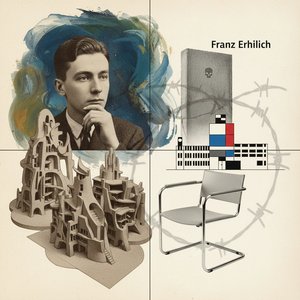
Explore the life of Franz Ehrlich, a pivotal Bauhaus architect whose career spanned Expressionism, resistance during Nazi Germany, and GDR reconstruction. Discover his complex legacy & view museum-quality reproductions at WahooArt.
Explore the life & art of Károly Ferenczy, a pivotal figure in Hungarian Modernism. Discover his landscapes, portraits, and role in founding the Nagybánya colony. Expert insights for collectors & enthusiasts.
Яка картина Amerigo Tot має найвищий рейтинг на ArtsDot.com?
Controsoffitto della Sala della Vittoria
До якого художнього періоду належав(ла) Amerigo Tot?
Modern
Хто такий Amerigo Tot?
Early Life and Education
Born: September 27, 1909, Fehérvárcsurgó, Austria-Hungary (now Hungary)
Died: December 13, 1984, Rome, Italy
Early life was spent in a small Hungarian village.
Studied under Ferenc Helbing and György Leszkovszky from 1926 until 1928.
Attended the Bauhaus in Germany, an influential school of art, architecture, and design known for its focus on functionalism and modern aesthetics. This experience significantly shaped his artistic approach.
Moved to Rome toward
Скільки картин Amerigo Tot представлено на ArtsDot.com?
1
Коли і де народився/народилася Amerigo Tot?
1909, Fehervarcsurgo, Hungary
Коли помер Amerigo Tot?
1984
Чи все ще поширюється авторське право на роботи Amerigo Tot?
Так, роботи цього митця все ще захищені авторським правом.