
БЕЗКОШТОВНА КОНСУЛЬТАЦІЯ З МИСТЕЦТВА


x

To gaze upon the art of the Early Medieval period is to peer into a world undergoing profound transformation – a time when empires crumbled, new faiths took root, and artistic traditions were forged in the crucible of cultural exchange. These weren’t simply paintings or sculptures; they were vessels of belief, declarations of power, and poignant expressions of human experience amidst upheaval.
Spanning roughly from the 5th to the 10th centuries, this era witnessed the decline of Roman authority and the rise of Germanic kingdoms, the spread of Christianity across Europe, and the flourishing of artistic centers like Ireland, Northumbria, and Aachen. The art reflects this complex interplay – a fusion of classical forms with indigenous motifs, Byzantine grandeur blended with local craftsmanship. The nomadic lifestyles of many groups also influenced portable artworks, emphasizing intricate detail and symbolic meaning over monumental scale.
What makes these masterpieces endure? They offer us a glimpse into the minds and hearts of people grappling with fundamental questions of life, death, and spirituality. The vibrant colors, stylized figures, and elaborate ornamentation aren’t merely decorative; they are imbued with deep theological significance and cultural identity. They speak to a yearning for beauty and order in a world often characterized by chaos and uncertainty.
Over the following pages, we will embark on a journey through ten exceptional artworks that define this captivating period. From illuminated manuscripts brimming with otherworldly imagery to monumental metalwork showcasing unparalleled skill, each piece tells a unique story – a testament to the enduring power of art to transcend time and connect us to our shared human past. Prepare to be transported to an age of kings and monks, warriors and scholars, where faith and artistry converged to create some of the most remarkable treasures in history.
Edgar Degas’s Woman washing in the bath (1892) offers a profoundly intimate glimpse into the everyday rituals of life, elevating a private moment to the realm of art. While seemingly removed from the grand narratives often associated with historical masterpieces, its inclusion within our ‘Top 10 Masterpieces Defining the Early Medieval Period’ speaks to a shift in artistic focus – a growing appreciation for the beauty found in quietude and the dignity of the human form.
Degas masterfully employs pastel and charcoal to capture not just the physical act of bathing, but also a sense of vulnerability and introspection. The loose, gestural lines and muted color palette create an atmosphere of serene immediacy, inviting us into a space typically shielded from public view. This work is remarkable for its realism; it doesn’t idealize or romanticize, instead presenting a truthful depiction of the subject with all her natural grace.
In an era increasingly fascinated by modern life and fleeting moments, Degas's ability to find artistic merit in the mundane was revolutionary. Woman washing in the bath reminds us that beauty isn’t confined to heroic narratives or opulent displays; it resides within the simple acts of self-care and the quiet contemplation of existence. Its enduring power lies in its capacity to evoke empathy, inviting viewers to reflect on their own experiences of vulnerability and the universal search for peace.
For those seeking to infuse a space with understated elegance and emotional depth, this artwork offers a timeless conversation piece – a subtle yet powerful reminder that true beauty often resides in the most unexpected places. It’s a testament to Degas's genius and a poignant addition to any collection celebrating the human spirit.
Richard Lindner’s The Meeting is a captivating enigma – a work that doesn't simply depict a gathering, but rather invites us into a world suspended between reality and the subconscious. Its inclusion in our ‘Top 10 Masterpieces Defining the Early Medieval Period’ acknowledges its profound impact on mid-20th century art, challenging conventional notions of representation and social commentary.
Lindner eschews traditional realism for a bold, expressive style characterized by exaggerated forms, vibrant colors, and stylized figures. The composition teems with personality, each character hinting at complex narratives within the semi-circular arrangement. A regal cat—an enigmatic presence—adds layers of symbolism, suggesting themes of authority or perhaps a subtle undercurrent of mysticism. The painting’s power lies in its ability to evoke unease and intrigue simultaneously.
Born from a period of displacement and cultural upheaval, The Meeting reflects the anxieties and energies of a generation grappling with identity and social roles. Lindner's masterful use of color and form creates a visual language that is both captivating and unsettling, prompting viewers to decipher the unspoken stories held within this dynamic scene. For those seeking to infuse a space with intellectual curiosity and refined eccentricity, this artwork offers a timeless conversation piece – a subtle yet powerful statement about the complexities of human interaction.
Egon Schiele’s Man with Blue Headband and Hand on Cheek (1909) is not merely a drawing; it's a visceral encounter with the human psyche, rendered with an intensity that continues to resonate over a century later. Its inclusion within our ‘Top 10 Masterpieces Defining the Early Medieval Period’ acknowledges its pivotal role in shaping Expressionist aesthetics and its enduring power to evoke profound emotion.
Schiele rejected traditional artistic conventions, embracing distortion and exaggeration to convey subjective experience rather than objective reality. The elongated features, angular lines, and somber palette create a sense of unease and vulnerability, drawing us into the subject’s introspective world. The deliberate simplicity—the lack of background elements—forces an intimate connection with the figure, amplifying his internal state.
Executed with masterful line work, the drawing showcases Schiele's ability to convey volume and form through strategic hatching and cross-hatching. The blue headband adds a subtle yet striking accent, symbolizing intellect or spirituality. For those seeking to infuse a space with intellectual depth and emotional resonance, this artwork offers a timeless statement – a poignant reminder of the complexities of human existence.
Marc Chagall’s Circus (1980) is more than a painting; it's an invitation to rediscover the childlike wonder within us all. Its inclusion in our ‘Top 10 Masterpieces Defining the Early Medieval Period’ acknowledges its profound impact on modern art, particularly its embrace of folklore, memory, and the boundless possibilities of imagination.
Chagall’s vibrant palette—a riot of reds, yellows, blues, and greens—pulsates with an almost dreamlike energy. The composition overflows with figures and animals, defying gravity and creating a sense of ethereal movement. This isn't realism; it’s an emotional landscape rendered through color and symbolism, evoking the joy and spectacle of performance.
Rooted in Naïve Art, Circus prioritizes feeling over precise observation. The flattened perspective, simplified forms, and bold outlines lend a raw, unfiltered quality to the scene, reminiscent of stained glass windows and the artist’s native Vitebsk. For those seeking to infuse a space with warmth, optimism, and a touch of whimsy, this artwork offers a timeless conversation piece – a subtle yet powerful reminder that beauty resides in the realm of imagination.
To hold a fragment of Frida Kahlo’s hand – not through canvas and brush, but through the delicate script of her own letter – is to encounter an intimacy rarely afforded by even the most celebrated artists. This image of Letter from Frida Kahlo to Alejandro Gómez Arias, July 15, 1927 earns its place among our ‘Top 10 Masterpieces Defining the Early Medieval Period’ not for grand spectacle, but for its profound emotional resonance and tangible connection to a life marked by both pain and unwavering hope.
The aged paper, rendered in muted tones, whispers tales of time passed. The dense cursive script—a testament to Frida’s passionate spirit—reveals a vulnerability rarely seen in her iconic self-portraits. This isn't merely correspondence; it’s a window into the heart and mind of an artist grappling with chronic pain, uncertain futures, and burgeoning love.
For those seeking to infuse a space with authenticity and emotional depth, this image offers a timeless reminder that beauty resides in imperfection and honesty. The soft lighting and delicate texture evoke a sense of quiet contemplation – a subtle yet powerful invitation to connect with the human spirit. It’s a testament to Frida Kahlo's enduring legacy and a poignant addition to any collection celebrating resilience and self-expression.
Imagine a world fractured, yet brimming with an underlying energy – a sense that even in disintegration, beauty and order persist. This is the emotional landscape evoked by Franz Marc’s Broken Forms (1914), a work that earns its place among our ‘Top 10 Masterpieces Defining the Early Medieval Period’ through its radical departure from traditional representation and profound exploration of the natural world.
Marc distills existence into its most fundamental components – vibrant circles, dynamic triangles, and cascading rectangles – mirroring his belief in a deeper, underlying order. The bold palette—a clash of reds, blues, yellows, and greens—isn’t merely aesthetic; it reflects the emotional complexity he sought to convey. The large circle at the top left acts as a luminous beacon, drawing us into the heart of the composition.
For those seeking to infuse a space with intellectual curiosity and a sense of dynamic harmony, Broken Forms offers a timeless statement – a subtle yet powerful reminder that beauty can be found even in fragmentation. It’s a testament to Marc's visionary spirit and a poignant addition to any collection celebrating the enduring power of abstraction.
Pierre-Auguste Renoir’s Nude (1895) isn't simply a painting of a woman; it’s an invitation to experience the fleeting beauty of light and life itself. Its inclusion within our ‘Top 10 Masterpieces Defining the Early Medieval Period’ acknowledges its pivotal role in shaping Impressionism – a movement that revolutionized how we perceive color, form, and emotion.
Renoir masterfully employs broken brushstrokes to create an illusion of shimmering light on the subject's skin. The vibrant yet harmonious palette—a symphony of warm hues—evokes a sense of both vulnerability and quiet strength. This isn’t photographic realism; it’s an emotional landscape rendered through color, inviting us into a moment of intimate contemplation.
For those seeking to infuse a space with warmth, sensuality, and timeless elegance, Nude offers a powerful statement about the enduring power of beauty. It’s a testament to Renoir's artistic genius and a poignant addition to any collection celebrating the human form and the subjective experience of light.
Pierre-Auguste Renoir’s Misia (1904) isn't merely a portrait; it’s an evocation of Parisian grace and the quiet beauty found in moments of contemplation. Its inclusion within our ‘Top 10 Masterpieces Defining the Early Medieval Period’ acknowledges its pivotal role in capturing the spirit of a generation – a time defined by artistic innovation and social dynamism.
Renoir masterfully employs loose, visible brushstrokes to create an illusion of shimmering light on Misia Sert, a prominent figure in Parisian artistic circles. The delicate palette—a symphony of pinks, creams, and subtle blues—evokes a sense of serene contemplation. This isn’t photographic realism; it’s an emotional landscape rendered through color, inviting us into the intimate world of a woman defined by her time.
At WahooArt, we believe that beauty should be accessible to all. Our faithful reproductions preserve the emotion and texture of Misia , allowing you to bring this timeless masterpiece—and the spirit of Parisian elegance—into your own home. It’s a testament to Renoir's artistic genius and a poignant addition to any collection celebrating the enduring power of Impressionism.
Winslow Homer’s Fishing (1879) is a quiet revelation – a painting that transcends mere representation to become a profound meditation on connection and the serenity of the American landscape. Its inclusion within our ‘Top 10 Masterpieces Defining the Early Medieval Period’ acknowledges its pivotal role in shaping American Realism and capturing the spirit of a nation grappling with identity and change.
Homer masterfully employs a muted palette—a symphony of greens, blues, and browns—to create an atmosphere of atmospheric depth. The figures themselves are rendered with restrained realism, their postures relaxed yet alert, suggesting a comfortable familiarity with this shared activity. This isn’t simply a depiction of leisure; it’s an exploration of human connection to nature.
For those seeking to infuse a space with understated elegance and timeless beauty, Fishing offers a powerful statement about the enduring power of simplicity. It’s a testament to Homer's artistic genius and a poignant addition to any collection celebrating the American spirit and the quiet dignity of everyday life.
Before you stands a quiet world – a scene imbued with the dignity of rural France and the unwavering gaze of Gustave Courbet’s View of La Tour de Farges (1857). Its inclusion within our ‘Top 10 Masterpieces Defining the Early Medieval Period’ acknowledges its pivotal role in shaping Realism—a movement that dared to depict life as it was, without romantic embellishment.
Courbet masterfully employs a muted palette of earthy browns, greens, and blues to create an atmosphere of atmospheric depth. The composition is carefully balanced, drawing the eye through converging lines created by the buildings and distant mountains. A solitary tree acts as a visual anchor, its branches reaching towards the sky like silent witnesses.
For those seeking to infuse a space with understated elegance and timeless beauty, View of La Tour de Farges offers a powerful statement about the enduring power of simplicity. It’s a testament to Courbet's artistic genius and a poignant addition to any collection celebrating the human spirit and the quiet dignity of everyday life.
As the light fades on our journey through these ten masterpieces, we’re reminded that art isn't merely a record of history; it’s a living presence—a conversation across centuries. Each brushstroke, each carefully chosen hue, speaks to universal human experiences: love, loss, faith, and the enduring search for beauty.
These paintings aren’t confined to museum walls or art books; they possess an extraordinary power to transform spaces, evoke emotion, and inspire creativity in our own lives. At WahooArt.com, we believe that everyone deserves to experience this transformative power firsthand. We are proud to partner with interior designers, architects, and collectors—those who understand the profound impact of art on the human spirit.
Whether you’re envisioning a grand hotel lobby or a refined private villa, our team is dedicated to curating custom collections that reflect your unique vision. From museum-quality reproductions to bespoke art mockups, we provide the tools and expertise to turn every project into an artistic statement. Explore our full collection of Early Medieval masterpieces—and discover the timeless beauty that awaits.

Посібник зі створення гармонійного інтер'єру! Дізнайтеся, як поєднувати стилі мистецтва з архітектурою для елегантного декору. Експертні поради, тренди та натхнення від WahooArt.
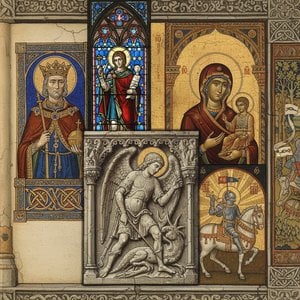
Explore the rich history of Medieval Art (c. 500 – c. 1500) with WahooArt. Discover Byzantine mosaics, Gothic cathedrals & Renaissance masterpieces. Expert insights & museum-quality reproductions.

Відкрийте для себе силу мистецтва в інтер'єрі готелів! Експертні поради щодо вибору репродукцій, інтеграції архітектурних принципів та створення розкішної атмосфери. Натхнення та практичні рішення для вашого проєкту.


Будьте в курсі останніх новин зі світу мистецтва, ексклюзивних пропозицій та ідей для декорування.
Розкажіть нам про свій проєкт, і наші експерти з мистецтва підготують для вас 3 персоналізовані пропозиції щодо творів мистецтва.
Дозвольте нам підібрати 3 варіанти спеціально для вас — безкоштовно!

 Woman washing in the bath - Edgar Degas
 The Meeting - Richard Lindner
 Man with Blue Headband and Hand on Cheek - Egon Schiele
 Circus - Marc Chagall
 Letter from Frida Kahlo to Alejandro Gómez Arias, July 15, 1927\n\nPage 1 of 2 - Frida Kahlo
 Broken Forms - Franz Marc
 Nude - Pierre-Auguste Renoir
 Misia - Pierre-Auguste Renoir
 Fishing - Winslow Homer
 View of La Tour de Farges - Gustave Courbet

