БЕЗКОШТОВНА КОНСУЛЬТАЦІЯ З МИСТЕЦТВА
x
Написана вручну олією на полотні у вашому розмірі та рамі, виготовлена на замовлення нашими художниками.
Обирайте з наших стандартних розмірів, що відповідають оригінальним пропорціям твору мистецтва.
Ви можете вказати власні розміри, щоб репродукція підійшла до конкретної рами або інтер'єру. Якщо вибраний вами розмір не відповідає пропорціям оригіналу, ми або обріжемо полотно, або доповнимо картину додатковими елементами, промальованими вручну. Цифровий макет буде надіслано вам на затвердження перед початком виробництва.
Зверніть увагу, що попередній перегляд на екрані не відображає фактичне обрізання або розширення зображення. Тільки макет точно покаже остаточну композицію.
Хоча ми можемо виготовити виріб у нестандартному розмірі, для збереження оригінальних пропорцій рекомендуємо обирати варіанти зі встановленого списку.
Доставка по всьому світу () за 3–4 тижні замість стандартних 5 тижнів. (1 Липень). Без жодних компромісів у якості.
So called
Розмір репродукції
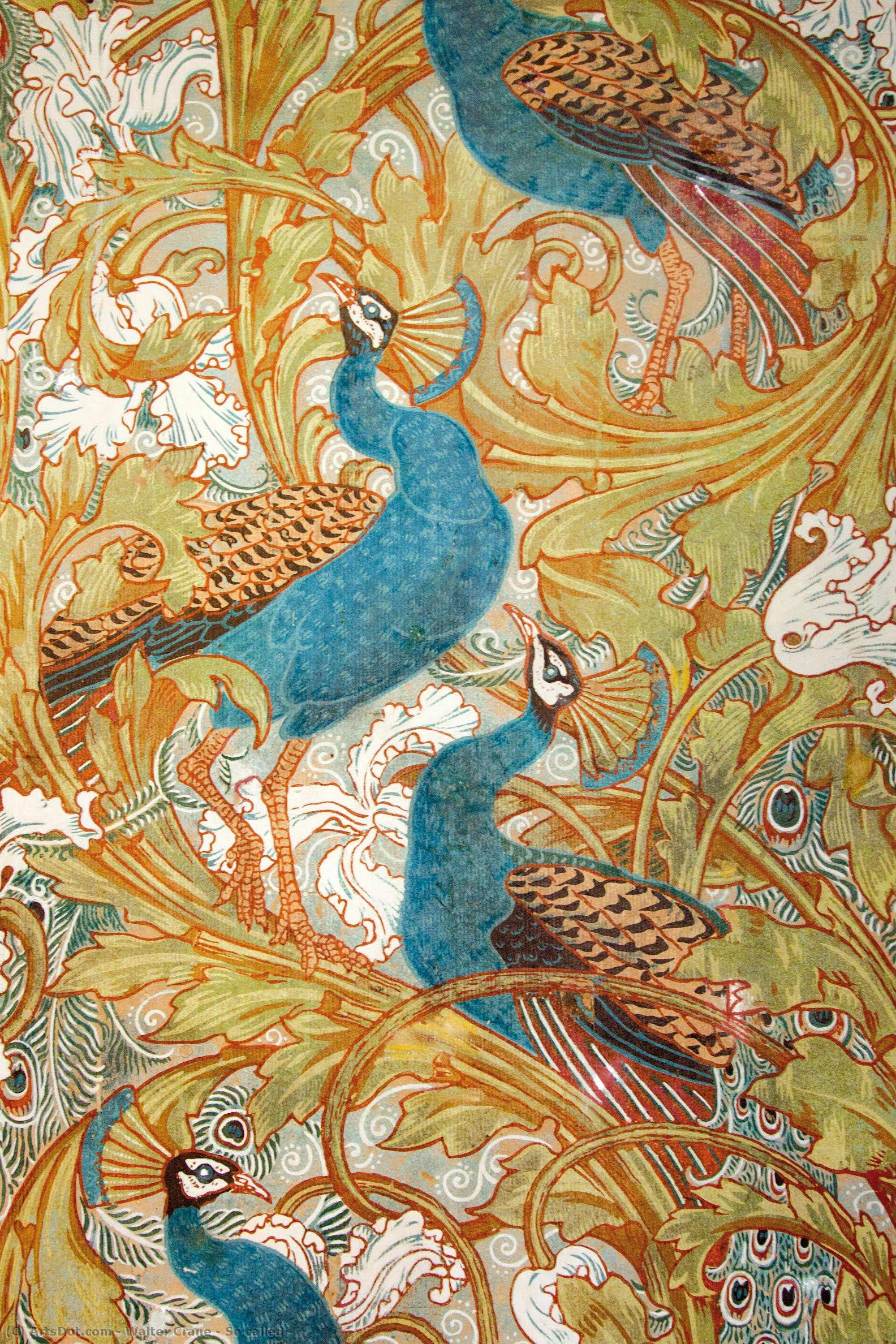
Within the walls of the Museum of Applied Arts in Budapest resides a fragment of Victorian eccentricity – a section of wallpaper, dubbed “So Called,” that offers a captivating glimpse into the world of Walter Crane and the burgeoning aesthetic sensibilities of late 19th-century Europe. More than just decorative surface, this vibrant panel is a testament to Crane’s mastery of color, pattern, and his deep engagement with the Arts and Crafts movement, a reaction against the perceived soullessness of industrialization and a fervent return to handcrafted beauty.
Crane, born in Liverpool in 1845, was a pivotal figure bridging the gap between traditional illustration and modern design. His early apprenticeship with William James Linton instilled within him a profound respect for wood-engraving – a painstaking process demanding meticulous observation and an understanding of line and texture. This foundation proved crucial as he evolved into a celebrated artist, producing not only intricate children’s books but also ambitious wallpaper designs that sought to infuse the domestic sphere with artistic merit. The “Peacock Garden” is a prime example of this ambition, showcasing Crane's ability to translate complex ideas – in this case, the revival of decorative arts – into a visually arresting and emotionally resonant surface.
The wallpaper’s design immediately commands attention. Bold peacock feathers dominate the composition, their iridescent blues, greens, and hints of gold cascading across a background of swirling floral motifs and geometric patterns. Crane's use of color is particularly noteworthy; it’s not merely decorative but imbued with a sense of movement and vitality. The layering of hues creates an illusion of depth, drawing the eye into the intricate details of each feather and blossom. The border itself, meticulously rendered in a contrasting palette, further enhances the overall impact, establishing a clear visual hierarchy that guides the viewer’s gaze.
Technically, Crane employed a sophisticated approach to pattern creation. The individual elements – the feathers, flowers, and geometric shapes – are not simply repeated identically; instead, they are subtly varied in scale, orientation, and color, generating a dynamic and engaging visual experience. This careful attention to detail speaks to Crane’s artistic rigor and his desire to elevate wallpaper from a mere functional element to a work of art.
The story behind the “Peacock Garden” is as compelling as the design itself. It’s believed that Jenő Radisics, the Museum of Applied Arts’ director at the time, acquired the wallpaper in or around 1898, reflecting his admiration for Walter Crane and the English Arts & Crafts movement. Radisics's conviction that this movement represented a model for Hungarian applied arts is evident not only in his acquisition of the wallpaper but also in the museum’s subsequent exhibitions featuring Crane’s work. The small, windowless room where the wallpaper was originally installed – a director’s residence – further underscores its significance as a symbol of artistic patronage and cultural exchange.
The wallpaper's survival is a remarkable testament to the Museum’s dedication to preserving its collection. It offers a tangible link to a pivotal moment in Hungarian art history, demonstrating how European artistic trends were embraced and adapted within the local context. It also provides a fascinating insight into the personal tastes of a prominent cultural figure – Jenő Radisics – and his commitment to fostering a vibrant and innovative artistic environment.
Beyond its aesthetic qualities, the “Peacock Garden” is rich in symbolism. The peacock itself has long been associated with beauty, pride, and immortality—a fitting emblem for a decorative surface designed to adorn a space of importance. The swirling floral motifs evoke notions of abundance, fertility, and the cyclical nature of life. The overall composition suggests a harmonious blend of natural and artificial elements, reflecting the Arts & Crafts movement’s desire to reconcile industrial production with handcrafted artistry.
Ultimately, “So Called” is more than just a wallpaper; it's an evocative work of art that captures the spirit of its time. It invites us to step into a world of vibrant color, intricate detail, and artistic aspiration—a window into the dreams of Walter Crane and the cultural landscape of Budapest at the turn of the 20th century.
1845 - 1915 , Великобританія
Розкажіть нам про свій проєкт, і наші експерти з мистецтва підготують для вас 3 персоналізовані пропозиції щодо творів мистецтва.
Дозвольте нам підібрати 3 варіанти спеціально для вас — безкоштовно!