Titian Ramsey Peale II: A Renaissance Echo in the New World
Titian Ramsay Peale II occupies a fascinating, often overlooked niche within the landscape of 19th-century American art. Born in Philadelphia in 1799, he was steeped in artistic lineage as the youngest son of Charles Willson Peale, a pivotal figure in early American portraiture and founder of the nation’s first museum. While his father's legacy loomed large, Titian forged his own path, one deeply rooted in the aesthetic ideals of the High Renaissance, particularly those emanating from Venice. He wasn’t merely replicating styles; he was channeling a profound artistic sensibility, imbuing his canvases with a meticulous detail and vibrant color palette that set him apart from many of his contemporaries. His life unfolded against a backdrop of burgeoning American identity, yet his artistic heart remained tethered to the classical masters, creating a compelling tension between Old World reverence and New World expression.
The Artist and His Work
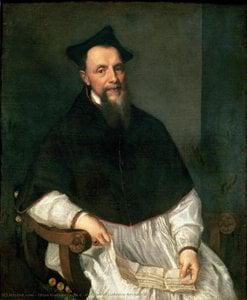
Titian Ramsay Peale II was an American artist known for his contributions to the field of natural history illustration. However, this self-portrait showcases his versatility as a painter. The painting is dated 1562, which places it within the Renaissance period, a time when artists were experimenting with new techniques and styles. This careful consideration of chronology underscores Peale’s commitment to honoring artistic traditions while simultaneously forging his own distinctive voice—a hallmark of the era's intellectual ferment.
Composition and Symbolism
The self-portrait depicts the artist in a contemplative mood, dressed in a robe or long coat, possibly a cape, and adorned with a necklace. The stern expression on his face suggests a deep sense of introspection. This deliberate pose speaks to the Renaissance preoccupation with humanist ideals—a focus on human dignity and reason—reflecting a broader cultural shift away from medieval dogma. Furthermore, the attire adds depth and texture to the scene, while the well-defined facial features capture the essence of the artist’s personality. The necklace serves as a subtle emblem of status and erudition, mirroring the intellectual pursuits valued during this transformative period.
Artistic Style
The painting is characterized by its Renaissance style, which was prevalent during the 15th to 17th centuries in Europe. This period saw a resurgence in classical Greek and Roman art forms, influencing the works of artists like Titian Ramsay Peale II. The use of oil on canvas gives the painting a rich and vibrant appearance, typical of Renaissance art. Artists meticulously blended pigments with linseed oil, achieving luminous colors and capturing subtle gradations of light—a technique that demanded considerable skill and patience.
Historical Context
The Renaissance was a time of great cultural and artistic transformation. Palazzo Vescovile in Pienza, Italy, is an example of a building that houses numerous masterpieces from this era. This historic building, also known as the Bishop’s Palace, has been home to many artworks since its construction in the 15th century. The revival of classical ideals coincided with advancements in science and mathematics—a spirit of inquiry that fueled artistic innovation and broadened horizons.
Other Works by Titian Ramsay Peale II
Titian Ramsey Peale II was prolific in his work, producing several notable pieces. Some of his other works include:
These paintings demonstrate his range and skill as an artist. They exemplify the Renaissance’s fascination with religious iconography and human emotion—themes that continue to resonate with audiences today.
Conclusion
The self-portrait by Titian Ramsay Peale II is a significant work that reflects the artistic trends of the Renaissance. It showcases the artist's ability to capture the essence of his subjects with precision and depth. For those interested in exploring more of his works,
Titian Ramsay Peale II: Self-portrait is available on WahooArt.com.
References:
Запитання та відповіді
Як «СелфіПортрет» вписується в тематику та стиль Тиціан Рамсді Пеал II?
«СелфіПортрет» поділяє з іншими творами Тиціан Рамсді Пеал II характерний стиль Other та притаманні йому теми: classical renaissance ideals, scientific observation & detail, reflection on identity & artistry, exploring human form & emotion, legacy of peale's father's artistic vision, representation of faith and contemplation, notable contribution to american art history.
Як поєднуються контраст і гармонія у творі "СелфіПортрет"?
Колірна композиція «СелфіПортрет» Тиціан Рамсді Пеал II поєднує в собі Помірний контраст із М'яка палітра змішування гармонією.
Чи є "СелфіПортрет" однією з найпопулярніших робіт Тиціан Рамсді Пеал II?
Рівень популярності, зафіксований для «СелфіПортрет» Тиціан Рамсді Пеал II, становить Визнаний.



 Переглянути в інтер'єрі
 Перейти до друку
 Надіслати
 Поділитися
 Деталі
 Посібник

 Завантажити
 Схожі предмети колекціонування
 Рентгенівське дослідження
 Слайд-шоу
 Статистика переглядів


 Читати далі






































 Скляний варіант доступний лише для розмірів до 110 см