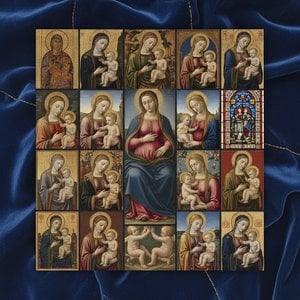
Francesco Conti: A Florentine Baroque Master Reflecting Inner Vision
Francesco Conti (1681 – 1760) stands as a pivotal figure in the artistic landscape of Florence during the Baroque era, embodying the spirit of dramatic realism and masterful chiaroscuro techniques—a legacy profoundly shaped by his mentors Giovanni Maria Morandi and Carlo Maratta.
Early Influences: Conti’s formative years under Morandi exposed him to the refined elegance of Roman Baroque painting, emphasizing idealized forms and balanced compositions. Simultaneously, Maratta's teachings championed theatrical grandeur and emotional intensity – elements that would become integral to Conti’s artistic sensibilities. This dual influence cemented his commitment to capturing not merely appearances but also conveying profound psychological depth.
Florence & Patronage: Returning to Florence after his Roman training, Conti secured invaluable support from the Riccardi family, who regularly commissioned him for monumental altarpieces and provided a stable income. This patronage allowed him to pursue his artistic endeavors with unwavering dedication and fostered collaborations that enriched Florentine art history.
Dominant Technique & Artistic Style
Conti’s signature technique involved meticulous layering of paint, creating textures that mirrored the grandeur and solemnity of his subjects. He skillfully manipulated light sources to sculpt forms and imbue canvases with an ethereal glow—a hallmark of Maratta's influence. Unlike earlier Mannerist painters who prioritized intellectual abstraction, Conti embraced a vibrant palette and dynamic compositions, reflecting the Baroque fascination with movement and emotion.
Religious Themes & Symbolism
Conti dedicated his artistic energies primarily to religious iconography, producing a prolific output of altarpieces and devotional paintings that resonated deeply with audiences. His depictions of saints—particularly Mary Magdalene and Saint Jerome—were imbued with symbolic meaning, conveying spiritual virtues and narratives central to Christian faith. Conti’s meticulous attention to detail—from the drapery folds to the facial expressions—served to heighten emotional impact and communicate profound theological ideas.
Notable Works & Legacy
Among Conti's most celebrated achievements are his monumental frescoes adorning Sant'Andrea della Minerva in Rome, showcasing his mastery of perspective and color. However, it is arguably “Madonna and Child with Saint Sylvester I, St. Paul and Saint Catherine of Alexandria”—commissioned for the Riccardi chapel—that encapsulates his artistic vision: a breathtaking depiction of divine grace rendered with unparalleled luminosity and textural richness.
Francesco Conti’s enduring influence extends beyond his individual paintings; he established a studio that nurtured generations of Florentine artists, shaping the stylistic trajectory of Baroque art in Tuscany. His legacy continues to inspire contemporary painters who strive to capture inner vision alongside formal beauty—a testament to Conti's profound contribution to artistic history.



 Переглянути в інтер'єрі
 Замовити репродукцію ручної роботи
 Надіслати як листівку
 Поділитися
 Детальніше

 Завантажити
 Схожі експонати
 Рентгенівське дослідження
 Слайд-шоу
 Статистика


 Читати далі






































 Скляний варіант доступний лише для розмірів до 110 см