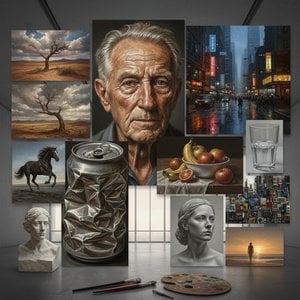
Štefan Hudzík: A Window into the Soul of Slovakia
Born in 1954 in Štiavnička, a small village nestled within the Slovakian mountains, Štefan Hudzík’s life and art were inextricably linked to the landscape and traditions of his homeland. His early years spent amidst the rolling hills and ancient forests of Spiš County profoundly shaped his artistic vision, imbuing his work with a deep sense of place and a reverence for the region's rich cultural heritage. Hudzík wasn’t merely an artist; he was a storyteller, meticulously crafting narratives through bronze, stone, and paper that resonated with the spirit of Slovakia.
Hudzík’s artistic journey began with formal training in Bratislava, where he honed his skills as a draftsman and sculptor. However, it was his distinctive approach to monumental art – a desire to capture not just the subject but also the *process* of creation – that truly set him apart. He famously insisted on presenting his works within their immediate environment, often incorporating scaffolding, tools, sketches, and even partially completed elements into the display. This radical transparency offered viewers an unprecedented glimpse behind the scenes, revealing the artist’s thought process and inviting them to become active participants in the artwork's unfolding narrative. This wasn’t simply about showcasing a finished product; it was about celebrating the act of making itself.
The Influence of Master Pavol and Slovak Folklore
Hudzík’s work is deeply rooted in the legacy of Master Pavol of Levoča, a 15th-century goldsmith and sculptor whose intricate religious medallions are considered national treasures. Pavol's meticulous detail and symbolic language served as a significant inspiration for Hudzík, particularly his use of allegory and Christian iconography. However, Hudzík’s art transcends mere imitation; he skillfully integrated elements of Slovak folklore, mythology, and peasant life into his compositions. He frequently depicted scenes from the *Slovanský ráj* (Slavic Paradise), a collection of traditional folk tales that offer a glimpse into the beliefs and values of the Slovak people. This fusion of religious symbolism and rural imagery created a uniquely Slovakian artistic voice.
The artist’s fascination with the everyday lives of his fellow Slovaks is evident in many of his works, particularly his medals. These aren't grand historical portraits but rather intimate portrayals of farmers, shepherds, woodcutters, and other members of rural communities. He captured their dignity, resilience, and connection to the land with remarkable sensitivity, elevating these ordinary figures to the status of heroic archetypes.
Technique and Materials: A Dialogue Between Tradition and Innovation
Hudzík’s technical mastery was equally impressive. He skillfully employed a range of materials – bronze, stone, wood, and paper – each chosen for its expressive qualities and symbolic weight. Bronze, in particular, became his signature medium, allowing him to create monumental sculptures that exuded strength and permanence while retaining a remarkable sense of texture and warmth. His process involved meticulous modeling, casting, and patination, often incorporating traditional techniques passed down through generations.
Despite his commitment to established methods, Hudzík was never afraid to experiment with new approaches. He frequently incorporated found objects – discarded tools, fragments of wood, even pieces of rusted metal – into his sculptures, adding layers of meaning and reflecting the cyclical nature of life and death. This willingness to embrace both tradition and innovation is a hallmark of his artistic style.
Legacy and Recognition
Štefan Hudzík’s work has garnered widespread recognition throughout Slovakia and beyond. His monumental sculptures, often installed in public spaces, serve as powerful reminders of the country's rich cultural heritage. His medals are highly sought after by collectors and museums alike, prized for their exquisite craftsmanship and evocative imagery.
Hudzík’s untimely death in 2017 left a void in the Slovak art world, but his legacy continues to inspire artists and viewers alike. His unique approach to monumental art – his commitment to transparency, his reverence for tradition, and his profound connection to the land – ensures that his work will remain a vital part of Slovakia’s artistic landscape for generations to come. His artwork is readily available through platforms like WahooArt.com, offering a direct connection to this remarkable artist's vision.
Useful Links:
Useful Content: