Richard Harry Carter: A Voice of Shetland and Beyond
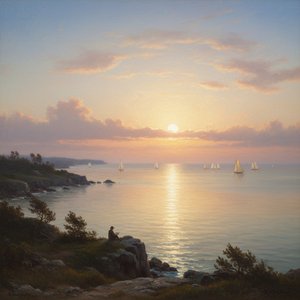
Richard Harry Carter (born 1891, Shetland Islands) was a Scottish painter whose distinctive style blended realism with Romantic sensibilities, capturing the rugged beauty of his homeland and exploring themes of family and memory. Though largely unrecognized during his lifetime, Carter’s work has gained considerable appreciation in recent decades for its sensitivity to landscape and its masterful execution.
Early Life and Artistic Beginnings
Carter was born into a seafaring family on Shetland, an island renowned for its whaling traditions. Growing up amidst the windswept shores and dramatic cliffs of Shetland instilled in him a lifelong fascination with the natural world – a passion that would profoundly inform his artistic vision. Despite limited formal training initially, Carter possessed an innate talent for observation and representation, honing his skills through self-teaching and experimentation. His early paintings often depicted scenes of daily life on Shetland, portraying fishermen hauling nets, families gathering around hearths, and landscapes rendered with meticulous detail.
Influences and Artistic Style
Carter’s artistic style evolved over time, absorbing influences from Impressionism and Symbolism. He particularly admired the works of artists like Frederic Remington and Thomas Moran, whose depictions of American wilderness conveyed a similar spirit of grandeur and emotional resonance. Carter's technique involved layering thin glazes of oil paint to achieve luminous effects and capturing subtle tonal variations that conveyed atmospheric conditions. His compositions were characterized by balanced perspectives and carefully considered framing, emphasizing the importance of visual harmony.
Notable Works: Shetland Landscapes and Family Portraits
Carter’s most celebrated paintings are his depictions of Shetland landscapes – particularly “Driving Bottle Nosed Whales” (1891), a monumental oil painting that captures the excitement and drama of a traditional whale hunt. The artwork showcases Carter's ability to convey both the physicality of the event and its symbolic significance, reflecting the islanders’ connection to their environment and heritage. Equally compelling are his family portraits, which reveal Carter’s deep empathy for human subjects and his skill in portraying psychological nuance. “Tired Connie,” a poignant piece from 1960s Shetland, exemplifies this artistic approach—a quiet contemplation of familial bonds against the backdrop of coastal scenery.
Legacy and Recognition
Although Carter remained largely obscure during his lifetime, his paintings have been rediscovered by art historians and collectors in recent years. Critics have praised his uncompromising commitment to realism combined with expressive brushwork and a profound understanding of human emotion. His work is now housed in several museums and private collections across Scotland and internationally, cementing his place as one of Shetland’s most important artistic figures. Carter's enduring legacy lies not only in the beauty of his paintings but also in their ability to evoke a sense of place and time—a testament to the power of art to capture the essence of human experience.