A Quiet Observer: The World of Paul Winstanley
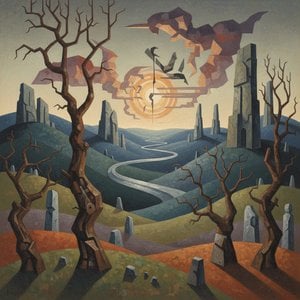
Paul Winstanley is a British painter whose work quietly compels, drawing viewers into scenes that feel both intimately familiar and subtly unsettling. Emerging as a significant voice in contemporary realism, Winstanley’s canvases depict interiors and landscapes imbued with a haunting stillness. He doesn't present bustling narratives or dramatic events; instead, he focuses on the poetry of uninhabited spaces – rooms bathed in soft light, empty streets reflecting the muted tones of twilight, and natural vistas devoid of human presence. This deliberate absence is not a void, but rather an invitation to contemplation, allowing the viewer to project their own emotions and experiences onto the scene. Winstanley’s paintings are less about *what* is depicted and more about *how* it feels to be within that space, or to remember a similar one.
Early Life and Artistic Development
While biographical details regarding Paul Winstanley remain intentionally sparse – he prefers the work to speak for itself – his artistic journey clearly stems from a deep engagement with photography. His paintings are often described as having a photographic quality, not in their replication of photographic detail, but in their careful composition, use of light and shadow, and the capturing of fleeting moments. This influence suggests an early fascination with the medium’s ability to freeze time and isolate specific perspectives. He developed his skills through dedicated study and practice, honing a technique that allows him to translate the nuances of light and texture onto canvas with remarkable precision. The artist's origins are rooted in London, a city which frequently appears as a subtle backdrop or inspiration for his work, lending an urban sensibility to even his most pastoral scenes.
Themes and Symbolism
Winstanley’s oeuvre is characterized by recurring themes of memory, solitude, and the passage of time. His interiors are not simply representations of rooms; they are evocative spaces that hint at past lives and untold stories. A half-empty teacup on a table, a discarded newspaper, or a window overlooking a quiet street – these seemingly mundane objects become imbued with symbolic weight, prompting questions about the people who once occupied these spaces and the events that unfolded within them. The windows themselves are particularly significant motifs, acting as portals between interior and exterior worlds, offering glimpses of landscapes that often mirror the emotional state of the room they overlook.
Light is arguably his most powerful tool; he masterfully manipulates it to create a sense of atmosphere and evoke feelings of nostalgia, melancholy, or quiet hope. His landscapes, similarly, are not idealized depictions of nature but rather introspective studies of light, form, and the subtle beauty found in everyday scenes.
The absence of people is crucial; it allows viewers to become active participants in the artwork, filling the void with their own interpretations and experiences.
Technique and Style
Winstanley’s technique is rooted in traditional oil painting methods, but he employs them with a contemporary sensibility. He builds up layers of paint slowly and deliberately, creating a rich texture that adds depth and dimension to his canvases. His brushwork is often subtle and refined, blending seamlessly to create a sense of realism without sacrificing the expressive qualities of the medium. The artist’s color palette is typically muted and understated, favoring soft grays, blues, and browns that contribute to the overall atmosphere of quiet contemplation. He doesn't rely on bold colors or dramatic contrasts; instead, he uses subtle variations in tone and value to create a sense of depth and luminosity.
- His work is often described as “contemporary realism,” but it transcends simple categorization.
- He prioritizes atmosphere and emotional resonance over strict representational accuracy.
- The influence of photography is evident in his composition and use of light.
Historical Significance and Legacy
Paul Winstanley’s work occupies a unique space within the contemporary art landscape. In an era often dominated by spectacle and overt expression, he offers a refreshing alternative – paintings that are quiet, introspective, and deeply personal. His focus on uninhabited spaces and subtle symbolism resonates with viewers seeking moments of calm and contemplation in a fast-paced world. While his career is still unfolding, Winstanley has already established himself as a significant voice in contemporary realism, influencing a new generation of artists who are exploring the power of atmosphere, memory, and the beauty found in everyday scenes. His paintings serve as a reminder that even in the absence of human presence, spaces can be imbued with meaning, emotion, and a profound sense of history. He is not merely depicting what he sees; he is inviting us to remember, to feel, and to connect with the quiet poetry of the world around us.