A Life Painted in Light: The Evocative World of José Picó Anto
José Picó Anto, a name perhaps less heralded than some of his Impressionist forebears, nevertheless carved a distinctive niche for himself within the landscape of 20th-century Spanish and French art. Born in Barcelona on October 16, 1928, Picó’s artistic journey was deeply rooted in family tradition; his father, Felipe Picó Puch, also a painter, instilled an early appreciation for the visual world. This familial influence proved foundational as young José embarked on his formal studies at the Beaux-Arts de Barcelone, later complemented by time spent at the Academy Libre ‘Capula del Licero’ – institutions that nurtured not only technical skill but also a burgeoning artistic sensibility. However, it was a move to Paris in 1957 that truly ignited Picó's creative spirit and set the course for his mature style.From Barcelona Beginnings to Parisian Flourishing
Paris, at the time, pulsed with an energy that drew artists from across the globe, offering a fertile ground for experimentation and innovation. Picó quickly immersed himself in the city’s vibrant art scene, exhibiting his work and developing a keen interest in engraving – a medium that would become increasingly important to his artistic process. While establishing himself as a painter, he also supported his burgeoning career through drafting work at an advertising agency. This practical necessity didn't detract from his passion; rather, it honed his observational skills and ability to capture fleeting moments with precision. His personal life blossomed too, marked by his marriage to Léonor Moix in 1959 – a partnership that undoubtedly provided both emotional support and creative inspiration throughout the decades. The early Parisian years were characterized by a search for artistic identity, a blending of inherited skills with the influences surrounding him. He wasn’t simply replicating what he saw; he was absorbing it, filtering it through his own unique lens.A Style Forged in Realism and Impressionistic Hues
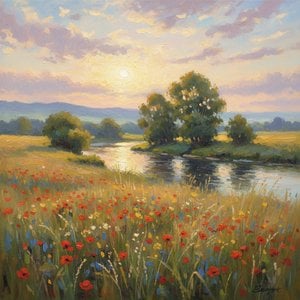
Picó Anto's work is often described as a compelling synthesis of realism and impressionism. He possessed a remarkable ability to depict scenes with meticulous detail – the texture of bark on a tree, the subtle play of light on water, the individual features of his portrait subjects. Yet, this dedication to accuracy never overshadowed a profound sensitivity to atmosphere and emotion. His landscapes aren’t merely representations of places; they are evocations of feeling, imbued with a sense of tranquility or melancholy depending on the subject matter. Portraits, too, were central to his oeuvre, revealing not just physical likeness but also an insightful understanding of human character. He wasn't interested in grand narratives or overt symbolism; instead, he focused on capturing the quiet dignity and inner lives of those around him. This approach resonated with a growing audience who appreciated his ability to find beauty in the everyday.Legacy and Historical Significance
Though he passed away on August 20, 2018, at the age of 89, José Picó Anto’s artistic legacy continues to unfold. His work stands as a testament to the enduring power of observation, the importance of technical skill, and the ability of art to capture not just what we see but how we *feel*. While he may not be a household name, his paintings offer a valuable glimpse into the mid-20th century artistic landscape – a period marked by both experimentation and a renewed appreciation for traditional techniques. His blending of realism and impressionism places him within a rich lineage of artists who sought to capture the beauty and complexity of the world around them.- Key Characteristics: Evocative portraits, atmospheric landscapes, meticulous detail combined with Impressionistic hues.
- Influences: Spanish painting tradition, Parisian art scene, Impressionism, Realism.
- Major Themes: The beauty of everyday life, human character, the tranquility and melancholy of nature.
- Picó Anto’s work reminds us that true artistry lies not in grand gestures but in the subtle power of observation and emotional resonance.