Ditlev Conrad Blunck (1798–1853): A Danish Romantic Painter
Ditlev Conrad Blunck, a pivotal figure of the Danish Golden Age, stands as a testament to artistic innovation and sensitivity within a period defined by profound cultural transformation. Born in Münsterdorf, Holstein, on June 22nd, 1798, he embarked upon an illustrious career that would ultimately culminate in his passing on January 7th, 1853, in Hamburg. His life’s journey mirrored the burgeoning spirit of Romanticism—a movement prioritizing emotion and imagination over strict rationalism—leaving an indelible mark on Danish art history.
Early Life and Artistic Education
Blunck's formative years were spent at the Royal Danish Academy of Art in Copenhagen, where he honed his skills under the tutelage of C.A. Lorentzen and C.W. Eckersberg. This influential mentorship instilled within him a foundational understanding of artistic principles—particularly those championed by Eckersberg’s emphasis on tonal harmony and expressive brushwork. Alongside fellow students Wilhelm Bendz, Ernst Meyer, and Albert Küchler, Blunck absorbed the prevailing aesthetic currents of his time, preparing himself for a distinguished artistic vocation.
Initial Artistic Style: History Painting
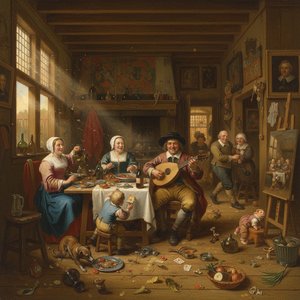
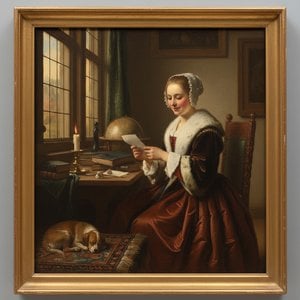
Initially, Blunck’s artistic endeavors centered around history painting—a dominant genre within Danish art during the mid-1820s. Reflecting the Romantic fascination with grand narratives and heroic figures, his early canvases captured dramatic scenes from biblical tales and mythological legends. However, Blunck swiftly transitioned towards a more nuanced approach, embracing genre painting—a style that sought to depict everyday life with remarkable realism and psychological depth.
Influences: Lund and Nazarenes
A crucial catalyst in Blunck’s artistic evolution was his association with J.L. Lund, a Danish Romantic painter who exerted considerable sway over the younger generation of artists. Lund's unwavering commitment to tonal harmony—a technique rooted in the Nazarene movement—deepened Blunck’s understanding of light and color—influencing his palette and compositional choices. This connection fostered an appreciation for emotive expression alongside meticulous observation, shaping Blunck’s distinctive artistic vision.
Notable Works and Legacy
While Blunck's oeuvre remains relatively modest compared to some of his contemporaries, his paintings possess a remarkable quality—characterized by profound emotional resonance and masterful execution. Among his most celebrated works are *Nightmare*, a haunting depiction of psychological torment that exemplifies the Romantic preoccupation with inner turmoil; and *The Nightmare*, which similarly explores themes of fear and vulnerability. His artistic legacy extends beyond individual masterpieces, contributing to the broader narrative of Danish Romanticism—a movement that irrevocably altered the course of European art.
For those eager to delve deeper into Blunck’s artistic style or explore the meticulous process behind creating handmade oil paintings reproductions, WahooArt.com offers detailed insights into his techniques and inspirations. Furthermore, exploring museums like Hugo Fischer—which showcase German and European painting from the 19th century—provides invaluable context for appreciating Blunck's place within the larger artistic landscape.