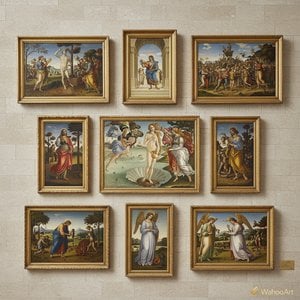
Benedetto Buglioni: Florentine Master of Glazed Terracotta
Benedetto Buglioni (1459/1460–1521) stands as a pivotal figure in the artistic landscape of Renaissance Florence, renowned primarily for his mastery of glazed terracotta sculpture—a technique that elevated ceramic art to unprecedented heights of beauty and sophistication. Born around 1460 in Florence, Buglioni’s lineage traced back to Giovanni di Bernardo, another esteemed sculptor whose influence profoundly shaped his formative years. According to Giorgio Vasari, Buglioni inherited from Andrea della Robbia “the secret of glazed earthenware,” highlighting the crucial role played by this Florentine workshop tradition in establishing his artistic trajectory.
### Early Life and Artistic Training
Buglioni’s early life remains shrouded in relative obscurity, yet evidence suggests he received intensive training under Luca della Robbia and Andrea della Robbia—giants of Florentine sculpture who championed innovative glazing methods. This apprenticeship instilled within him a deep understanding of the transformative potential of ceramic pigments and firing processes, shaping his artistic vision for decades to come. The Della Robbich workshop’s emphasis on achieving luminous surfaces through careful layering of oxides – a breakthrough at the time – undoubtedly fueled Buglioni's ambition to push the boundaries of sculptural expression.
### Notable Commissions and Artistic Output
Buglioni quickly gained recognition as an independent sculptor, securing prestigious commissions for churches throughout Tuscany. His involvement in projects like Ognissanti Cathedral, San Pietro in Radicofani, and Santa Lucia a Settimello demonstrates his versatility and ability to adapt to diverse stylistic demands. However, Buglioni’s true legacy rests upon his distinctive glazed terracotta creations—particularly the monumental *Descent of Christ in Limbo* for Pistoia Cathedral and the intricate frieze depicting the Seven Acts of Mercy commissioned for London's Victoria and Albert Museum. These works exemplify Buglioni’s meticulous craftsmanship and unwavering commitment to capturing spiritual narratives with breathtaking visual clarity.
### The Influence of Della Robbia and Michelangelo
Buglioni’s artistic sensibilities were undeniably shaped by the pioneering achievements of Luca della Robbia and Michelangelo Buonarroti—artists who revolutionized sculpture through their exploration of naturalism and expressive dynamism. Like della Robbia, Buglioni embraced a humanist aesthetic rooted in observation and anatomical accuracy, mirroring Michelangelo's monumental ambition to convey profound emotional depth within sculptural form. The stylistic convergence between Buglioni’s oeuvre and the masterpieces produced by these titans underscores the vibrant intellectual climate that characterized Renaissance Florence.
### Legacy and Recognition
Benedetto Buglioni died in Florence in 1521, leaving behind a remarkable body of work—a testament to his artistic genius and enduring contribution to Florentine sculpture. His sculptures continue to inspire admiration for their elegance, technical virtuosity, and profound spiritual resonance. Furthermore, Buglioni’s influence extended beyond his immediate contemporaries, shaping the aesthetic sensibilities of subsequent generations of artists and cementing his place as one of Florence's most celebrated sculptors—a true innovator who elevated glazed terracotta art to unparalleled heights of artistic excellence. His masterpiece, St Christine in Bolsena, remains a symbol of Florentine sculptural achievement.