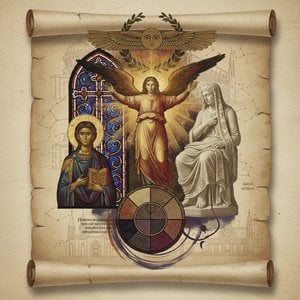
Alois Bílek: Sculptor of Memory and Emotion
Alois Bílek (1887 – 1961) stands as a pivotal figure in Czech sculpture, embodying the spirit of Expressionism while simultaneously grounding his artistic vision in meticulous observation of the natural world. Born in Stará Roveň, Bohemia, Bílek’s formative years were steeped in rural traditions and instilled within him a profound appreciation for craftsmanship—a dedication that would permeate throughout his prolific career. His life was marked by both personal tragedy and unwavering artistic commitment, shaping him into an artist deeply attuned to the complexities of human experience.- Early Life & Education: Bílek’s formal training began at Prague School of Applied Arts, where he honed his skills in modeling and carving under Antonín Dvořák Sr., a respected sculptor who championed realism alongside expressive gesture. This dual influence would prove crucial to Bílek's artistic trajectory.
- Influences & Artistic Style: Bílek’s aesthetic sensibilities were profoundly impacted by the burgeoning Expressionist movement, particularly figures like Edvard Munch and Auguste Rodin. However, unlike many of his contemporaries who embraced abstraction, Bílek resolutely pursued a path rooted in detailed anatomical accuracy combined with emotionally charged compositions.
- Notable Works: Bílek achieved international acclaim for sculptures depicting biblical scenes and mythological subjects—most notably “The Shepherd,” “The Crucifixion” and “The Resurrection.” These pieces are characterized by their monumental scale, masterful execution, and palpable sense of drama, reflecting Bílek’s unwavering belief in the power of art to convey profound spiritual truths.
- Technique & Materials: Bílek's sculptural technique involved painstaking modeling with clay and wax followed by casting in bronze—a process he undertook with meticulous precision. He favored using a machine hammer for shaping his sculptures, ensuring uniformity and achieving remarkable textural detail.
The Shepherd: A Testament to Rural Tradition
“The Shepherd,” created in 1936, exemplifies Bílek’s commitment to portraying the dignity of labor and the beauty of the countryside. The sculpture depicts a shepherd tending his flock amidst rolling hills—a scene rendered with remarkable realism and imbued with an emotional resonance that speaks to themes of compassion, responsibility, and connection to nature. Bílek's masterful use of bronze casting techniques contributes to the sculpture’s enduring presence and conveys its solemn grandeur.Legacy & Historical Significance
Alois Bílek’s sculptures continue to resonate with audiences worldwide, serving as powerful reminders of the human condition and celebrating the transformative potential of artistic expression. He remains a cornerstone of Czech sculptural history—a sculptor who successfully bridged the gap between stylistic innovation and humanist values. His enduring influence can be seen in subsequent generations of artists who sought inspiration from his unwavering dedication to craftmanship and his profound understanding of emotion.Further Exploration
For more information on Alois Bílek’s life and work, consult resources such as:- Wikipedia: Alois Grussmann
- Invaluable: Alois Bílek Sold at Auction Prices
- Wikidata: Alois Bílek (Q20755445)
Soru & Cevap
Alois Bílek en çok hangi renkleri kullandı?
Alois Bílek eserlerinin renk profili, sanatçının Palet Genomu sayfasında gösterilmektedir.
Alois Bílek nereli?
Alois Bílek, Czech Republic ülkesinde doğmuştur.
Alois Bílek adlı sanatçının eserlerine dair istatistikleri nerede bulabilirim?
Alois Bílek'in İstatistikler sayfası, Alois Bílek'in bu web sitesi üzerinde listelenen eserlerinden hesaplanan istatistikleri sunar.