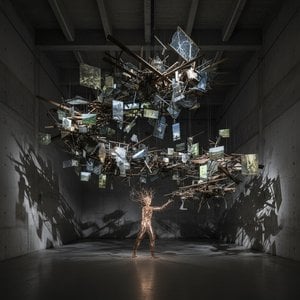
Alfons J. Schilling (1934 – 2013): Pioneer of Spin Art and Light Experiments
Alfons J. Schilling (1934 – 2013) stands as a singular figure in the landscape of Swiss art history, recognized primarily for his groundbreaking exploration of spin art—a technique that revolutionized painting and captivated audiences with its dynamic visual effects—and for his pioneering investigations into the interplay between light and color. Born in Basel in 1934, Schilling’s artistic journey was marked by a profound engagement with action painting and a relentless pursuit of innovative approaches to artistic expression.Early Life and Artistic Influences
Schilling's formative years instilled within him an appreciation for art and culture—a legacy that would profoundly shape his creative trajectory. Studying at the University of Applied Arts in Vienna from 1956 to 1959 exposed him to the burgeoning movement of action painting, spearheaded by artists like Emil Nolde and Ernst Ludwig Kirchner. This influence instilled a conviction that art should actively engage with its environment and challenge conventional perceptions of representation. The dynamism and spontaneity championed by action painters resonated deeply with Schilling’s artistic sensibilities, propelling him toward experimentation with unconventional methods and materials.The Spin Art Revolution
Schilling's breakthrough arrived in 1960 when he abandoned academic pursuits and embarked on a transformative voyage to Mallorca alongside Günter Brus—a fellow artist who would become instrumental in shaping his artistic vision. This encounter ignited Schilling’s fascination with spin art, a technique that involved rotating a canvas or other surface while applying paint—resulting in mesmerizing patterns of swirling color and movement. He swiftly established himself as one of the first artists to embrace this innovative medium, meticulously documenting its evolution through detailed photographs and preparatory sketches. The resulting artworks captured the essence of kinetic energy and defied traditional notions of artistic composition.Exploring Light and Color Relationships
Continuing his exploration of perceptual experience, Schilling turned his attention to manipulating light and color—a pursuit that yielded remarkable results. Collaborating with composers Beat Furrer and Karlheinz Essl, he devised ingenious “light production” systems for opera performances, demonstrating a commitment to interdisciplinarity and pushing the boundaries of artistic collaboration. These projects underscored Schilling’s conviction that art could enrich other disciplines and foster new forms of sensory engagement. Furthermore, his experiments with lenticular photographs—images that shift appearance when viewed from different angles—revealed an astute understanding of optical illusions and spatial perception.Legacy and Recognition
Alfons J. Schilling's artistic legacy extends beyond his pioneering contributions to spin art and light experimentation; it resides in his unwavering dedication to artistic innovation and his influence on subsequent generations of artists. His work continues to inspire curiosity and admiration, serving as a testament to the transformative power of artistic exploration—a reminder that true creativity lies in challenging conventions and embracing uncharted territories. Schilling’s impact is palpable in the vibrant tapestry of contemporary art, where his pioneering spirit persists as an emblem of artistic courage and visionary imagination.- Notable Exhibitions: Galerie Ariadne (1975)
- Collaborations: Beat Furrer & Karlheinz Essl