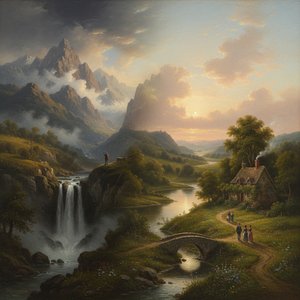
Lazzaro Pasini (1861 – 1949): A Tuscan Landscape Painter
Lazzaro Pasini, born in Reggio Emilia in 1861, stands as a pivotal figure within the Macchiaioli movement—a group of artists who revolutionized Italian painting at the turn of the century. Rejecting academic conventions and embracing plein air painting, Pasini’s canvases capture the essence of Tuscan landscapes with remarkable immediacy and sensitivity. His artistic journey began under the tutelage of Romualdo Belloli, a respected engraver in his hometown, fostering an early appreciation for meticulous observation and tonal harmony—skills that would define his distinctive style.
- Early Training: Romualdo Belloli’s influence instilled a foundational understanding of engraving techniques and compositional principles.
- Florence & Fattori’s Studio: Following a scholarship to the Academy, Pasini relocated to Florence where he immersed himself in Giovanni Fattori’s studio, absorbing the stylistic precepts of Macchiaioli painting.
The Macchiaioli Style and Tuscan Inspiration
Pasini's artistic vision was profoundly shaped by the Macchiaioli movement—a rebellion against traditional academic art that championed spontaneous brushstrokes and vibrant color palettes. Artists like Fattori, Giuseppe Martelli, and Giovanni Fattori sought to depict nature as it appeared before their eyes, prioritizing tonal variations over precise detail.
- Emphasis on Tone: Pasini skillfully employed tonal modulation—the blending of colors to create subtle gradations—to convey atmospheric conditions and the emotional resonance of his subjects.
- Direct Observation: Unlike preceding generations who relied on sketches or studio reproductions, Pasini conducted extensive plein air studies, capturing the fleeting beauty of Tuscan landscapes with unparalleled accuracy.
Notable Works & Artistic Evolution
Pasini’s oeuvre comprises a substantial collection of landscape paintings and genre scenes—primarily depicting rural life in Tuscany.
- “Picking Grapes”: One of his most celebrated canvases, “Picking Grapes,” exemplifies Pasini's masterful use of color and texture to convey the vitality of the harvest season.
- “Twelve Studies of Vesuvius”: This series showcases Pasini’s dedication to capturing the dramatic grandeur of Mount Vesuvius—a testament to his artistic prowess and unwavering commitment to portraying natural phenomena with profound emotional depth.
Museum Collections & Legacy
Pasini's artworks are housed in prominent museums across Italy, including the Pinacoteca di Vicenza and Museo del Novecento in Milan—institutions that recognize his contribution to Italian art history.
- Pinacoteca di Vicenza: The museum’s collection includes several landscapes by Pasini, offering visitors a glimpse into his artistic sensibilities.
- Museo del Novecento: Located in Milan, the museo del novecento showcases Pasini's paintings alongside works by other influential artists of the early 20th century—solidifying his place as a cornerstone of Lombard Naturalism and Macchiaioli aesthetics.
Pasini’s legacy extends beyond his individual masterpieces; he represents a pivotal moment in Italian art—a decisive break from academic formalism and an embrace of expressive naturalism that continues to inspire artists today.
His unwavering dedication to capturing the spirit of Tuscany remains a beacon for landscape painters seeking authenticity and emotional resonance.