Jung Yeon Doo: Exploring Reality Through Photography and Sculpture
Jung Yeon Doo (b. 1969) stands as a prominent figure in contemporary Korean art, recognized for his distinctive approach to visual storytelling—a masterful fusion of photography, videography, and sculpture that consistently challenges perceptions of reality. Born in Seoul, South Korea, Doo’s artistic journey began with formal training at Sogang University where he honed his sculptural skills under the guidance of David Annesley at Saint Martin's College of Art, fostering a foundational understanding of form and materiality.
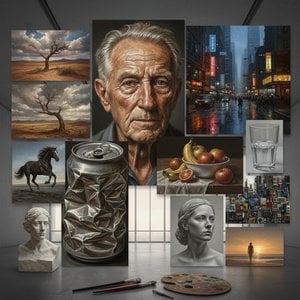
His stylistic hallmark lies in blurring the boundaries between observation and representation. Doo doesn’t merely depict what he sees; instead, he meticulously dissects and reconstructs it, revealing the processes inherent in artistic creation. This deliberate methodology is evident across his oeuvre—from haunting portraits capturing nuanced expressions to expansive landscapes imbued with symbolic resonance—demonstrating a profound engagement with both visual aesthetics and conceptual inquiry.
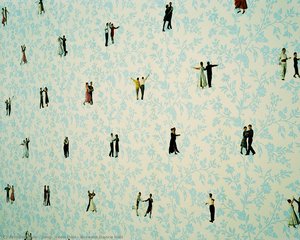
Influenced by artists like Ansel Adams and László Moholy-Nagy, Doo’s photographic practice prioritizes capturing atmospheric conditions and subtle shifts in light, mirroring the Impressionistic tradition while simultaneously incorporating elements of Conceptual Art. Recurring themes explore notions of identity, memory, and cultural heritage—particularly evident in pieces such as “Giant Flowers,” a tranquil landscape photograph blending natural beauty with human presence—and "Princes Twins," a striking textile design that utilizes intricate patterns to convey symbolic narratives rooted in Korean folklore. Furthermore, his exploration of monumental figures like Elizabeth II and Mark Zuckerberg exemplifies an interest in confronting societal complexities through portraiture.
Doo’s sculptural endeavors delve into experimentation with materials and techniques, often incorporating found objects and unconventional methods to generate textured surfaces and evocative forms. His work has garnered critical acclaim and recognition—including the prestigious “Artist of the Year” award bestowed upon him by NMAC Korea in 2007—solidifying his position as a leading voice within Korean artistic discourse. Exhibitions spanning across Korea and internationally showcase his versatility and commitment to pushing creative boundaries.
His contribution to art history extends beyond individual artworks; Doo’s unwavering dedication to questioning conventional viewpoints serves as an inspiration for younger generations of artists striving to redefine the role of visual media in conveying complex ideas and emotions. He continues to refine his craft, cementing his legacy as a visionary artist who champions artistic innovation and intellectual rigor.