Henry Whiting: A Painter of American Landscapes and a Collector’s Eye
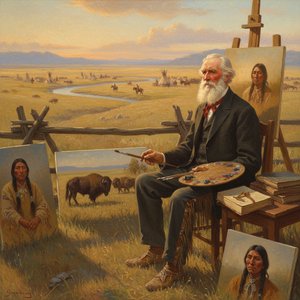
Henry Whiting (c. 1839 – 1931) remains a somewhat enigmatic figure in the annals of late 19th and early 20th-century American art, often overshadowed by his more celebrated contemporaries yet possessing a distinctive style and an intriguing personal history. Born in New York City, Whiting’s artistic journey was shaped by a restless spirit, a fascination with travel, and a keen eye for both the beauty of the natural world and the intricacies of human experience. His work, primarily characterized by vibrant color palettes, dynamic compositions, and a palpable sense of movement, reflects a unique blend of influences – from the Hudson River School’s romantic landscapes to the burgeoning realism of the era and, crucially, his extensive travels throughout Asia.
Whiting's early life offered little indication of his future artistic pursuits. He spent his youth working in various occupations, including as a clerk and a journalist, before embarking on a series of extended journeys that would profoundly impact his artistic vision. These expeditions – to Europe, Japan, and the American West – exposed him to diverse cultures, landscapes, and artistic traditions, fueling a desire to capture the essence of these experiences through painting. It was during this period that he began to develop his signature style, characterized by loose brushwork, bold color choices, and an emphasis on capturing fleeting moments of light and atmosphere.
The Gallopers Series and a Unique Artistic Identity
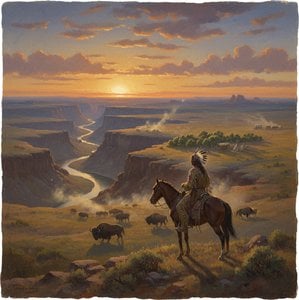
Whiting’s most recognizable body of work is undoubtedly the “Gallopers” series, a collection of dynamic paintings depicting cowboys and other figures engaged in outdoor activities – cattle drives, rodeos, and frontier life. These works, executed primarily between 1890 and 1920, are not simply depictions of these scenes; they’re imbued with a sense of energy, excitement, and even a touch of romanticism. Whiting's approach to portraying these subjects was remarkably unconventional for the time, eschewing the meticulous detail favored by many academic painters in favor of looser brushstrokes and a more expressive style.
However, it’s important to note that the “Gallopers” series represents only one facet of Whiting’s artistic output. He also produced a significant body of work depicting landscapes – both American and foreign – often infused with elements of Asian art and design. His travels in Japan, in particular, had a profound influence on his color palette and compositional techniques, leading him to incorporate subtle patterns and textures reminiscent of Japanese woodblock prints into his paintings. This fusion of Western and Eastern artistic traditions is a hallmark of Whiting’s unique style.
A Collector's Eye: Shaping an Extraordinary Private Collection
Beyond his own painting practice, Henry Whiting is perhaps best remembered for the extraordinary private collection he amassed over decades of travel and acquisition. Beginning in the 1920s, he embarked on a systematic pursuit of works by both established and emerging artists – primarily Japanese ceramics but also paintings, prints, and sculptures from around the world. This collection, housed at his home in Idaho, became a testament to his discerning eye and his deep appreciation for diverse artistic traditions.
Whiting’s collecting philosophy extended beyond mere acquisition; he was deeply interested in the stories behind each piece, meticulously researching its provenance and significance. His collection is not simply a display of beautiful objects but a carefully curated narrative reflecting his own travels, experiences, and intellectual interests. The collection itself has been studied by art historians and scholars, offering valuable insights into the artistic landscape of the early 20th century.
Legacy and Historical Significance
While Henry Whiting may not have achieved widespread recognition during his lifetime, his work continues to be appreciated for its vibrant color palettes, dynamic compositions, and unique blend of influences. His “Gallopers” series offers a captivating glimpse into the American West, while his landscape paintings reveal a deep connection to the natural world. More importantly, he stands as an example of an artist who embraced travel and cultural exchange, using these experiences to enrich his artistic vision and create a truly distinctive body of work.
Furthermore, Whiting’s legacy extends beyond his own art through his extensive collection, which has become a valuable resource for scholars and collectors alike. His life exemplifies the role of an artist as both creator and curator, shaping not only his own artistic practice but also contributing to the broader understanding and appreciation of art history.