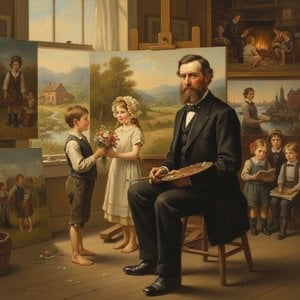
George Clint (1770 – 1854): A Pioneer of English Portraiture
George Clint (1770 – 1854) stands as a significant figure in the annals of British art history, particularly recognized for his contributions to portrait painting and theatrical productions during the formative years of the nineteenth century. Born in Covent Garden, London, he emerged from humble beginnings to become an Associate Member of the Royal Academy, cementing his place amongst the artistic elite of his era. His oeuvre encompasses a diverse range of subjects – stately portraits capturing the grandeur of aristocratic families alongside dramatic scenes reflecting the spirit of the stage—demonstrating versatility and ambition that characterized his artistic journey.
Early Life and Artistic Training
Information regarding Clint’s formative years remains somewhat sparse, primarily gleaned from genealogical records indicating he was the son of John Clint, a draper residing in London. Despite limited biographical details, it is understood that Clint received an education focused on classical studies and drawing, equipping him with foundational skills crucial for his subsequent artistic pursuits. While specifics about his early instructors are elusive, exposure to influential artistic trends circulating throughout Britain undoubtedly shaped his aesthetic sensibilities.
Theatrical Career and Artistic Development
Beyond painting, Clint possessed a considerable talent for theatrical design and production. He served as a scenic artist for numerous London theatres, collaborating with prominent playwrights and directors—a vocation that honed his observational skills and fostered an understanding of visual storytelling. This dual engagement between fine art and performance is noteworthy, reflecting the broader cultural landscape of Victorian England where artistic endeavors often intersected seamlessly. His theatrical work allowed him to experiment with color palettes and compositional techniques, enriching his artistic repertoire and informing his later portrait commissions.
Notable Paintings: Capturing Dignity and Drama
Clint’s artistic reputation rests largely upon his captivating portraits—particularly those executed during his Royal Academy membership period (1803-1849). He skillfully captured the essence of his subjects, conveying not merely likeness but also psychological depth and aristocratic bearing. Works such as “La Palermitana” exemplify his mastery of neoclassical style, utilizing precise draughtsmanship and subtle tonal gradations to illuminate the sitter’s countenance with remarkable luminosity. Similarly, his depiction of George O'Brien Wyndham, 3rd Earl of Egremont—a monumental portrait completed in 1827—demonstrates a profound understanding of sculptural form and dramatic lighting, elevating the subject to iconic status.
Influence and Legacy
George Clint’s influence extended beyond his immediate contemporaries; he served as an instructor at Somerset House, nurturing the talents of aspiring artists and contributing to the dissemination of artistic knowledge. His meticulous attention to detail and commitment to portraying subjects with dignity and nuance established him as a benchmark for portraiture during the Romantic era. Although overshadowed by more flamboyant figures of his time, Clint’s enduring legacy resides in his contribution to British art history—a testament to his dedication and skill as a painter and theatrical designer who captured the spirit of his age. His work continues to inspire admiration for its elegance and psychological insight.