


x
Det finns endast ett korrekt svar på varje fråga.
Mahlangu’s early life was deeply rooted in Ndebele tradition. Raised on a farm outside Middelburg, she learned the art of mural painting directly from her mother and grandmother – skills passed down through generations within the Southern Ndebele community. This wasn't simply an artistic pursuit; it was a vital part of their cultural identity, with adolescent girls meticulously decorating the exterior walls of their homes after marriage, creating intricate visual narratives that communicated family history, social status, and spiritual beliefs. These murals weren’t mere decoration; they were living documents, imbued with symbolic meaning and reflecting the collective consciousness of the community.
While traditionally practiced on the adobe walls of Ndebele homesteads, Mahlangu’s artistic vision quickly expanded beyond this established medium. Recognizing the limitations and challenges of working with perishable materials, she began adapting her techniques to canvas and metal alloys, preserving the essence of Ndebele art for a wider audience. Her signature style is instantly recognizable: bold geometric patterns arranged in striking diagonal or chevron formations, often surrounded by intricate white-bounded lines. This distinctive aesthetic evolved organically from her foundational training, demonstrating an impressive ability to synthesize tradition with innovation.
Esther Mahlangu’s art began to gain international recognition in 1989 at the “Magiciens de la terre” exhibition in Paris, a landmark event that showcased diverse artistic traditions from around the world. This exposure opened doors to numerous commissions and collaborations, solidifying her position as one of South Africa's most celebrated artists. Her work has been featured in prestigious exhibitions worldwide, including those at the Centre Pompidou, the National Museum of Women in the Arts, and the British Museum.
Esther Mahlangu’s impact extends far beyond the canvases she adorns. She is a vital link to Ndebele cultural heritage, actively preserving and promoting traditional artistic practices for future generations. Her work serves as a powerful reminder of the richness and diversity of South African culture, while simultaneously pushing the boundaries of contemporary art. Her willingness to adapt tradition without sacrificing its core values has resulted in a body of work that is both deeply rooted in history and strikingly modern. As she continues to create, Esther Mahlangu remains an inspiring figure – a testament to the enduring power of art to tell stories, connect communities, and celebrate cultural identity.
Further Resources: WahooArt Artist Page | Wikipedia Entry

Explore the dynamic world of contemporary art movements with WahooArt.com's expert guide. Discover key artists, influential styles & build a visionary collection. Learn about investment potential and appraisal.

Discover the art of cross-cultural interior design with WahooArt.com. Explore museum-quality reproductions & expert guidance to create a globally inspired, sophisticated home. Shop now!
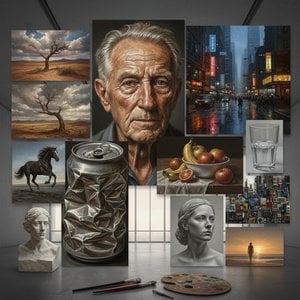
Utforska de 10 mästerverk som definierade Contemporary Realism! Lär känna kända konstnärer, tekniker och berättelser bakom ikoniska målningar. Hitta inspiration & köp museumkvalitativa reproduktioner på WahooArt.com – för en stilfull heminredning.


Håll dig uppdaterad med de senaste konstnyheterna, exklusiva erbjudanden och inredningsidéer.
Berätta om ditt projekt så kommer våra konstexperter att ge dig 3 personliga konstförslag.
Vi skapar ett urval av 3 alternativ helt anpassat för dig – gratis!


