A Life Immersed in Allegory: Cornelis Pietersz Holsteijn and the Dutch Golden Age
Cornelis Pietersz Holsteijn, born in Haarlem in 1618 and passing away in Amsterdam in 1658, remains a compelling yet somewhat enigmatic figure within the vibrant landscape of the Dutch Golden Age. His relatively short life was dedicated to painting scenes steeped in classical mythology and allegorical meaning, works that reveal both a mastery of technique and an intriguing engagement with the intellectual currents of his time. Holsteijn’s artistic lineage was firmly rooted in Haarlem's established traditions; he was the son of Pieter Pietersz Holsteyn I, a respected stained-glass painter, engraver, and tapestry designer. This familial connection undoubtedly provided early exposure to visual artistry and instilled a strong sense of craftsmanship. The elder Holsteyn’s Catholic faith—a minority position in Protestant Haarlem—shaped the family dynamic and likely influenced the themes explored by Cornelis throughout his career. While details regarding his formal training remain scarce, it is clear that he quickly developed a distinctive style characterized by dramatic compositions, rich color palettes, and a keen attention to detail.
The Development of a Mythological Vision
Holsteijn’s early work suggests an apprenticeship focused on mastering the fundamentals of figure painting and composition. However, his artistic trajectory soon diverged towards more ambitious subjects—allegorical scenes drawn from classical literature and mythology. This fascination with mythological narratives was not uncommon among Dutch Golden Age artists, but Holsteijn distinguished himself through a particular emphasis on psychological depth and emotional intensity. Paintings like Mercury and Argus, for example, showcase his ability to capture moments of high drama and tension. The story of Mercury’s deception and the tragic fate of Argus are rendered with striking clarity, emphasizing the vulnerability of the giant and the cunning of the messenger god. He became a burgher of Amsterdam in 1652, indicating a degree of professional success and integration into the city's artistic community. His marriage to Machteltje Cornelisdr Holblock, sister of painter Jan Cornelisz Holblock, further solidified his connections within Amsterdam’s art circles. Living on the Oude Schans and later near the Walloon Orphanage, he received commissions for decorative paintings that demonstrate his versatility and adaptability.
Key Works and Artistic Characteristics
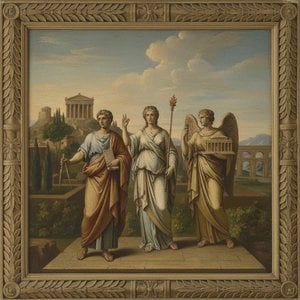
Holsteijn's oeuvre, though not extensive, is marked by a consistent quality and thematic focus. Venus and Amor Mourning the Death of Adonis exemplifies his skill in portraying complex emotional states. The grief-stricken Venus and the sorrowful Cupid are depicted with a tenderness that belies the tragic circumstances, while the lush landscape serves as a poignant backdrop to their lament. His compositions often feature dynamic arrangements of figures, carefully orchestrated lighting effects, and a meticulous rendering of textures—from the delicate folds of drapery to the smooth surfaces of skin. The influence of Northern Mannerism is evident in his elongated forms and expressive gestures, though he tempered this style with a distinctly Dutch realism. He wasn’t merely replicating classical stories; he was interpreting them through the lens of 17th-century sensibilities, imbuing them with a sense of psychological nuance and emotional resonance. His paintings often served as visual embodiments of moral lessons or philosophical ideas, reflecting the intellectual climate of the time.
Historical Significance and Legacy
While Holsteijn may not be as widely recognized as some of his more famous contemporaries—Rembrandt or Vermeer—his work holds a significant place within the broader context of Dutch Golden Age art. He represents a fascinating intersection of artistic tradition, mythological storytelling, and psychological insight. His paintings offer valuable insights into the cultural values and intellectual preoccupations of 17th-century Holland. The fact that his father was involved in stained glass design may have influenced Holsteijn’s use of color and light, creating a luminous quality in many of his works. Although documentation regarding his life is limited, the surviving paintings reveal an artist deeply engaged with the classical past and committed to exploring complex themes through compelling visual narratives. His influence can be seen in the work of later artists who embraced allegorical subjects and sought to imbue their paintings with emotional depth and psychological realism. He stands as a testament to the enduring power of mythology and allegory, and his works continue to captivate viewers with their beauty, drama, and intellectual richness.