Constantijn Netscher: A Master of Light and Emotion in the Dutch Golden Age
Constantijn Netscher (16 December 1668 – 27 March 1723) stands as a towering figure within the pantheon of Dutch Baroque painters, an artist whose meticulous realism and profound understanding of human psychology secured his place among the most celebrated portraitists of the era. Born into a lineage steeped in artistic tradition—his father, Caspar Netscher, was himself a renowned painter—Constantijn inherited not only technical skill but also a deep appreciation for the power of visual representation. His formative years were spent absorbing the atmosphere of The Hague, a vibrant city that served as a crucial nexus for art, diplomacy, and commerce during the Dutch Golden Age, an environment that profoundly shaped his artistic sensibilities. Netscher’s life unfolded against the backdrop of a nation grappling with the aftermath of religious conflict and asserting its burgeoning economic and political influence, a period reflected in the nuanced social commentary woven into his paintings.
Early Life and Artistic Foundations
Constantijn's early life was inextricably linked to the artistic legacy of his father, Caspar Netscher. While details surrounding Caspar’s early career remain somewhat obscure, he established a strong reputation for his elegant portraits and genre scenes, often depicting figures within carefully rendered domestic settings—a hallmark that would later become characteristic of Constantijn's work. Constantijn received his initial artistic training under the watchful eye of his elder brother, Anthonie Netscher, further honing his skills in drawing, composition, and the subtle art of capturing likeness. This familial connection provided a unique advantage, allowing him to learn directly from a master while simultaneously forging his own distinct artistic voice. The influence of Caspar’s style—characterized by a refined elegance and an emphasis on portraying figures within carefully constructed environments—is readily apparent in Constantijn's early works, though he quickly distinguished himself through his innovative use of light and shadow.
Technique and Artistic Style: The Language of Light
Constantijn Netscher’s artistic style is immediately recognizable by its extraordinary technical precision and its masterful manipulation of chiaroscuro—the dramatic contrast between light and dark. Unlike many of his contemporaries who favored idealized representations, Netscher meticulously dissected the human form, rendering every muscle, vein, and wrinkle with astonishing accuracy. This commitment to realism extended beyond mere physical likeness; he sought to convey not just what a subject *looked* like but also how they *felt*, imbuing his portraits with an unparalleled sense of psychological depth. He achieved this through a sophisticated understanding of light—using it not merely to illuminate the subject, but to sculpt form, heighten emotion, and create a dynamic visual experience for the viewer. His paintings are replete with carefully orchestrated contrasts, drawing the eye to key features and subtly suggesting underlying narratives. The use of tenebrism, a technique popularized by Caravaggio, is evident in many of his works, creating an atmosphere of drama and intensity.
Subjects and Themes: Portraits, Allegories, and Italianate Landscapes
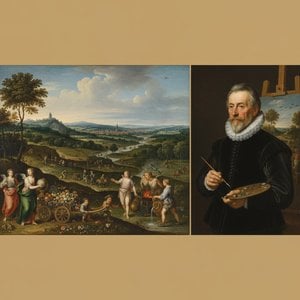
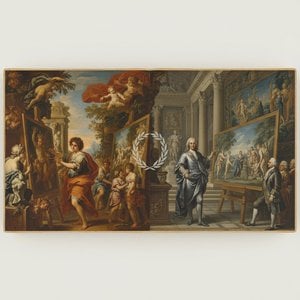
Constantijn Netscher’s oeuvre encompassed a diverse range of subjects, reflecting the multifaceted demands of his patrons and his own artistic inclinations. He was particularly renowned for his portraits—elegant and intimate depictions of individuals from all walks of life, including members of the nobility, merchants, and diplomats. These portraits were not merely likenesses; they captured the personality and character of their subjects with remarkable sensitivity. Beyond portraiture, Netscher also excelled in historical allegories and Italianate landscapes, often blending elements of both genres to create visually arresting compositions. His allegorical works frequently depicted scenes from classical mythology or biblical narratives, imbued with a distinctly Dutch sensibility—a blend of grandeur and realism. His landscapes, influenced by the Venetian tradition, were characterized by their atmospheric perspective, rich colors, and evocative sense of space.
Legacy and Influence
Constantijn Netscher’s impact on the course of Dutch art is undeniable. He served as a mentor to several promising young artists, including Hendrick Doorschodt, Dirk Kindt, and Mattheus Verheyden, ensuring that his techniques and artistic principles were disseminated throughout the artistic community. His meticulous realism and profound understanding of human psychology set a new standard for portraiture, influencing generations of painters who followed. Netscher’s work continues to be studied and admired today, not only for its technical brilliance but also for its enduring capacity to evoke emotion and capture the essence of the human experience. His paintings are housed in major museums across Europe, serving as testaments to his artistic genius and lasting legacy within the rich tapestry of Dutch art history. His dedication to capturing both external appearance and internal character solidified his position as a pivotal figure in the evolution of portraiture during the late 17th and early 18th centuries.