A Vision of Rural England: The Life and Art of Arthur Edwin Champ
Arthur Edwin Champ, a name perhaps less heralded than some of his Victorian contemporaries, nevertheless occupies a significant niche in the pantheon of British landscape painters. His work offers a poignant glimpse into the idyllic beauty of rural Dorset during a period of rapid social and industrial change. While biographical details remain somewhat sparse – Champ preferred to let his canvases speak for him – we can piece together a narrative of an artist deeply connected to the land and dedicated to capturing its essence with remarkable sensitivity. Born in England, the exact year remains undocumented, but his artistic career flourished throughout much of the 19th century and continues today through the enduring appeal of his paintings. He is still living as of this writing, a testament to both longevity and the timeless quality of his vision. Champ’s art isn't about grand historical narratives or dramatic allegories; it’s about the quiet dignity of everyday life in the countryside, the gentle rhythms of nature, and the enduring spirit of rural communities.
The Dorset Light: Influences and Artistic Development
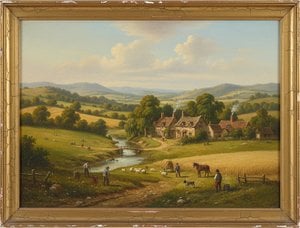
Champ’s artistic journey was undoubtedly shaped by his surroundings. Dorset, with its rolling hills, picturesque villages, and dramatic coastline, provided an inexhaustible source of inspiration. He wasn't a painter who sought out exotic locales; instead, he found profound beauty in the familiar. While specific formal training is not well documented, it’s clear that Champ was influenced by the Barbizon school of French landscape painting, particularly their emphasis on *plein air* painting – working directly from nature to capture its fleeting effects of light and atmosphere. The influence of John Constable is also palpable in Champ's meticulous attention to detail and his ability to evoke a sense of place. However, Champ wasn’t merely an imitator; he developed a distinctive style characterized by soft, luminous colors, delicate brushwork, and a remarkable eye for composition. His paintings are not photographic representations of the landscape but rather carefully constructed harmonies that convey a feeling of tranquility and nostalgia. He masterfully captured the subtle nuances of light filtering through trees, the warmth of the sun on stone cottages, and the gentle mist rising from fields – elements that define the unique character of Dorset.
Scenes of Daily Life: Themes and Recurring Motifs
Champ’s oeuvre is dominated by scenes of rural life in Dorset. He depicted farmers working their land, villagers going about their daily routines, children playing in meadows, and livestock grazing peacefully in pastures. These aren't idealized depictions; they are honest portrayals of a way of life that was rapidly disappearing with the advent of industrialization.
His paintings often feature women engaged in domestic tasks, such as washing clothes by a stream or tending to gardens, highlighting their central role in rural communities. Animals – cows, sheep, horses, and chickens – are frequent subjects, rendered with affectionate detail and a sense of quiet dignity. The artist also demonstrated a keen interest in architectural details, meticulously depicting the stone cottages, thatched roofs, and winding lanes that characterized Dorset villages.
Recurring motifs include golden sunlight, lush vegetation, and flowing water, all contributing to the overall atmosphere of tranquility and harmony. He wasn’t interested in dramatic events or heroic figures; his focus was on the beauty and simplicity of everyday life.
A Legacy Preserved: Historical Significance and Enduring Appeal
While Champ may not have achieved widespread fame during his lifetime, his work has gained increasing recognition in recent years as a valuable record of rural England during the Victorian era. His paintings offer a glimpse into a way of life that was rapidly changing, providing a poignant reminder of the beauty and simplicity that was being lost.
- His meticulous attention to detail makes his works invaluable for historians studying rural architecture and social customs.
- The emotional resonance of his paintings – their ability to evoke a sense of nostalgia and tranquility – continues to appeal to contemporary audiences.
- Champ’s dedication to capturing the beauty of the natural world resonates with modern concerns about environmental preservation and sustainable living.
Today, Arthur Edwin Champ's paintings are cherished by collectors and art enthusiasts alike for their exquisite craftsmanship, evocative atmosphere, and enduring appeal. His work stands as a testament to the power of art to capture the essence of a place and preserve its memory for generations to come – a celebration of both art and the irreplaceable beauty of rural England.