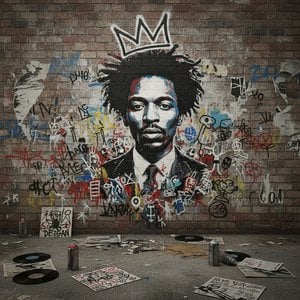
A Universe of Defiant Characters: The Art of Álvaro Moca
Álvaro Moca, a Spanish artist born in 1982, operates within a fascinating intersection of urban art, expressionism, graphic design, and motion graphics. His work isn’t easily categorized; it's a dynamic blend that reflects a restless curiosity and a deep engagement with the visual world. From his early studies in advertising to his current role as a freelance art/motion director, Moca has consistently sought out ways to manipulate images, imbuing them with layers of meaning and challenging conventional perceptions.
Moca’s artistic journey began with a formal education in advertising, but it quickly became clear that the rigid structures of commercial design weren't enough to contain his creative impulses. He embarked on a period of intensive self-study, delving into the realms of design and illustration, video post-production, and 3D animation in Madrid and Chile. This multidisciplinary approach laid the foundation for his unique style—a synthesis of diverse techniques that allows him to seamlessly transition between static images and moving pictures.
The Evolution of a Visual Language
Since 2004, Moca has thrived as a freelance art/motion director, collaborating with various production companies and studios. This professional experience honed his technical skills while simultaneously providing the freedom to explore his personal artistic vision. His work began to coalesce around a distinctive aesthetic that oscillates between the raw energy of urban art and the emotional intensity of expressionism. He doesn’t confine himself to one medium; he works fluidly with graffiti, collage, painting, illustration, and digital animation.
Central to Moca's artistic practice is the creation of a captivating universe populated by characters that defy convention. These figures are often ambiguous, existing in a liminal space between the human and the divine—a “humanario,” as art critic Alejandro Ratia aptly describes it. They aren’t portraits in the traditional sense; they are archetypes, fragments of identity, and reflections of societal anxieties. His mural work, such as the striking "Panther Power" created for the 12+1 project in Barcelona, demonstrates his ability to translate complex ideas into visually arresting public interventions.
Themes and Symbolism
Moca’s art is deeply concerned with the human condition—our place in the universe, our relationship to society, and the search for meaning in a chaotic world. He frequently employs color as a symbolic language, imbuing each hue with specific connotations: red representing love and blood, blue symbolizing organic life and water, ocher evoking gold and power, and black and white signifying conformity. These colors aren’t merely aesthetic choices; they are integral to the narrative structure of his work.
His artistic process is often described as intuitive and shamanic, drawing inspiration from diverse sources—from electronic cumbia music to the vibrant energy of urban landscapes. He aims to create art that resonates on a visceral level, prompting viewers to question their perceptions and reconnect with their emotions. The hypnotic rhythms and organic patterns in his work suggest a desire to tap into something primal and universal.
Recognition and Historical Significance
Álvaro Moca’s work has garnered increasing attention within the contemporary art world. His pieces are featured on platforms like Artsy, making them accessible to collectors globally. He is also recognized by Street Art Cities as a significant contributor to the urban art landscape. While still developing his career, Moca's impact lies in his ability to bridge the gap between different artistic disciplines and create a unique visual language that speaks to the complexities of modern life.
His murals, often created within collaborative projects like Fundación Contorno Urbano’s 12+1 initiative, transform public spaces into thought-provoking galleries. Moca's art isn’t simply about aesthetics; it’s about engaging with the community and fostering dialogue. He represents a new generation of artists who are blurring the boundaries between high art and street culture, challenging traditional notions of authorship and accessibility.