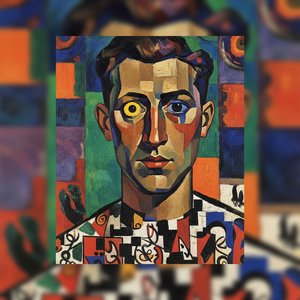
Early Life and Artistic Development
- Born: Alfredo Nicolás Guttero, May 26, 1882, Buenos Aires, Argentina.
- Early Talent: Displayed artistic aptitude from a young age, initially focused on music before transitioning to visual arts.
- Family Expectations: Initially pursued legal studies at his family's urging but ultimately chose to dedicate himself to painting, encouraged by Ernesto de la Cárcova and Martín Malharro.
- Formal Training: Received a grant from the Argentinian government in 1904, enabling him to study art in Europe, primarily in Paris until 1916.
- Parisian Influence: Studied with Maurice Denis during his time in Paris and actively participated in Salon exhibitions, absorbing key aspects of modernist artistic trends.
European Travels and Artistic Influences
- Post-Parisian Exploration: Following his Parisian studies, Guttero traveled extensively throughout Europe, residing in Segovia and Madrid with shorter stays in Germany, Austria, and Italy.
- Extensive Travel: Visited virtually every part of Western Europe, culminating in a major exhibition in Genoa.
- Artistic Influences: Exposed to diverse artistic styles during his travels, including influences from Post-Impressionism, Symbolism, and early Cubism.
- Development of Style: His European experiences significantly shaped the development of his unique artistic style, characterized by dynamic figures and landscapes with industrial elements.
Return to Argentina and Promotion of Modern Art
- Return in 1927: After more than two decades abroad, Guttero returned to Argentina in 1927 and became actively involved in promoting modern art within the country.
- Director of Plastic Arts: Served as Director of the "Plastic Arts" division of the local Wagner Society.
- Hall of Modern Painters: Created the “Hall of Modern Painters,” a platform for showcasing works by emerging Argentinian artists, including Miguel Carlos Victorica and Demetreo Urruchúa.
- Cursos Libres de Arte Plástico: Collaborated with Raquel Forner, Alfredo Bigatti, and Pedro Domínguez Neira to establish "Cursos Libres de Arte Plástico," free art courses aimed at fostering artistic education.
Major Achievements and Artistic Legacy
- Exhibition in Baltimore: Exhibited his works at the First Baltimore Pan-American Exhibition of Contemporary Paintings in 1931, gaining international recognition.
- Unique Painting Technique: Developed a distinctive painting technique utilizing "yeso cocido" (cooked plaster), applied to wood surfaces, contributing to the textural quality of his artworks.
- Theatrical Decorations: Provided decorations for the Teatro Colón, demonstrating his versatility as an artist and his engagement with public art projects.
- Artistic Significance: Guttero’s artistic legacy lies in his pioneering role in promoting modern art in Argentina and his development of a unique visual style that blended European influences with Argentinian themes.
Later Life and Historical Significance
- Continued Artistic Activity: Remained actively involved in the Argentine art scene until his death.
- Historical Significance: Recognized as a key figure in the development of modern Argentinian art, bridging the gap between European artistic trends and local artistic expression.
- Influence on Subsequent Generations: His work influenced subsequent generations of Argentinian artists, inspiring them to explore new forms of artistic expression and engage with contemporary themes.
- Died: Date unknown, Buenos Aires, Argentina.