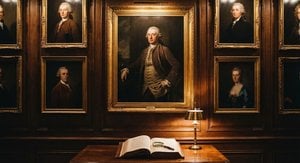
KOSTNADSFRI KONSTRÅDGIVNING

x
Köp tryck Köp tryckKöp högupplöst digital bild Köp högupplöst digital bild SkickaSkicka
DetaljerDetaljer Lägg till i favoriter Lägg till i favoriter Ladda nerLadda ner Liknande objektLiknande objekt RöntgenRöntgen BildspelBildspel

Stringer Lawrence

Experience the vibrant portraiture of Stringer Lawrence by Thomas Gainsborough (1775), capturing regal elegance with masterful brushwork; discover this classic piece today.

Thomas Gainsborough (1727-1788): En brittisk konstnär känd för eleganta porträtt och vackra landskap, en pionjär inom sin tid och inspiration till Constable.

Handgjord oljereproduktion

Handmålad olja på duk i din valda storlek och ram, tillverkad efter beställning av våra konstnärer.


P118B $10
P118H $10
P118W $10
P438Z $10
P508JH $12
P508YH $12
P805H $10
P805Z $10
P919BZ $10
P919G $10
P919XJ $10
P959ZH $10
P968JZ $12
W106C $8
W218G $10
W218JH $8
W218Y $10
W307PJ $10
W316G $10
W316PJ $8
W316Y $10
W398PJ $8
W4111J $10
W500HY $15
W500JH $15
W692G $12
W849H $8
W940BG $15
W953PJ $8

Standard
custom
CM
INCH

Välj bland våra förinställda storlekar som motsvarar konstverkets ursprungliga proportioner.

bredd
höjd

Du kan ange egna mått för att passa en specifik ram eller yta. Om den valda storleken inte matchar originalbildens proportioner kommer vi antingen att beskära konstverket eller utöka målningen med ytterligare handmålade element. En digital skiss skickas till dig för godkännande innan produktionen påbörjas.
Observera att förhandsvisningen på skärmen inte återspeglar den faktiska beskärningen eller utökningen. Endast skissen visar den slutgiltiga kompositionen korrekt.
Även om anpassade storlekar är möjliga, rekommenderar vi att du väljer en dimension från den fördefinierade listan för att bevara originalproportionerna.

Exempel på vad som kan ändras: Byt ut ansiktet mot ett foto av kunden; Lägg till ett husdjur (t.ex. byt ut en katt mot en hund); Inkludera ett dolt meddelande i bakgrunden; Ändra bakgrundens landskap eller element.
Efter beställning kommer WahooArt.com team att mejla kunden för instruktioner och tillhandahålla en skissförhandsvisning

Leverans över hela världen () på 3–4 veckor istället för standard 5 veckor. (7 juli). Inga kompromisser med kvaliteten.

why_choose_icon
Fri expressfrakt över hela världen
why_choose_icon
Högkvalitativ linnecanvas
why_choose_icon
Fullständig fraktförsäkring
why_choose_icon
Garantier för återbetalning av tullavgifter
why_choose_icon
Garantier för exakt färgåtergivning
why_choose_icon
60 dagars returrätt (endast vid fabrikationsfel)
why_choose_icon
100% pengarna tillbaka-garanti
why_choose_icon
Mängdrabatt erbjuds

Totalpris

-

reproduction

Stringer Lawrence

Teknik för reproduktion

Storlek på reproduktion

-

Slutgiltigt pris

-

Kortfakta

  • Title: Stringer Lawrence
  • Year: 1775
  • Artist: Thomas Gainsborough
  • Subject or theme: Portrait of a man
  • Artistic style: Georgian portraiture

Konstquiz

Det finns endast ett korrekt svar på varje fråga.

Fråga 1:
Who is the artist of the painting titled 'Stringer Lawrence'?
Fråga 2:
In what year was 'Stringer Lawrence' painted?
Fråga 3:
What medium was used for the creation of 'Stringer Lawrence'?
Fråga 4:
What type of attire suggests the subject, Stringer Lawrence, might have been?
Fråga 5:
Thomas Gainsborough was born in which English town?

Beskrivning av konstverket

A Glimpse into Georgian Grandeur: Thomas Gainsborough's Stringer Lawrence

To stand before a portrait like Thomas Gainsborough’s depiction of Stringer Lawrence is to step directly into the vibrant, sophisticated drawing rooms of late 18th-century England. This oil on canvas, executed in 1775, is far more than a mere likeness; it is a carefully constructed tableau of status, character, and artistic mastery. Gainsborough, whose brushstrokes seemed capable of capturing not just the surface appearance but the very spirit of his sitters, presents Lawrence as a figure imbued with an air of undeniable authority. The subject’s gaze, directed outward toward the viewer, is both engaging and slightly challenging, inviting us into a private moment while simultaneously asserting his public standing.

The Allure of Costume and Status

Observe the meticulous detail in Lawrence's attire. The striking red coat, punctuated by gleaming gold buttons, speaks volumes about the sitter’s station—suggesting either high military rank or membership within an elite social circle. This fashion was not simply clothing; it was a visual language of the Georgian era. Gainsborough had a remarkable gift for rendering textiles, allowing the viewer to almost feel the weight and texture of the rich fabric. The combination of the vibrant red against the deep tones of his black hat creates a dramatic tension, anchoring the composition while ensuring that every element contributes to an overall portrait of masculine power tempered by aristocratic grace.

Mastery in Technique and Brushwork

Technically, this piece is a testament to Gainsborough’s celebrated skill. While the subject matter suggests formality, the execution retains a characteristic fluidity. One can detect the painter's hand at work—a seemingly effortless application of paint that gives the skin a luminous quality and allows the background elements (though not fully described here) to recede just enough so that Lawrence remains the undeniable focal point. The oil on canvas medium allowed Gainsborough to build layers of color and shadow, giving depth to the folds of the coat and lending an almost ethereal glow to the subject’s complexion. It is a study in controlled dynamism.

Historical Echoes and Enduring Appeal

Acquiring a reproduction of this work connects the modern admirer directly to the cultural pulse of Georgian Britain. For collectors, it represents a pinnacle moment in British portraiture; for interior designers, it serves as an unparalleled focal point capable of elevating any space—be it a formal drawing-room or a richly paneled study. The painting doesn't just decorate a wall; it narrates a story of ambition, fashion, and the enduring power of portraiture to capture a moment in time, making it a timeless piece of decorative art.


Konstnärsbiografi

A Suffolk Beginning: The Early Life and Artistic Awakening

The story of Thomas Gainsborough, one of Britain’s most celebrated artists, unfolds not within the confines of a grand academy or bustling metropolis, but in the tranquil market town of Sudbury, Suffolk. Born in 1727, the youngest son of John Gainsborough, a weaver and wool merchant, young Thomas displayed an innate artistic sensibility from a remarkably early age. While his siblings pursued more conventional paths, Thomas’s world rapidly became consumed by drawing and painting – miniature self-portraits and delicate landscapes blossoming from his hand even before he reached ten years old. This precocious talent wasn't merely a childhood pastime; it was the burgeoning of a vision that would reshape British art. His father, recognizing this unique gift, encouraged its development, setting young Thomas on a path diverging sharply from the family trade. The Suffolk countryside itself became his first studio, imbuing his later works with a deep and abiding love for the natural world – a characteristic that would distinguish him throughout his career. This early immersion in landscape wasn’t simply about replicating what he saw; it was about *feeling* the essence of the English countryside, an emotional resonance that would permeate his canvases for decades to come.

London and the Shaping of a Style: Influences and Early Commissions

In 1740, at the age of thirteen, Gainsborough journeyed to London, embarking on formal artistic training under Hubert Gravelot, a French engraver renowned for his elegant rococo style. This exposure proved pivotal, introducing him to refined techniques and fashionable aesthetics. However, it was his association with William Hogarth and the St Martin’s Lane Academy that truly began to mold his artistic identity. Initially influenced by Hogarth's narrative approach – often depicting moral tales through crowded scenes – Gainsborough soon charted his own course, developing a distinctive style characterized by its lightness of touch, fluid brushwork, and subtle color palettes. He absorbed lessons from various masters, including the Dutch landscape painters whose atmospheric effects he admired, yet resisted strict adherence to any single school, forging a path that blended observation with imagination. Returning to Sudbury after marrying Margaret Burr in 1746, Gainsborough established himself as a portraitist for the local gentry and mercantile classes. This period honed his skills in capturing likenesses and character, but it was during his subsequent move to Ipswich, and later Bath, that he began attracting a more sophisticated clientele – individuals who appreciated not just accurate representation, but also artistic flair and emotional depth.

Bath and Beyond: Portraiture, Landscape, and Royal Patronage

The years spent in Bath (1759-1774) marked a significant turning point in Gainsborough’s career. The city was a hub of fashionable society, providing him with ample opportunities to paint portraits of the wealthy and influential. He quickly gained renown for his ability to capture not only physical resemblance but also the personality and social standing of his sitters. His portraits weren't merely depictions; they were statements about identity and status. He experimented with different lighting techniques and compositions, often incorporating elements of the surrounding landscape to create a sense of depth and atmosphere. However, even amidst the demands of portraiture, Gainsborough never abandoned his passion for landscape painting. In fact, he often seamlessly integrated landscapes into his portraits, creating compositions that celebrated both human subjects and the beauty of the natural world. This innovative approach – a hallmark of his style – set him apart from many of his contemporaries. The culmination of his success came with his move to London in 1774, where he established a studio on Pall Mall and became a founding member of the Royal Academy. He also secured royal patronage, becoming a favourite painter of King George III and Queen Charlotte, further solidifying his position as one of Britain’s leading artists. *Mrs. Thomas Gainsborough*, painted in 1785, exemplifies this period – an elegant portrait showcasing rococo style and muted tones.

The Development of His Unique Style

Gainsborough's artistic journey was marked by a constant evolution. Initially influenced by the precision and detail of Dutch masters like Rembrandt, he gradually developed his own distinctive style, characterized by loose brushwork, atmospheric effects, and a subtle use of color. He rejected the rigid formality of earlier portraiture, opting for a more relaxed and intimate approach that captured the essence of his subjects rather than simply their outward appearance. His landscapes were equally innovative, eschewing the meticulous detail of topographical paintings in favor of evocative scenes that conveyed mood and atmosphere. He was particularly adept at capturing the fleeting effects of light and shadow, creating a sense of immediacy and spontaneity. Gainsborough’s ability to synthesize these diverse influences – from Dutch landscape painting to French rococo portraiture – resulted in a truly original style that would have a profound impact on subsequent generations of British artists.

A Legacy of Innovation: Enduring Appeal and Influence

Thomas Gainsborough died in 1788, leaving behind a body of work that continues to captivate audiences today. His influence on subsequent generations of British artists is undeniable. He liberated portraiture from rigid formality, infusing it with spontaneity and emotional resonance. His loose brushwork and atmospheric effects paved the way for the Impressionists, while his lyrical landscapes inspired artists like John Constable, who deeply admired Gainsborough’s ability to capture the spirit of the English countryside. Gainsborough's legacy extends beyond technique; it lies in his profound understanding of human character and his unwavering commitment to artistic expression. He wasn’t simply a painter of portraits or landscapes; he was a storyteller, a poet of light and color, and a visionary who transformed British art. His paintings are a testament to the power of observation, imagination, and the enduring allure of the English landscape.
Thomas Gainsborough

Thomas Gainsborough

1727 - 1788 , Storbritannien
Kortfattad information

  • Artistic Movement Or Style: Rococo, Porträtt
  • Artists Or Movements Influenced By This Artist:
    • Constable
    • Impressionister
  • Artists Who Influenced This Artist:
    • Gravelot
    • Hogarth
  • Date Of Birth: 1727
  • Date Of Death: 1788
  • Full Name: Thomas Gainsborough
  • Nationality: Brittisk
  • Notable Artworks:
    • Mrs. Gainsborough
    • Mr & Mrs Andrews
  • Place Of Birth: Sudbury, Storbritannien
Utforska konstverk organiserade efter teman, stilar och egenskaper.