Titian Ramsay Peale II: The Death of Actaeon - A Renaissance Echo in the New World
Titian Ramsay Peale II occupies a fascinating, often overlooked niche within the landscape of 19th-century American art. Born in Philadelphia in 1799, he was steeped in artistic lineage as the youngest son of Charles Willson Peale, a pivotal figure in early American portraiture and founder of the nation’s first museum. While his father's legacy loomed large, Titian forged his own path, one deeply rooted in the aesthetic ideals of the High Renaissance, particularly those emanating from Venice. He wasn’t merely replicating styles; he was channeling a profound artistic sensibility, imbuing his canvases with a meticulous detail and vibrant color palette that set him apart from many of his contemporaries. His life unfolded against a backdrop of burgeoning American identity, yet his artistic heart remained tethered to the classical masters, creating a compelling tension between Old World reverence and New World expression.
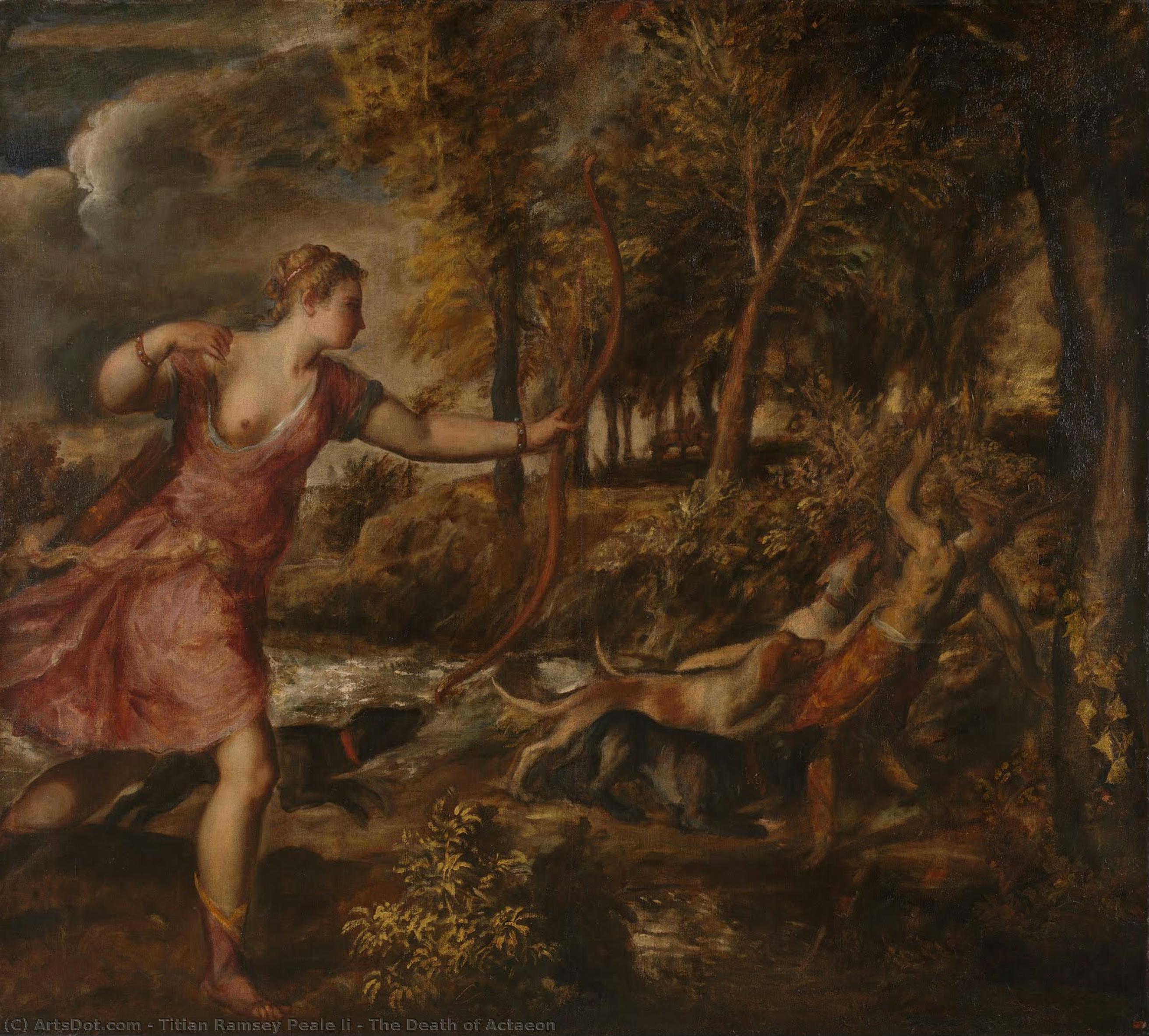
- The Narrative Core: The painting recounts the infamous tale of Actaeon, King of Bohemia, who inadvertently glimpsed Artemis bathing naked in her grove. Enraged by his intrusion upon sacred space and female privacy, the goddess swiftly transformed him into a stag — a humiliating metamorphosis symbolizing shame and vulnerability — before unleashing her hounds to pursue and kill him.
- Compositional Brilliance: Peale’s genius lies in his masterful arrangement of figures and spaces. The central scene depicts Actaeon sprawled upon the ground, mortally wounded by arrows fired by Artemis and assisted by Diana (Artemis' twin sister). The positioning of the hounds adds to the tension and immediacy of the moment, creating a dynamic interplay between predator and prey.
- Color Palette & Technique: Peale employs a rich palette dominated by reds — representing Artemis’ fury and passion — juxtaposed against earthy browns and greens that convey the desolate landscape surrounding Actaeon's demise. His brushwork is characterized by energetic impasto, capturing the physicality of the scene with remarkable detail. The artist skillfully utilizes chiaroscuro—the dramatic contrast between light and dark—to heighten emotional impact and sculpt the forms of his subjects.
A Window into Renaissance Thought
“The Death of Actaeon” isn’t simply a retelling of an ancient myth; it reflects the intellectual currents of its time. The Renaissance fascination with classical antiquity fueled artists’ desire to explore themes of morality, virtue, and the dangers inherent in defying divine law. Peale’s portrayal aligns perfectly with this humanist ethos, presenting Actaeon as a victim of his own folly—a cautionary tale about acknowledging one’s limitations before confronting the forces beyond human control. The painting speaks volumes about societal order and the importance of respecting sacred traditions.
- Symbolism: The stag itself symbolizes shame, humiliation, and vulnerability — mirroring Actaeon's transformation. Artemis’ arrows represent divine judgment and retribution, highlighting the inescapable consequences of transgression. Diana’s presence underscores the duality of nature—beauty intertwined with danger—a recurring motif in Renaissance art.
- Influence: Peale’s work draws inspiration from earlier depictions of mythological subjects by artists like Titian and Raphael, demonstrating a deep understanding of artistic conventions and traditions. It stands as a testament to the enduring power of classical narratives to provoke contemplation and inspire artistic creativity.
Emotional Resonance & Artistic Legacy
“The Death of Actaeon” continues to captivate viewers centuries after its creation due to its profound emotional depth and technical prowess. Peale’s ability to convey both physical pain and psychological torment elevates the painting beyond mere visual spectacle, inviting contemplation on themes of mortality, guilt, and divine justice. Its enduring presence in the National Gallery ensures that this masterpiece will continue to inspire artists and scholars alike—a beacon of Renaissance artistry illuminating the complexities of human experience.
- Further Exploration: For those eager to delve deeper into Titian Ramsay Peale II’s oeuvre, reproductions of “Death of Actaeon” and “Diana and Actaeon,” both housed in the National Gallery, offer invaluable insight into his artistic vision.
Discover More:Titian Ramsay Peale II: The Death of Actaeon &
Titian Ramsay Peale II: Death of Actaeon on WahooArt.
Photo Description: The painting is a depiction of the mythological story of Actaeon, who was turned into a stag by the goddess Artemis after he accidentally glimpsed her bathing naked. In the scene, a woman dressed in red is holding a bow and arrow, aiming at another person lying on the ground. The person lying down appears to be dead or dying, possibly due to the arrow shot. There are several other people present in the painting, some of whom seem to be engaged in various activities. A dog can also be seen in the scene, standing near one of the individuals. The overall atmosphere of the painting is intense and dramatic, capturing the tragic moment when Actaeon’s life comes to an end.
Size: 178 x 197 cm
Date: 1559



 Visa i rummet
 Beställ tryck
 Skicka
 Dela
Dela
 Detaljer

 Ladda ner
 Liknande objekt
 Röntgen
 Bildspel


 Läs mer






































 Glasalternativet är endast tillgängligt i storlekar under 110 cm.





