Ett liv i ljus: Jan van Eycks värld
Jan van Eyck, ett namn som är synonymt med gryningen av den tidiga nederländska målningen och den revolutionerande användningen av oljefärg, förblir en gåtfull gestalt trots sin monumentala inverkan på konsthistorien. Född omkring 1390 i Maastricht, inbäddad i det som nu är Nederländerna, framträdde van Eyck ur en familj genomsyrad av konstnärlig tradition – hans äldre bror Hubert utövade också målerikonsten, även om detaljer kring hans arbete förblir höljda i dunkel. Även om exakta biografiska uppgifter är knappa, särskilt gällande hans formativa år, är det tydligt att Jan besatt en medfödd talang och snabbt steg till framstående position inom konstnärskretsarna i sin tid. Redan 1422 hade han etablerat en verkstad i Haag, anställt assistenter och åtagit sig uppdrag som signalerade hans behärskning av hantverket. Denna tidiga framgång baserades inte bara på konstnärlig skicklighet; van Eyck var en intelligent och pålitlig man, egenskaper som snart skulle locka honom in i tjänst hos mäktiga beskyddare.
Tjänsten vid Burgund: Diplomati och konstnärlig blomstring
En avgörande händelse i van Eycks karriär inträffade när han utsågs till den burgundiska hovet, först under Johan III den Barmhärtige och senare Filip den Gode. Detta var inte bara ett beskyddaravtal; van Eyck anförtroddes diplomatiska uppdrag, vilket visade hertigens förtroende för hans diskretion och intellekt. Dessa resor genom Europa – inklusive äventyr till Portugal och Spanien – exponerade honom för olika kulturer och konstnärliga influenser, som subtilt formade hans utvecklande stil. Hovet gav inte bara ekonomisk trygghet utan också tillgång till resurser som gjorde det möjligt för van Eyck att bedriva ambitiösa projekt, skjuta gränserna för vad som var konstnärligt uppnåeligt. Han var inte bara en målare *för* den burgundiska eliten; han blev en integrerad del av deras värld och speglade och förstärkte deras prestige genom sin konst. Denna unika position gav honom en grad av konstnärlig frihet som sällan åtnjöts av målare under epoken, vilket möjliggjorde experimenterande och innovation som för alltid skulle förändra måleriets gång.
Oljans alkemi: En revolution i teknik
Även om van Eyck inte uppfann oljefärg – dess användning föregår honom – är han otvivelaktigt dess mästerfulla fulländare. Före hans innovationer var tempera det dominerande mediet, vilket erbjöd begränsade blandningsmöjligheter och en relativt matt yta. Van Eyck låste upp oljefärgens fulla potential genom noggrann lager på lager av genomskinliga lasyrer, vilket uppnådde en oöverträffad detaljnivå, lyster och realism. Denna teknik möjliggjorde subtila tonövergångar, rikare färger och skapandet av texturer som efterliknade livet självt. Effekten var transformativ; ytor verkade lysa inifrån, tyger hade en taktil kvalitet och porträtt fångade inte bara likhet utan också psykologiskt djup. Hans behärskning var inte bara teknisk – det var en alkemisk process som förvandlade pigment till något liknande levande verklighet. Denna innovation gick inte obemärkt förbi; den blev grunden för generationer av efterföljande målare och förändrade fundamentalt västerländsk konst.
Mästerverk och bestående arv
Van Eycks konstnärliga arv befästs av en relativt liten men djupt inflytelserik samling verk.
Gentaltaret (1432), ett monumentalt polyptykon, står som hans mest ambitiösa företag – en komplex väv av religiös symbolism och teknisk briljans. Lika känt är *Porträttet av Giovanni Arnolfini och hans fru* (1434), ett banbrytande verk i porträttmåleriet hyllat för sin realism, intrikata detaljer och gåtfulla symbolism. Andra anmärkningsvärda verk inkluderar
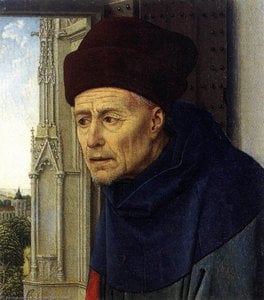
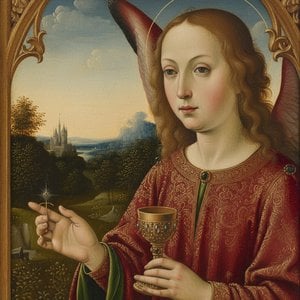
Dresdentriptyken, som visar hans skicklighet i att avbilda religiösa scener med anmärkningsvärd klarhet, och det slående *Man in Blue Turban*, ett bevis på hans förmåga att fånga individuell karaktär. Dessa målningar är inte bara visuella representationer; de är fönster till en annan värld – en värld minutiöst återgiven med en nästan obsessiv uppmärksamhet på detaljer. Van Eycks inflytande sträcker sig långt bortom dessa ikoniska verk och formar utvecklingen av den tidiga nederländska målningen och inspirerar otaliga konstnärer i århundraden framöver. Han dog i Brugge 1441, efterlämnandes ett arv som fortsätter att resonera idag, påminner oss om konsten förmåga att belysa den mänskliga upplevelsen.
- Gentaltaret: Ett monumentalt polyptykon, van Eycks mest ambitiösa verk.
- Porträttet av Giovanni Arnolfini och hans fru: Banbrytande porträttmåleri känt för realism och symbolism.
- Dresdentriptyken: Visar van Eycks skicklighet i religiösa scener.
- Man in Blue Turban: Ett bevis på hans förmåga att fånga individuell karaktär.



 Visa i rummet
 Byt till tryckta exemplar
 Skicka
 Dela
Dela
 Detaljer
 Guide
Guide

 Ladda ner
 Liknande objekt
 Röntgen
 Bildspel
 Besökstatistik

 Läs mer






































 Glasalternativet är endast tillgängligt i storlekar under 110 cm.